
Most people visit Central Park and never leave the south end. They snap a photo near the Bethesda Fountain, loop around the Reservoir, and call it done. But Central Park is 843 acres — and some of its most extraordinary places are hiding in plain sight, visited only by the few who know where to look.
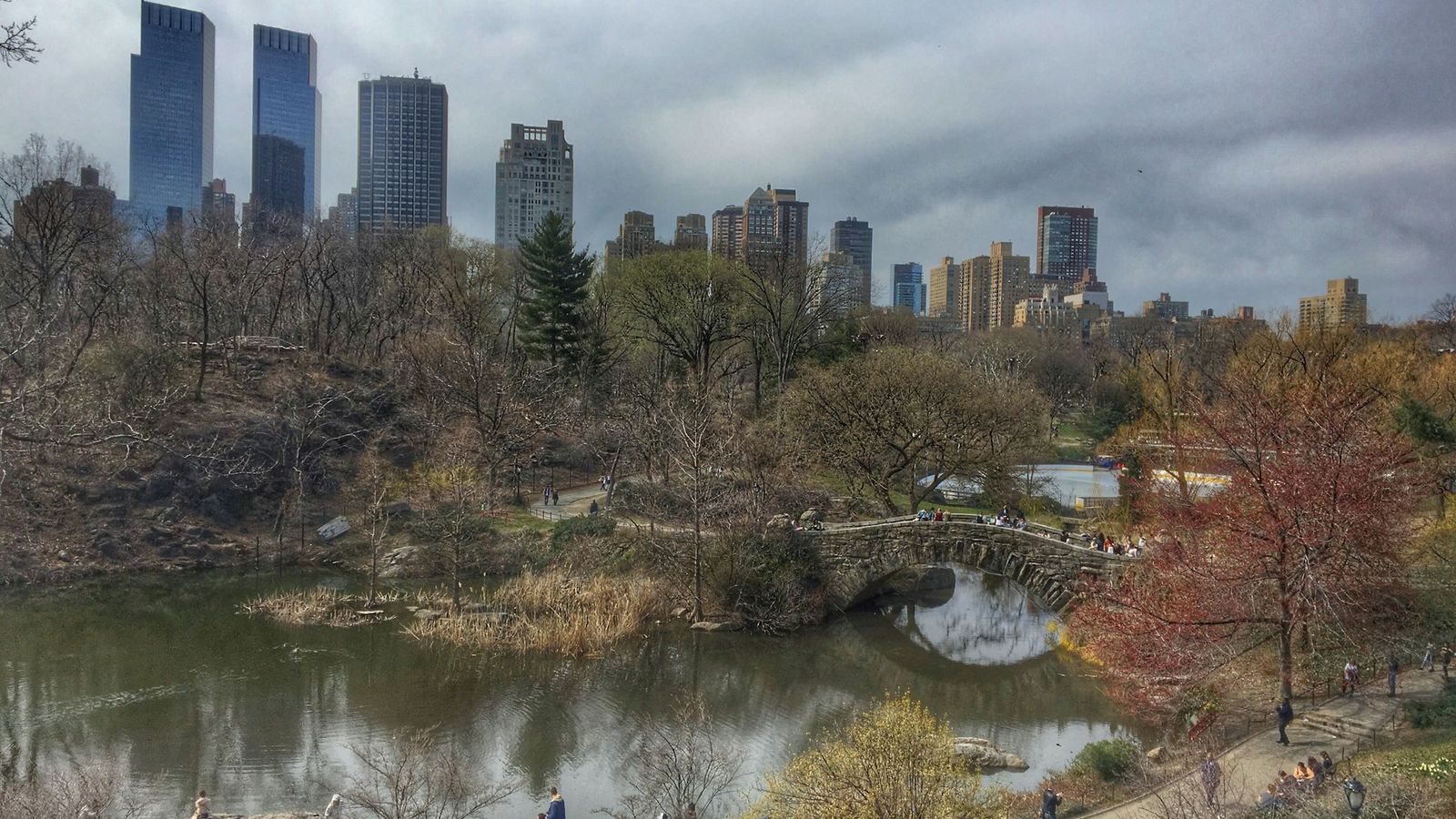
The Ramble: New York’s Secret Woodland
Just north of the Lake lies the Ramble — 36 acres of wild, wooded terrain that feels nothing like the rest of the park. The paths here don’t follow a grid. They wind and double back, opening unexpectedly onto rocky outcroppings and quiet stream beds.
The Ramble was designed to feel untamed. Frederick Law Olmsted and Calvert Vaux planted it deliberately as a contrast to the park’s manicured lawns. Today it is famous among birdwatchers — over 200 species pass through during spring and fall migration alone.
If you see someone standing very still with binoculars on a May morning, you’ve found the right place.
The Shakespeare Garden Almost Nobody Visits
Tucked near the 79th Street entrance on the West Side is a garden planted entirely with species mentioned in Shakespeare’s plays. Roses, lavender, violets, rue, rosemary — each labeled with the lines in which they appear.
It was created in 1916 to mark the 300th anniversary of Shakespeare’s death. The garden wraps around a 19th-century Swedish cottage — originally a schoolhouse built in Sweden for the 1876 Philadelphia Centennial Exposition, then transported to Central Park.
That cottage now houses a marionette theatre that has been running children’s puppet shows since 1973. Most New Yorkers have never been inside. It’s one of those places that feels like a secret even after you’ve found it.
The Conservatory Garden: Central Park’s Formal Secret
At 105th Street and Fifth Avenue, through an ornate set of wrought-iron gates that once stood at the Vanderbilt mansion on 58th Street, is the Conservatory Garden. It is the only formally designed garden in Central Park — six acres of structured planting in three distinct styles: Italianate to the north, English in the center, French to the south.
On weekday mornings it is almost entirely empty. No joggers. No cyclists. No tour groups. Just benches, flowering borders, and the low sound of a fountain.
The gates themselves are worth finding. They were designed around 1894 and rescued when the Vanderbilt home was demolished. They now open onto what is arguably the most peaceful half-hour you can spend in Manhattan.
Enjoying this? Join New York lovers getting stories like this every week. Subscribe free →
The Bronze Animals People Keep Walking Past
The park has more sculpture than most visitors realize — and some of the finest pieces are easy to miss.
Near Conservatory Water — the model-boat pond near 74th Street — is the Alice in Wonderland sculpture by José de Creeft, installed in 1959. Alice sits large on a bronze mushroom, the Mad Hatter gesturing beside her. Children have been climbing it for sixty years. It was commissioned by philanthropist George Delacorte as a gift to the children of New York City.
Closer to 67th Street is Balto — a bronze Siberian husky on a granite rock. The real Balto led a sled dog relay team that carried diphtheria antitoxin 674 miles through an Alaskan blizzard in January 1925, saving the town of Nome. The statue was placed in Central Park just months after that journey. It was rubbed smooth by six decades of hands.
Strawberry Fields and the Building Beyond the Trees
Everyone has heard of Strawberry Fields — the teardrop-shaped garden on the West Side near 72nd Street, dedicated to John Lennon after his death in 1980. The Imagine mosaic is always ringed with visitors leaving flowers.
But directly across the path, most people don’t look up. The building visible through the trees is the Dakota — the apartment building where Lennon lived and died. The corner window overlooking the park was his.
Stand at that spot long enough and you understand why this part of Central Park carries a different weight than the rest. The city keeps going. The park stays still. That contrast is part of what New York does to you.
If you’re exploring Manhattan more broadly, this guide to New York City’s best neighbourhoods pairs well with a day spent wandering beyond the park’s famous landmarks.
Frequently Asked Questions
What are the best hidden spots in Central Park that most tourists miss?
The Ramble (a 36-acre woodland on the park’s east side), the Shakespeare Garden near the 79th Street West entrance, and the Conservatory Garden at 105th Street and Fifth Avenue are the park’s least-visited and most rewarding corners. Most visitors never venture past the Bethesda Fountain and the Great Lawn.
What is the Shakespeare Garden in Central Park?
The Shakespeare Garden is a small garden near the 79th Street entrance on the West Side, planted with species mentioned in Shakespeare’s plays and labeled with the relevant lines. Created in 1916 for the 300th anniversary of Shakespeare’s death, it surrounds a 19th-century Swedish cottage that now houses a marionette theatre for children.
When is the best time to visit Central Park’s hidden gardens?
Weekday mornings in spring (April through June) or fall (September through October) are ideal. Spring migration brings hundreds of bird species through the Ramble. The Conservatory Garden peaks in May and again in late September. Arrive before 10am for the best chance of near-solitude in the formal gardens.
Is it worth visiting Central Park beyond the main tourist areas?
Absolutely. The sections north of 86th Street — including the Conservatory Garden, the Great Hill, and the Loch — feel like a completely different park. Fewer crowds, more wildlife, and the same extraordinary landscape design that made Central Park famous in the first place.
Central Park gives you exactly what you’re willing to look for. The statues, the gardens, the woodland — they’ve always been there. You just have to step off the main path and keep walking.
You Might Also Enjoy
- The New York Public Library’s Hidden Secrets Most Visitors Never Find
- The Best Neighbourhoods in New York City: A Visitor’s Guide
- Astoria, Queens: New York’s Most Underrated Borough
Plan Your New York Trip
Ready to explore beyond the obvious? Our complete New York City neighbourhood guide covers where to stay, what to eat, and which corners of the five boroughs are worth your time.
Join 1,100+ New York Lovers
Every weekday morning, get New York’s lesser-known corners, neighborhood stories, food origins, and city secrets — straight to your inbox.
Subscribe free — enter your email:
📲 Know someone who’d love this? Share on WhatsApp →
Free forever · Unsubscribe anytime

Subscribe Free