
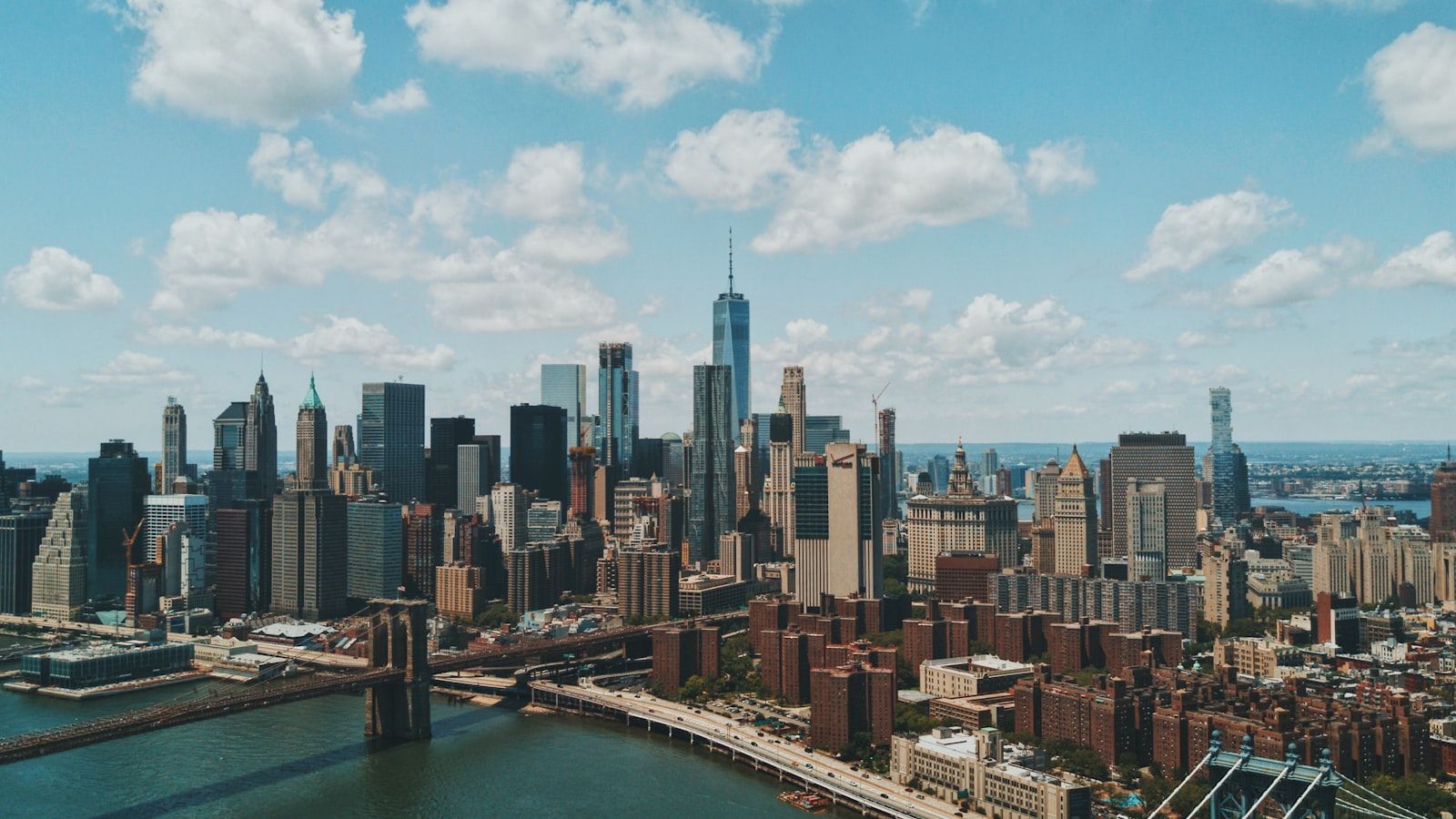
You walk out of the narrow brownstone streets — past a Greek Revival townhouse, past a garden hidden behind an iron gate — and suddenly the whole of Lower Manhattan appears before you. The Brooklyn Bridge hangs in the middle distance. New York Harbour stretches south to the horizon. It’s the kind of view that stops people mid-sentence.
This is the Brooklyn Heights Promenade. And most visitors to New York have never heard of it.
The Walk That Shouldn’t Exist
The Promenade wasn’t planned as a gift. It came out of a fight.
In the 1940s, Robert Moses — New York’s most powerful urban planner — intended to drive the Brooklyn-Queens Expressway directly through the heart of Brooklyn Heights. The community pushed back. The compromise that emerged was unusual: run the highway below, then cantilever a public walkway on top of it.
The Promenade opened in 1950. It runs three blocks along Columbia Heights, suspended above the traffic below. From here, the view stretches across New York Harbour to the Statue of Liberty, across the Brooklyn Bridge’s cables, and across the jagged line of Lower Manhattan.
Robert Moses rarely gave ground. This is one of the few times a community made him.
America’s First Historic District
In 1965, Brooklyn Heights became the first neighbourhood in New York City to be officially designated a historic district. That decision preserved something remarkable.
Walk along Willow Street or Pierrepont Street and you’ll find Greek Revival townhouses from the 1830s, Italianate brownstones from the 1860s, and Queen Anne rowhouses from the 1880s. More than 600 buildings are protected from demolition or significant alteration. The block layouts haven’t changed in 150 years.
For a deeper look at the history connecting Brooklyn Heights to Manhattan via the Brooklyn Bridge, the view from the Promenade puts everything in context — you can see exactly where the bridge lands from any window facing east.
Enjoying this? Join New York lovers getting stories like this every week. Subscribe free →
The Writers Who Came to Think
Brooklyn Heights has always drawn writers. Truman Capote wrote In Cold Blood at 70 Willow Street, working in the basement apartment of a friend. Thomas Wolfe, W.H. Auden, and Christopher Isherwood all lived in the neighbourhood at various points in their careers.
Arthur Miller spent years here. Norman Mailer lived on Columbia Heights for decades, with views across the harbour that he said made the city feel manageable for the first time.
There’s something in the quiet that suited them. Brooklyn Heights has no famous nightlife strip and no trending market. What it has is brownstones, gardens behind iron gates, and a promenade where the city lets you stop and breathe.
Walking Brooklyn Heights Today
The best way to experience Brooklyn Heights is without a plan. Start at Cadman Plaza Park in the north and walk south toward the water.
On Willow Street, look for number 70. On Pierrepont Street, look up at the rooflines. On Montague Street — the neighbourhood’s main commercial stretch — you’ll find coffee shops and restaurants that haven’t yet discovered they’re fashionable. For the wider picture of where to eat across Brooklyn and beyond, the New York food guide covers the borough’s best spots in detail.
End at the Promenade. Find a bench facing Manhattan. Stay long enough to watch the light change across the water.
What Brooklyn Heights Feels Like
The Heights is not a tourist neighbourhood in the usual sense. There are no souvenir shops. The restaurants don’t have lines. The brownstone blocks are residential in the old-fashioned way — people live in them.
What visitors often find, unexpectedly, is that Brooklyn Heights is exactly what they imagined New York would look like before they arrived. Quiet streets. Extraordinary buildings. History that doesn’t announce itself. And one of the great views on earth, three blocks wide, hovering above the highway that was never supposed to be there.
If Brooklyn Heights inspires you to explore more of the borough, Williamsburg’s transformation story is just a few neighborhoods away and offers a completely different chapter in Brooklyn’s history.
What is the best time to visit the Brooklyn Heights Promenade?
Early morning and late afternoon offer the most dramatic light. The Promenade faces west toward Lower Manhattan, making it especially beautiful at sunset when the skyline catches the last light of the day. Summer evenings bring residents out in numbers, but the walkway never becomes truly crowded.
How do I get to the Brooklyn Heights Promenade from Manhattan?
Take the 2, 3, 4, or 5 subway train to Borough Hall, or the A or C to High Street in Brooklyn. The Promenade is a 5–10 minute walk from either station. You can also walk across the Brooklyn Bridge on foot — the bridge deposits you near DUMBO, just below Brooklyn Heights.
Is the Brooklyn Heights Promenade free to visit?
Yes. The Promenade is completely free and open to the public at all hours, with no admission fee or ticketing. It is a public walkway maintained by the New York City Parks Department and open year-round.
What can you see from the Brooklyn Heights Promenade?
On a clear day, the view includes the full Lower Manhattan skyline, the Brooklyn Bridge, the Manhattan Bridge, the Statue of Liberty, Governors Island, and New York Harbor. It’s one of the most complete panoramic views of New York’s geography available from anywhere in the five boroughs.
You Might Also Enjoy
- The Secrets the Brooklyn Bridge Hides in Plain Sight — the engineering triumph and human story behind New York’s most iconic crossing
- How Williamsburg Accidentally Became the World’s Hippest Address — Brooklyn’s most dramatic neighbourhood transformation, just a few miles north
- Prospect Park: Brooklyn’s Living Room — Frederick Law Olmsted’s masterwork, just across the borough
Plan Your New York Trip
Brooklyn Heights is an easy half-day from Manhattan. Combine it with a walk across the Brooklyn Bridge and a visit to Brooklyn Bridge Park below for a full day in Brooklyn. The New York food guide has restaurant recommendations for the neighbourhood and across the borough.
Join 1,100+ New York Lovers
Every weekday morning, get New York’s hidden gems, neighbourhood stories, food origins, and city secrets — straight to your inbox.
Subscribe free — enter your email:
📲 Know someone who’d love this? Share on WhatsApp →
Love more? Join 65,000 Ireland lovers → · Join 43,000 Scotland lovers →
Free forever · Unsubscribe anytime
Frequently Asked Questions
Where exactly is the Brooklyn Heights Promenade?
The Promenade runs for three blocks along Columbia Heights, suspended above the Brooklyn-Queens Expressway. It opens up views of Lower Manhattan, the Brooklyn Bridge, and New York Harbour.
What's the history behind the Promenade?
The Promenade was born from a community compromise with urban planner Robert Moses in the 1940s—instead of running the expressway directly through the neighborhood, it was built underground with a public walkway cantileered on top, opening in 1950.
When did Brooklyn Heights become a historic district?
Brooklyn Heights was officially designated as the first historic neighborhood in New York City in 1965, which protected over 600 buildings from demolition or major alteration.
What buildings and streets should I explore in Brooklyn Heights?
Walk along Willow Street or Pierrepont Street to find Greek Revival townhouses from the 1830s, Italianate brownstones from the 1860s, and Queen Anne rowhouses from the 1880s—all still standing with their original block layouts intact.

Subscribe Free