
Every night, in every Broadway theatre across Midtown Manhattan, the same ritual plays out before the doors lock. A single metal stand is wheeled to centre stage. A bare bulb clicks on. Everyone goes home.
No stage manager questions it. No director asks why. The ghost light has watched over empty stages in New York for over a century, and the theatre world shows no sign of stopping.
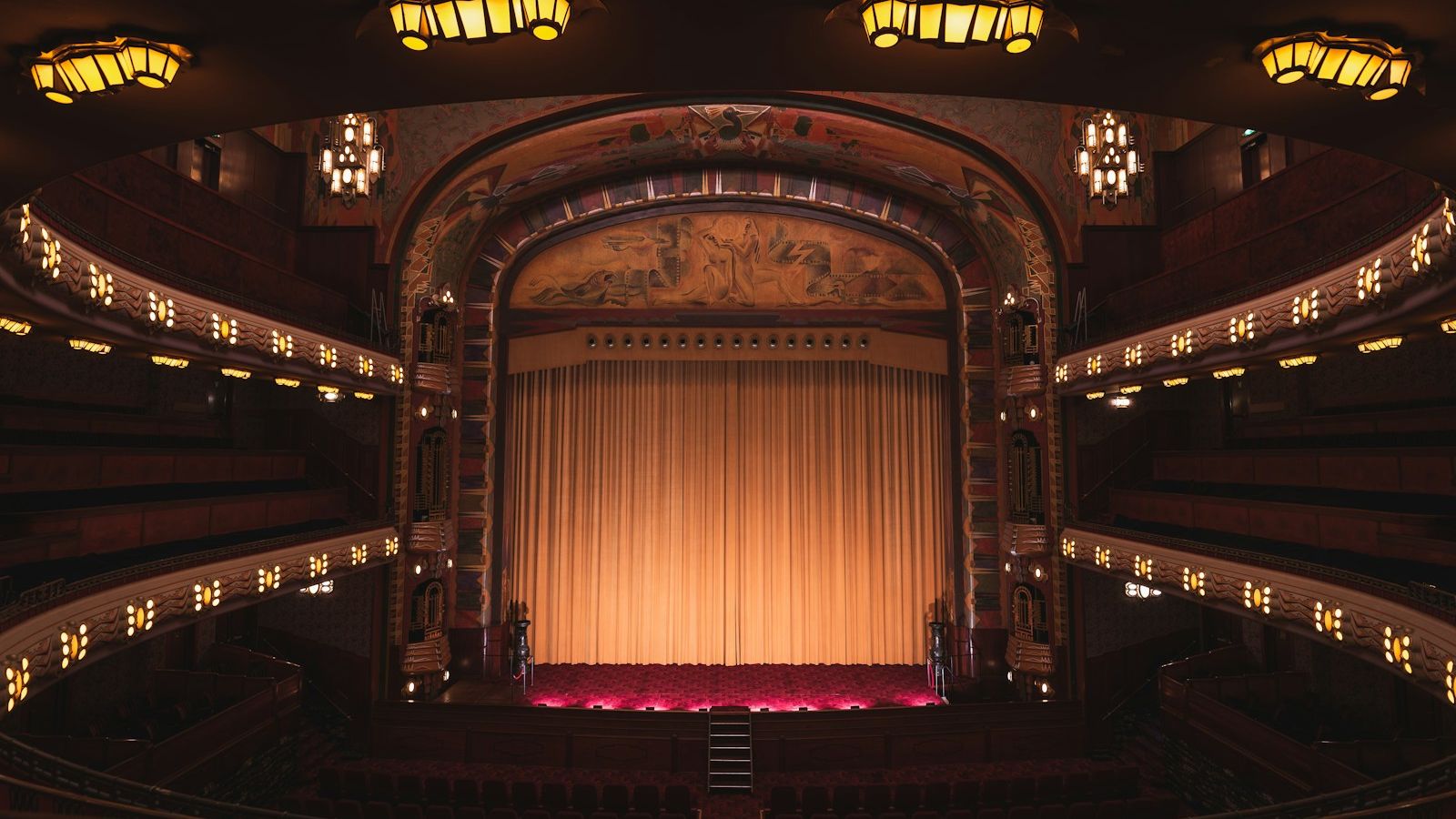
The Ghost Light No One Can Fully Explain
Every Broadway house — from the Gershwin Theatre on 51st Street to the St. James on 44th — leaves one burning through the night on every dark stage.
The official explanation is practical: the light keeps workers safe from falling into the orchestra pit in total darkness. But theatres are rarely practical about anything.
Old-time stagehands insisted that theatre buildings are never truly empty. The performers who spent their careers on those boards never entirely leave. The ghost light keeps them company — and keeps them from causing trouble.
Whether you believe in theatre spirits or not, the light stays on. That’s the rule, and no one is about to be the person who breaks it.
The One Word No Broadway Actor Will Say Out Loud
Say “Macbeth” inside any Broadway theatre and watch what happens. Experienced cast members will go still. Someone will wince. Nothing good follows.
Shakespeare’s Scottish play carries the most famous curse in the English-speaking world. For four centuries, actors have refused to say its name in a theatre, calling it only “the Scottish Play” instead.
The curse traces to the very first performance in 1606. The actor playing Lady Macbeth reportedly died before opening night. Accidents, injuries, and disasters followed productions of the play across two continents over the next four hundred years.
If you accidentally say the name in a theatre, there’s a specific ritual to break the curse. You must leave the building immediately, turn around three times, spit over your left shoulder, and knock before re-entering. Most serious Broadway actors do this without hesitation — or apology.
Never Wish an Actor Good Luck — And Never Ask Why
Before every performance at every theatre in Midtown, cast members say the same thing to each other: “Break a leg.”
They never say “good luck.” In the theatre world, wishing someone good luck is the fastest way to invite the opposite.
The phrase “break a leg” has several competing origin stories. One traces it to the leg lines — the curtains on either side of the stage that actors cross when they make an entrance. To “break the leg” meant to actually get on stage and perform. For every understudy who waited in the wings night after night and never got their chance, that crossing was everything.
The real origin is almost beside the point now. The phrase is automatic, universal, and the prohibition on “good luck” is absolute.
Enjoying this? Join New York lovers getting stories like this every week. Subscribe free →
The Whistling Rule (And Why It Started on Ships)
Of all Broadway’s backstage superstitions, the no-whistling rule has the most concrete origin — and most of the actors following it today have no idea what it is.
In the early days of New York theatre, the fly system — the ropes and pulleys that raise and lower scenery and backdrops — was operated by sailors. They were the only workers in the city who knew how to handle rope rigging at that scale.
Sailors communicated through whistled signals. A whistle backstage meant something was about to move. An accidental whistle in the wrong moment could send a hundred-pound piece of scenery crashing down onto an actor mid-scene.
The sailors are long gone. The ropes are now operated by motors. But no one whistles backstage on Broadway, and no one asks why.
How New York Became the Keeper of These Traditions
Broadway’s theatre culture didn’t emerge from nowhere. New York in the early 1900s was the convergence point for performance traditions from a dozen different countries.
The immigrant workers who built the Midtown theatre district brought superstitions from European stages that had been alive for centuries. The Yiddish theatre tradition on the Lower East Side — which drew enormous crowds before Broadway even dominated — had its own deep folklore about luck, spirits, and performance ritual.
New York absorbed all of it. The city’s theatre culture became a living archive of everything the performers who passed through it believed.
Today’s Broadway actors may have grown up in Los Angeles or London. But by the time they’re standing in the wings at a Midtown stage, they’re following rules that were already old when Times Square was still a neighbourhood called Longacre Square.
What is the ghost light in Broadway theatres?
A ghost light is a single bare bulb on a metal stand that is placed at centre stage in every Broadway theatre after each performance. It burns through the night as a safety measure and, by long tradition, as a way of keeping the spirits of former performers company in an otherwise empty house.
Why do Broadway actors say “break a leg” instead of good luck?
Saying “good luck” in a theatre is considered bad luck by actors worldwide. “Break a leg” is the traditional alternative — one origin traces it to the leg lines, the curtains on either side of the stage that actors cross when they make an entrance. To “break the leg” meant to actually make it onto the stage.
Why is it bad luck to say Macbeth in a New York theatre?
The play has been associated with accidents and misfortune since its first performance in 1606. Theatre tradition holds that saying the name aloud inside a theatre invites disaster. The ritual to break the curse involves leaving the building, turning three times, spitting, and knocking before re-entering.
What is the no-whistling rule backstage at Broadway?
Whistling backstage is considered bad luck in every theater. The rule traces to the era when fly systems — the machinery that raises and lowers scenery — were operated by sailors who communicated through whistled signals. An accidental whistle could have sent heavy scenery crashing onto the stage below. The sailors are long gone, but the rule remains.
None of these traditions are really about ghosts, or curses, or bad luck. They’re about the invisible thread that connects everyone who has ever stood on a New York stage — from the sailors who operated the ropes to the actors who sell out the Gershwin tonight.
The ghost light burns not because anyone is afraid of the dark. It burns because some buildings deserve not to be left entirely alone.
You Might Also Enjoy
- The Theatre Street That Made Millions of New Yorkers Laugh, Cry, and Argue in Yiddish
- Why Greenwich Village Has Been New York’s Most Rebellious Neighbourhood for 200 Years
- Why Times Square Had a Completely Different Name Until One Newspaper Changed Everything
Plan Your New York Trip
Getting ready to visit New York? Our 3-day New York City guide covers the best ways to experience the city — the theatre district, neighborhoods, food, and the stories behind it all.
Join 1,100+ New York Lovers
Every weekday morning, get New York’s hidden gems, neighbourhood stories, food origins, and city secrets — straight to your inbox.
Subscribe free — enter your email:
📲 Know someone who’d love this? Share on WhatsApp →
Love more? Join 65,000 Ireland lovers → · Join 43,000 Scotland lovers →
Free forever · Unsubscribe anytime

Subscribe Free