
The neighbourhood no longer exists on any map. But for hundreds of thousands of Irish families, Five Points was where their American story began.
In the 1840s and 1850s, this cramped triangle became the most crowded neighbourhood on Earth. Irish families fleeing famine crowded into its tenements. They built churches, raised children, buried the dead, and found community in chaos.
If you have Irish roots in New York, your family likely passed through Five Points.
If you love New York’s hidden stories, you’ll love our free weekly newsletter. Subscribe to Love New York →
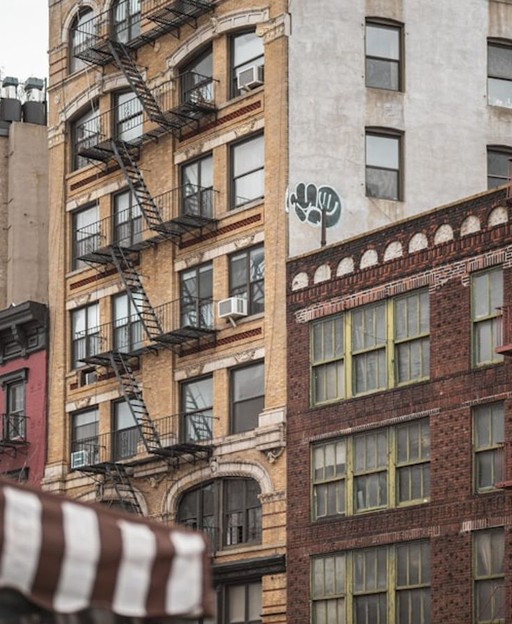
Where Was Five Points?
Five Points took its name from a junction of five streets in Lower Manhattan. The streets were Anthony, Cross, Orange, Little Water, and Mulberry. They met in a rough five-pointed shape.
Today, the area falls around Foley Square and Columbus Park. The Civic Center and the Manhattan courts now stand where thousands of Irish families once lived. Nothing of the original street plan survives.
Why the Irish Came
The Irish had been arriving in New York since the early 1800s. But everything changed with the Great Famine.
From 1845 to 1852, potato blight destroyed Ireland’s staple crop. Around one million people died of starvation and disease. Another million emigrated. Ships sailed from Cork, Liverpool, and Queenstown, packed with desperate families.
They arrived in New York with almost nothing. Many had paid their last pennies for passage. Some were too weak to walk off the boat unaided.
Five Points was where many of them ended up. Rents were low. Other Irish people were already there. The neighbourhood felt familiar, even in its misery.
By 1850, the Irish made up nearly a third of New York City’s entire population. Tyler Anbinder found that Five Points had more Irish-born residents per acre than any other place in the city.
Life in the Tenements
Five Points was brutal by any standard. Families of six or eight people shared single rooms. Windows were rare. Fresh air was rarer still.
The most notorious building was the Old Brewery. This old brewery had become a tenement. It held hundreds of people at a time. Some rooms had not seen daylight in years. Cholera, typhus, and tuberculosis swept through regularly.
And yet, community held on.
Irish families shared food when they had it. Churches opened their doors. Women ran informal credit networks, lending coins and flour to neighbours who had nothing.
Children played in Paradise Square, the small open space at the heart of the neighbourhood. On hot nights, the whole community seemed to spill out into it.
Jacob Riis photographed Five Points and published How the Other Half Lives in 1890. His photos shocked New York. But they also preserved a world that would otherwise have vanished entirely.
The experience was not unlike what the Irish found in other cities. By 1900, many descendants of these Famine arrivals had begun to move up. Read more about life in 1900 New York.
The Church at the Heart of It All
For the Irish of Five Points, the Catholic Church was everything.
St. Patrick’s Old Cathedral on Mulberry Street was built in 1815. It became the spiritual centre of the Irish Catholic community in lower Manhattan. This is not the famous Fifth Avenue cathedral — that came much later. The Mulberry Street church came first.
During the worst Famine years, the church was overwhelmed. Priests gave last rites to the dying. The cathedral’s old graveyard received the bodies of those who did not survive their first New York winter.
Today, St. Patrick’s Old Cathedral is a minor basilica. It still stands at 263 Mulberry Street. You can still attend Mass there. Walking through its doors, you enter the same space where Famine survivors once prayed. They prayed for families left behind in Ireland.
It is one of the most moving heritage sites in the city.
The Gangs of Five Points
Five Points was not a peaceful place. Poverty and overcrowding bred violence.
Irish gang culture grew out of this environment. The Dead Rabbits were the most famous Irish gang in the neighbourhood. They fought for territory and jobs. They fought for standing in a city that barely noticed them.
Their rivals included the Bowery Boys and various anti-immigrant gangs who openly despised the Irish newcomers. Hostility to Catholics and Irish people was fierce in New York at this time.
The gangs were, in part, a response to exclusion. The Irish were blocked from many trades and jobs. Signs reading “No Irish Need Apply” appeared across the city. The gangs offered belonging, however brutal.
Charles Dickens visited Five Points in 1842. He wrote in American Notes of “hideous tenements” and “poverty, wretchedness, and vice.” He saw the suffering. He missed the resilience.
The End of Five Points
By the 1880s, city reformers had decided Five Points needed to go.
Jacob Riis and others campaigned for its demolition. In the 1890s, the worst tenements were cleared. Columbus Park was built in their place, designed by the landscape architect Calvert Vaux.
Mulberry Bend was one of the most dangerous streets. It became a tree-lined garden. It was progress, of a kind. But it erased almost all physical evidence of Irish life here.
The Irish who had lived there scattered outwards. Many moved to the South Bronx. There, the same pattern played out again. Read about the South Bronx’s immigrant story.
Five Points disappeared. But its influence on Irish-American culture did not.
Want more stories like this? Our weekly newsletter goes deeper into New York’s heritage every week. It’s free. Subscribe here →
Famous Names Shaped by Five Points
The neighbourhood shaped an extraordinary generation of Irish-Americans.
Alfred E. Smith grew up near Five Points in the 1880s. He became the first Irish-American nominee for President. He went on to champion labour laws and social welfare in New York State. His rise from tenement poverty to national politics was the Five Points story in miniature.
Boss Tweed — William Marcy Tweed — also rose from this world. Corrupt and politically powerful, he directed city resources towards the Irish poor in ways that built lasting loyalty. He was eventually jailed, but his machine shaped New York City politics for decades.
The Five Points pattern repeated itself across generations. It was not just a slum. It was a crucible.
What Survives Today
You cannot walk the original streets of Five Points. They were renamed and rerouted long ago.
But you can stand in Columbus Park. It was built on the site of Mulberry Bend. Standing there, you begin to understand what once existed. The park is now a Chinese-American gathering space. Every immigrant wave has left its mark on this corner of Manhattan.
St. Patrick’s Old Cathedral at 263 Mulberry Street is the most significant surviving connection to the Irish Catholic Five Points. The building is largely unchanged from the early 19th century. Guided history tours run regularly. The old graveyard is open to visitors.
The Tenement Museum is at 97 Orchard Street. It is a short walk from here. It brings immigrant tenement life back to life. Guided tours show you preserved apartments from the 1860s to the 1930s. The buildings are in the Lower East Side, not Five Points. But the stories are the same. See our Lower East Side guide for more.
The Municipal Archives hold Five Points records. These include birth, death, and census documents. Your family may be there.
How to Trace Your Ancestors from Five Points
These resources can help if your family lived in Five Points.
The Ellis Island Foundation database at libertyellisfoundation.org holds passenger records from the late 1800s onwards. For arrivals before 1870, check the Castle Garden records, which predate Ellis Island by several decades.
The New York City Municipal Archives hold vital records from 1847 onwards. Births, marriages, and deaths were all documented, even in the worst tenements.
The Milstein Division of the New York Public Library holds old maps and newspaper archives. These can help you find a specific tenement address.
The Tenement Museum research service can help you find specific buildings in the area.
Frequently Asked Questions
Where exactly was Five Points located in Manhattan?
Five Points was in what is now the Civic Center area of Lower Manhattan. Today, Foley Square and Columbus Park sit on the same ground. The five streets — Anthony, Cross, Orange, Little Water, and Mulberry — were renamed long ago. Some no longer exist at all.
When did Irish immigrants arrive in Five Points?
Irish immigration to Five Points accelerated sharply during and after the Great Famine of 1845–1852. By 1850, the Irish made up nearly a third of New York City’s population. Many settled first in lower Manhattan.
Can you still visit Five Points today?
The original neighbourhood was demolished in the 1890s. Columbus Park now stands on part of the original site. St. Patrick’s Old Cathedral at 263 Mulberry Street dates from 1815. It is the most direct surviving link to Irish Five Points. It is open to visitors.
What is the best way to research Irish ancestors from Five Points?
Start with the Ellis Island Foundation database for post-1870 arrivals. Use Castle Garden records for earlier ones. The Municipal Archives hold vital records from 1847. The Milstein Division of the New York Public Library has old maps and neighbourhood records.
Ready to explore the New York your ancestors knew? Subscribe to Love New York — free weekly stories, heritage guides, and hidden history. Join us →
