
When Frederick Law Olmsted finished Central Park, everyone called it a masterpiece. He called it a dress rehearsal.
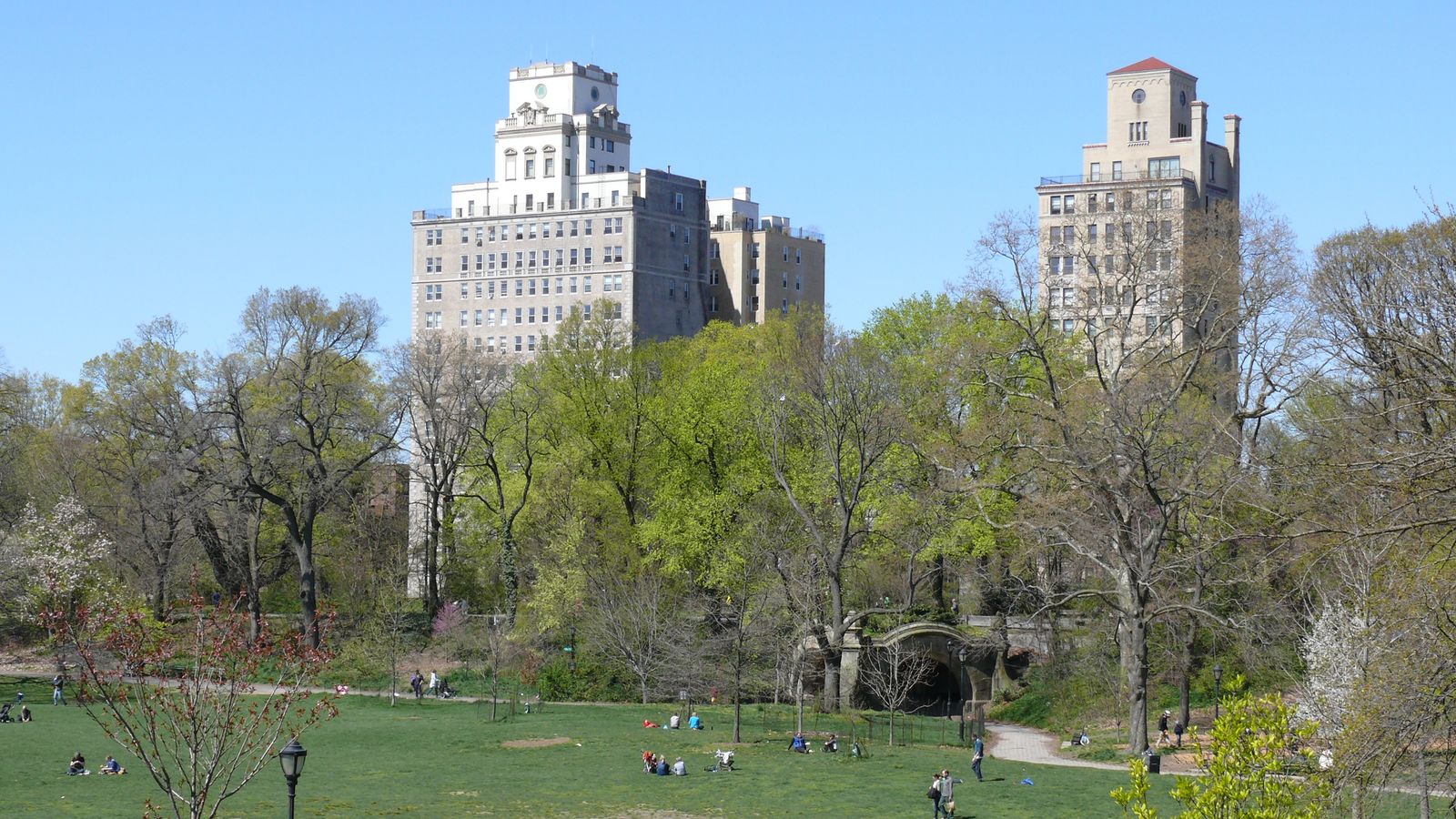
The park that Olmsted considered his greatest achievement isn’t in Manhattan. It’s in Brooklyn. And millions of New Yorkers walk past it every year without fully understanding what they’re looking at.
The Park Its Own Architect Called Greater
Olmsted and his partner Calvert Vaux designed Central Park in the 1850s. They spent years navigating politics, accommodating roads, and working around terrain and infrastructure that were already there.
When Brooklyn hired them for a second park in 1865, they got something rare: a nearly blank canvas.
No competing roads to route around. No pre-existing structures to preserve. Just 585 acres of open land on the edge of what was then a separate city from Manhattan.
Olmsted later wrote that Prospect Park gave him the freedom to do what Central Park had only approached. The Long Meadow, he said, was the finest thing he had ever built. Coming from the man who shaped America’s idea of a city park, that’s not a small claim.
The Longest Meadow in Any Urban Park in America
Enter Prospect Park from the north, near Grand Army Plaza, and you’ll find yourself standing on a sweep of green that seems to have no end.
That’s not an accident. The Long Meadow stretches for nearly three-quarters of a mile. At sixty acres, it’s the longest meadow in any urban park in the United States.
Olmsted designed it with a precise optical illusion in mind. The tree lines on either side are angled inward so that the meadow appears to extend endlessly into the distance. You stop seeing Brooklyn. You stop hearing it.
He was convinced that this kind of visual escape wasn’t just pleasant — it was necessary. He believed that city dwellers needed spaces where their minds could rest completely from the stimulation of urban life. The Long Meadow was his most complete answer to that idea.
The Only Forest Left in Brooklyn
Enjoying this? Join New York lovers getting stories like this every week. Subscribe free →
Most visitors walk the meadow, circle the lake, and leave. Few ever find the Ravine.
Tucked into the northern section of the park, the Ravine is the only remaining natural forest in Brooklyn. Not a landscaped grove or a planted woodland — an actual old-growth-style forest, with a stream running through it, a canopy thick enough to block the sky, and soil that has never been built upon.
In spring and fall, birders come from across the city to stand quietly in the Ravine as migrating songbirds pass through. The forest sits on one of the few natural elevated ridges in Brooklyn, which funnels birds through like a corridor. On a good morning in May, you might hear thirty species in under an hour.
Finding the Ravine requires leaving the main path. There are no signs pointing the way. That’s partly why it stays quiet.
The Hidden Corners That Reward the Curious
Most visitors never find the Vale of Cashmere — a sunken garden near the park’s northeast corner, a shallow bowl surrounded by shrubs with a small ornamental pond at its center. It was designed as a quiet retreat within the retreat. For years it fell into neglect. Today it’s been carefully restored, and it’s almost always empty.
Near the park’s northern edge, a rocky outcrop called the Battle Pass marks the site where American forces held off British troops for two crucial hours during the Battle of Brooklyn in 1776. That delay gave Washington’s army time to escape across the East River. The rock is still there. Most people jog past it without slowing down.
The Camperdown Elm, planted in 1872, stands near the Boathouse and looks like a tree that’s been turned inside out. The branches corkscrew downward in wild loops, reaching toward the ground. It’s over 150 years old. The Brooklyn poet Marianne Moore wrote an entire poem campaigning to save it from decay. It survived. It’s still growing.
If you’re spending a day exploring Brooklyn, Prospect Park belongs at the center of it — not as an afterthought on the way to somewhere else.
What Olmsted Got Right Here That He Couldn’t Do Elsewhere
Central Park is a great park. But it’s also bisected by transverse roads, built on terrain that was partly already developed, and shaped by political compromises at every turn.
Prospect Park flows. The Long Meadow leads naturally into the Ravine. The Ravine descends toward the lake. The lake curves back toward the meadow. You can walk for hours and feel like you’re following a single, continuous landscape rather than moving between sections.
Olmsted called this “sylvan scenery” — a designed imitation of nature so complete that you stop thinking of it as designed at all. The borough around it has changed dramatically since 1867. The park has not.
He got it right here. He knew it. And if you walk through Prospect Park slowly enough, you’ll understand exactly what he meant.
Prospect Park is Brooklyn’s least-visited great thing. Not because it’s hard to find — it sits just one subway stop from the park that gets all the attention — but because nobody told you to go looking.
Now you know where to look.
You Might Also Enjoy
- The Brooklyn Brownstone Was Almost Bulldozed. Then New Yorkers Started Fighting Back.
- Brooklyn in 48 Hours: An Insider’s Guide
- Free Things to Do in NYC: The Best No-Cost Experiences in New York City
Plan Your New York Trip
Free Things to Do in NYC — Prospect Park is completely free to enter, every day of the year. Our full guide covers the best no-cost experiences across all five boroughs.
Join New York Lovers
Every weekday morning, get New York’s hidden gems, neighbourhood stories, food origins, and city secrets — straight to your inbox.
Subscribe free — enter your email:
Love more? Join 65,000 Ireland lovers → · Join 43,000 Scotland lovers →
Free forever · Unsubscribe anytime
