
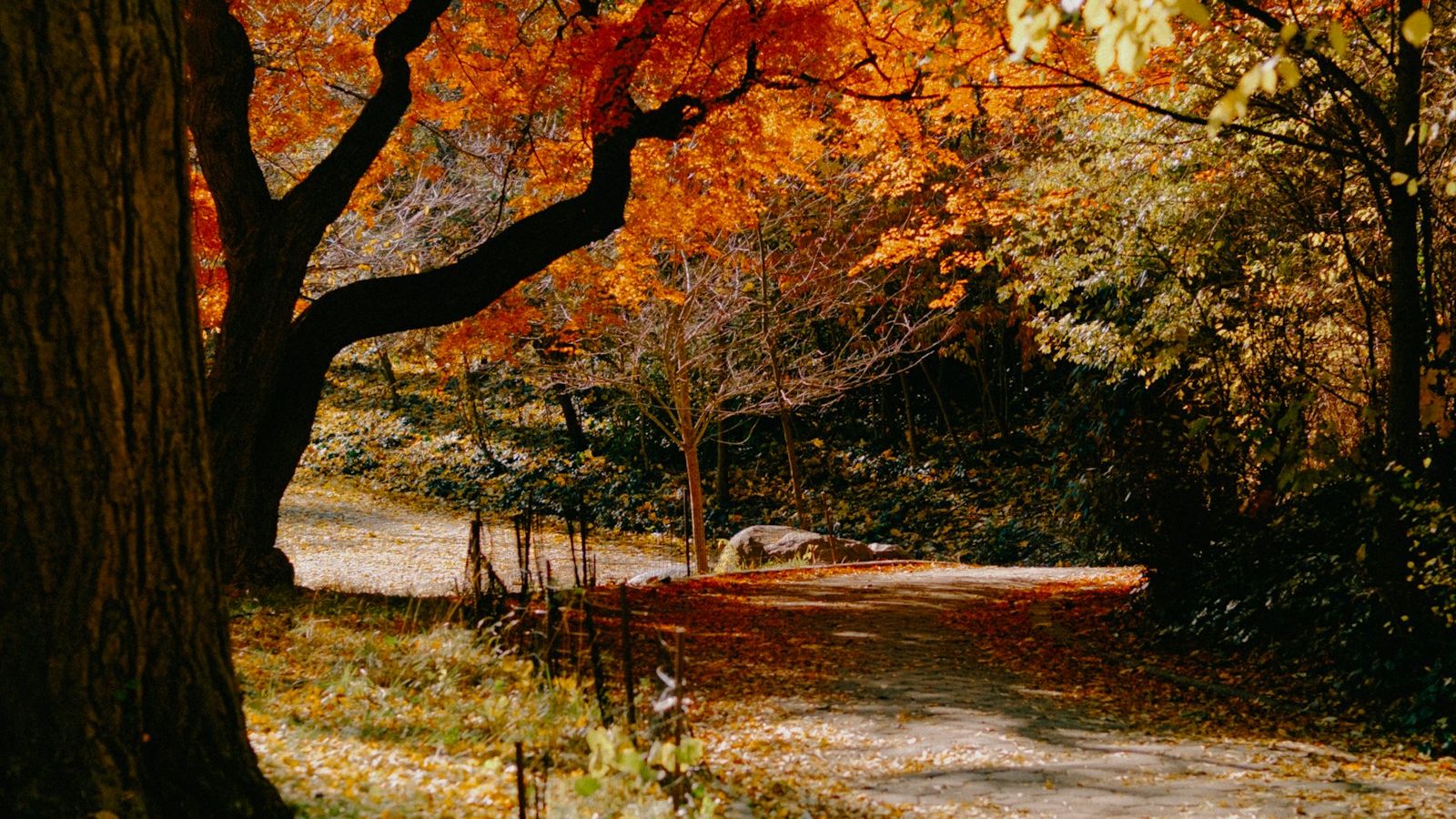
There’s a park in Brooklyn that Frederick Law Olmsted — the man who designed Central Park — said gave him more creative freedom than any project he had worked on. A place with a real forest, a 19th-century boathouse, and a hidden waterway most New Yorkers have never walked beside.
That park is Prospect Park. And for over 150 years, Brooklyn has kept it almost entirely to itself.
The Man Who Built Central Park — and Then Did Better
Frederick Law Olmsted and Calvert Vaux designed Central Park in the 1850s and 1860s. The moment they finished, they were already working on something else.
Brooklyn hired the same pair to design a park of their own. Olmsted later wrote that Prospect Park gave him freedom Central Park never could. Manhattan’s street grid had hemmed him in on all sides. In Brooklyn, he could shape the terrain almost from scratch.
The result was 585 acres of open meadow, dense woodland, and still water — built to feel like the countryside had been lifted whole and set down in the middle of the city.
The Only Forest Left in Brooklyn
The Ravine sits in the northeastern section of the park, and it feels like a different world the moment you descend into it.
This is the only remaining natural forest in all of Brooklyn. Not a managed woodland or a planted grove — an actual forest, with a stream running through it, dense canopy overhead, and a trail that winds through the trees for nearly a mile.
On a quiet weekday morning, you can walk the Ravine trail and hear nothing but water and birds. The city disappears completely. It’s the kind of place that makes you wonder how it survived at all.
The Prospect Park Audubon Center, based in the historic Boathouse, runs free guided walks through the Ravine on weekends throughout the warmer months.
The Lullwater and the 1905 Boathouse
Few spots in any New York park match the Lullwater for quiet beauty. This narrow channel runs between Prospect Lake and the Boathouse, lined on both sides by overhanging trees that meet overhead in summer.
It was built as a peaceful boating route — a place to drift slowly, away from the crowds at the main lake. Pedal boats are still available for rent during summer months, and the pace of the Lullwater encourages exactly the kind of unhurried afternoon that feels impossible to find in New York.
The Boathouse itself was built in 1905 in the Beaux-Arts style. It came close to demolition in the 1960s before the community stepped in. It now serves as home to the Audubon Center, running free programs on the park’s wildlife and ecology throughout the year.
Enjoying this? Join New York lovers getting stories like this every week. Subscribe free →
A Carousel Running Since 1912
Near the Willink entrance on Flatbush Avenue, there’s a carousel that has been in motion for more than a century.
The Carousel at Prospect Park was built in 1912 and features 51 hand-carved wooden animals. It runs on weekends and school holidays and costs just a couple of dollars to ride — making it one of the most joyful small surprises the park hides in plain sight.
It’s easy to walk past if you don’t know it’s there. That’s true of much of Prospect Park.
The Long Meadow — Longer Than You Expect
At 90 acres, the Long Meadow is the largest meadow in any urban park in the United States. It stretches from the main entrance near Grand Army Plaza through the heart of the park — over a mile of open grass, broad sky, and unbroken horizon.
In summer, it fills with picnickers, dog walkers, and groups taking advantage of the open space. In winter, when fog settles low over the grass and the park empties out, it can feel genuinely remote — less Brooklyn, more somewhere borrowed from the English countryside.
Olmsted designed the Long Meadow to give city residents the feeling of open space they’d never otherwise find in New York. Over 150 years later, it still delivers.
How to Build a Perfect Brooklyn Day Around Prospect Park
The park sits at the center of some of Brooklyn’s most walkable neighborhoods. Park Slope borders it to the west, Prospect Heights to the north, Crown Heights and Flatbush to the south and east.
A morning walk through the Ravine, then along the Lullwater to the Boathouse, followed by lunch in Park Slope and an afternoon exploring Williamsburg’s creative history — that’s a full Brooklyn day that most visitors never think to build.
Many of the park’s best experiences cost nothing. If you’re watching your budget, our guide to free things to do in NYC has everything you need to plan a rich trip without spending heavily.
What is the best time to visit Prospect Park in New York?
Spring (April to June) and fall (September to November) offer the best conditions — mild temperatures, strong foliage color, and manageable crowds. Summer weekends can get busy on the Long Meadow, but the Ravine stays quiet year-round and is worth visiting in any season.
Is Prospect Park free to visit?
Yes — entry to the park is completely free, and many Audubon Center programs on weekends are also free. The Carousel charges a small fee to ride, and pedal boat rentals have seasonal pricing, but the park’s best experiences cost nothing at all.
How do I get to Prospect Park from Manhattan?
Take the 2 or 3 subway train to Grand Army Plaza, or the B or Q train to Prospect Park station on the south side. The journey from Midtown Manhattan takes around 30 to 40 minutes. The Grand Army Plaza entrance puts you directly at the top of the Long Meadow.
What is the Ravine in Prospect Park, and is it worth visiting?
The Ravine is a densely wooded valley in the park’s northeastern section — the only remaining natural forest in Brooklyn. A stream runs through it and a trail winds along the water for close to a mile. It’s the park’s most genuinely wild corner and one of the most unexpected places in New York City.
Prospect Park rewards slow walking and unhurried afternoons. Go without a fixed plan, follow the sound of water into the Ravine, and you will find something worth returning for.
You Might Also Enjoy
- The Brooklyn Neighborhood That Artists Built — and Then Could No Longer Afford
- Why the First Person to Cross the Brooklyn Bridge Was Carrying a Rooster
- Free Things to Do in NYC: The Complete Guide
Plan Your New York Trip
New to New York and not sure where to start? Our 3-day New York City itinerary gives you a complete framework — from first morning to final evening — for experiencing the city without the overwhelm.
Join 1,100+ New York Lovers
Every weekday morning, get New York’s hidden gems, neighbourhood stories, food origins, and city secrets — straight to your inbox.
Subscribe free — enter your email:
📲 Know someone who’d love this? Share on WhatsApp →
Love more? Join 65,000 Ireland lovers → · Join 43,000 Scotland lovers →
Free forever · Unsubscribe anytime

Subscribe Free