
Most people who walk past the New York Public Library on Fifth Avenue never go inside. They see the stone lions, take a photo, and keep moving. That’s a mistake. Behind those marble columns is one of the strangest and most extraordinary buildings in New York — full of rooms the tourist maps don’t show and stories that most visitors never hear.
The Reservoir That Became a Library
The site at Fifth Avenue and 42nd Street was not always home to a library. From 1842 until 1900, it held the Croton Reservoir — a massive fortified structure that stored the city’s drinking water. When the city decided to demolish the reservoir, two private collectors named John Jacob Astor and James Lenox donated their personal libraries to the public.
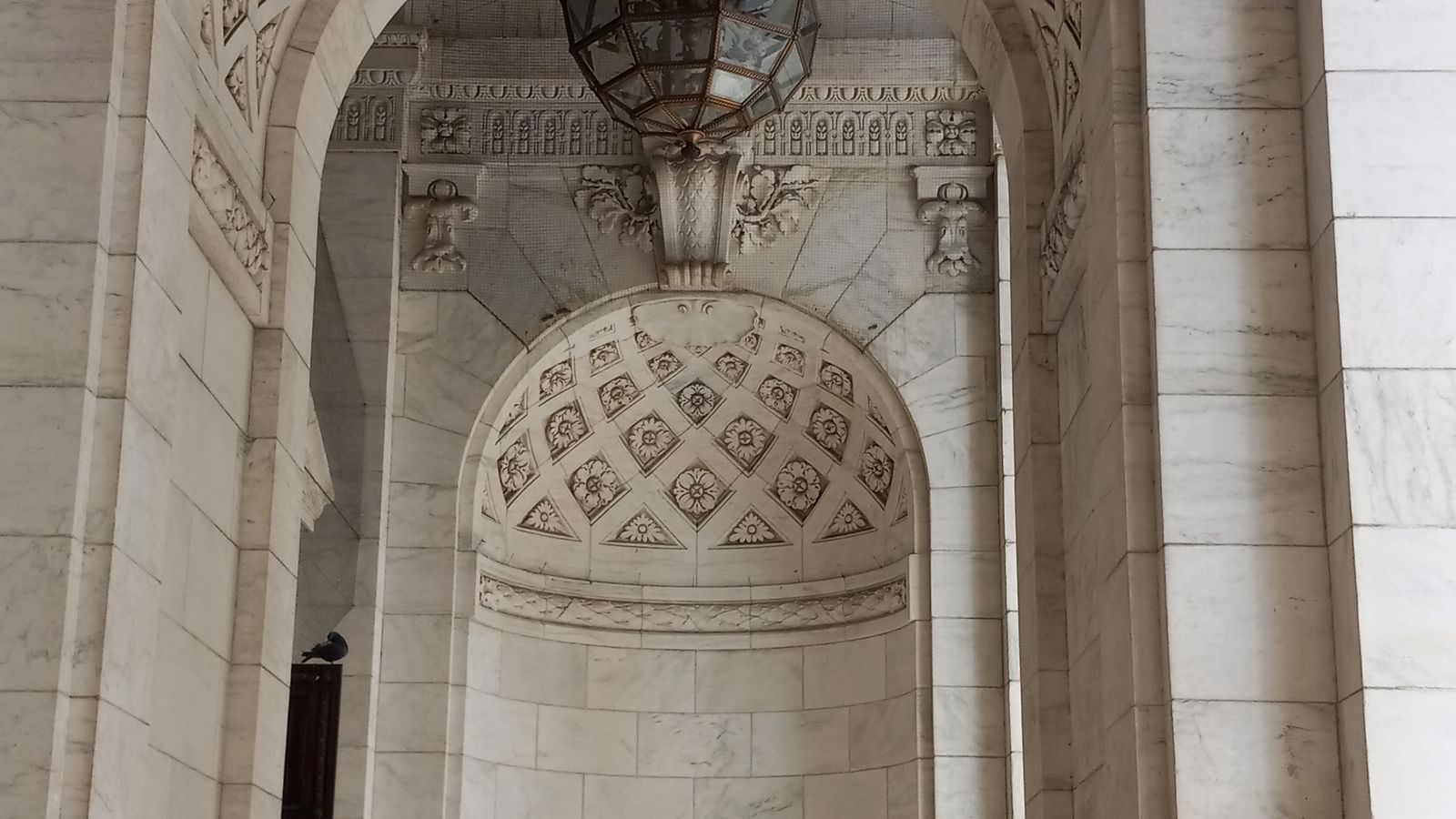
Combined with a bequest from former Governor Samuel Tilden, the city suddenly had both a site and a collection. Construction began in 1897. It took more than 500 workers fourteen years to complete the building. The marble came from the same Tennessee quarry that would later supply stone for the Lincoln Memorial.
The Lions With a Secret History
The two lions flanking the entrance have guarded Fifth Avenue since the building opened in 1911. For years they had no official names. Locals called them “Leo Astor” and “Leo Lenox” after the library’s founding donors — a private joke between New Yorkers who knew the story.
Then came the Great Depression. Mayor Fiorello La Guardia, looking for ways to lift the city’s spirits, gave the lions their official names: Patience and Fortitude. Those were the qualities, he said, that New Yorkers would need to survive the Depression.
The names stuck. Today, the lions are dressed in seasonal decorations for holidays — wreaths at Christmas, baseball caps during major city celebrations. They have become one of the most recognised symbols in New York, and most people who photograph them have no idea how they got their names.
The Reading Room That Stops Visitors Cold
Most people who do enter the library go straight to the third floor. That is where the Rose Main Reading Room is.
The room is 297 feet long — almost the length of a full city block. It stands 51 feet high, with original ceiling murals painted in 1911 that still look as vivid as the day they were applied. Two chandeliers, each weighing several tons, hang from the painted sky above long wooden tables lined with old brass reading lamps.
On a quiet weekday morning, this is one of the most beautiful rooms in New York. Entry is completely free. You can sit down, open a book, and stay as long as you like — which is more than you can say for almost any other landmark in the city.
Enjoying this? Join New York lovers getting stories like this every week. Subscribe free →
The Underground City Beneath Bryant Park
What most visitors never discover is that the library extends seven stories underground. Beneath the adjacent Bryant Park, miles of shelving hold over three million books, manuscripts, and documents.
A system of conveyors and pneumatic tubes delivers books from the stacks to the reading rooms above. Researchers submit a request slip, wait about forty minutes, and their requested volume arrives at the desk. The temperature and humidity in the stacks are kept constant year-round — a climate designed not for people, but for paper.
The underground stacks are not open to the public. But knowing they exist changes the way you feel standing in the Rose Room. Somewhere below your feet, three million voices are waiting to be heard.
The Collections That Rarely Get Mentioned
The Berg Collection on the third floor holds original manuscripts by Charles Dickens, Virginia Woolf, and Lord Byron. Not copies. Not reproductions. The actual handwritten pages, available for qualified researchers to examine in person.
The Map Division houses more than 430,000 maps, some dating to the 1500s. You can view early charts of New York Harbour made before the grid system existed — the island when it was still mostly farmland and forest.
Less known is the restaurant menu archive. The library holds over 45,000 menus from New York City restaurants dating back to 1843. A 19th-century dinner at Delmonico’s. A lunch menu from a Times Square chophouse in 1922. An unbroken record of what this city ate for nearly two hundred years.
What Most People Miss When They Visit
The building is open to the public, and entry is free. No ticket is required. But a few things are worth knowing before you go.
The Rose Main Reading Room is a research space, not a tourist exhibit. You can sit at any open seat, spread out your things, and read for as long as you want. Treat it as a reader would, and it becomes yours.
The reference librarians at the information desks help anyone — not just academic researchers. They know the collections better than anyone, and they are there to answer questions. If you have ever wanted to know something obscure about New York’s past, this is the place to start.
The gift shop near the entrance sells small ceramic lions. Patience and Fortitude in miniature. If you want something to take home that actually means something in this city, they fit in a carry-on.
Frequently Asked Questions
Is the New York Public Library free to visit?
Yes. The main branch on Fifth Avenue and 42nd Street is free to enter and free to use. No ticket or reservation is required. The building is open Monday through Saturday, with hours that vary by day — check the library’s website before your visit.
What is the best time to visit the New York Public Library?
Weekday mornings are the quietest. The Rose Main Reading Room is most peaceful before noon, when tour groups and school visits are fewer. If you want the reading room mostly to yourself, Tuesday or Wednesday morning is ideal.
Can you borrow books from the main New York Public Library branch?
The Fifth Avenue branch is a research-only library — books cannot be checked out. For borrowing, any of the 88 branch libraries across the five boroughs offers standard lending. A library card is free for New York State residents and available the same day.
Where are the famous New York Public Library lion statues?
Patience and Fortitude flank the main entrance steps on Fifth Avenue, between 40th and 42nd Streets. They have stood guard since the building opened in 1911. The names were given by Mayor La Guardia during the 1930s and have never changed.
You Might Also Enjoy
- The Hidden Secrets of Grand Central Terminal Most Commuters Never Notice
- The Rockefeller Centre Stories That Go Far Deeper Than the Ice Rink
- Free Things To Do in NYC: The Complete Guide for Visitors
Plan Your New York Trip
Ready to explore? Our New York City travel tips guide covers everything from getting around the subway to the best neighborhoods to base yourself in — a practical starting point for any visit.
Join 1,100+ New York Lovers
Every weekday morning, get New York’s hidden gems, neighbourhood stories, food origins, and city secrets — straight to your inbox.
Subscribe free — enter your email:
📲 Know someone who’d love this? Share on WhatsApp →
Love more? Join 65,000 Ireland lovers → · Join 43,000 Scotland lovers →
Free forever · · Unsubscribe anytime

Subscribe Free