
The High Line is one of New York’s most unusual green spaces. It runs for 1.45 miles above the streets of Manhattan’s West Side, built on a disused elevated freight railway that once carried meat and dairy to the warehouses below. Today it is a public park, free to enter and open every day of the year, drawing millions of visitors from around the world.
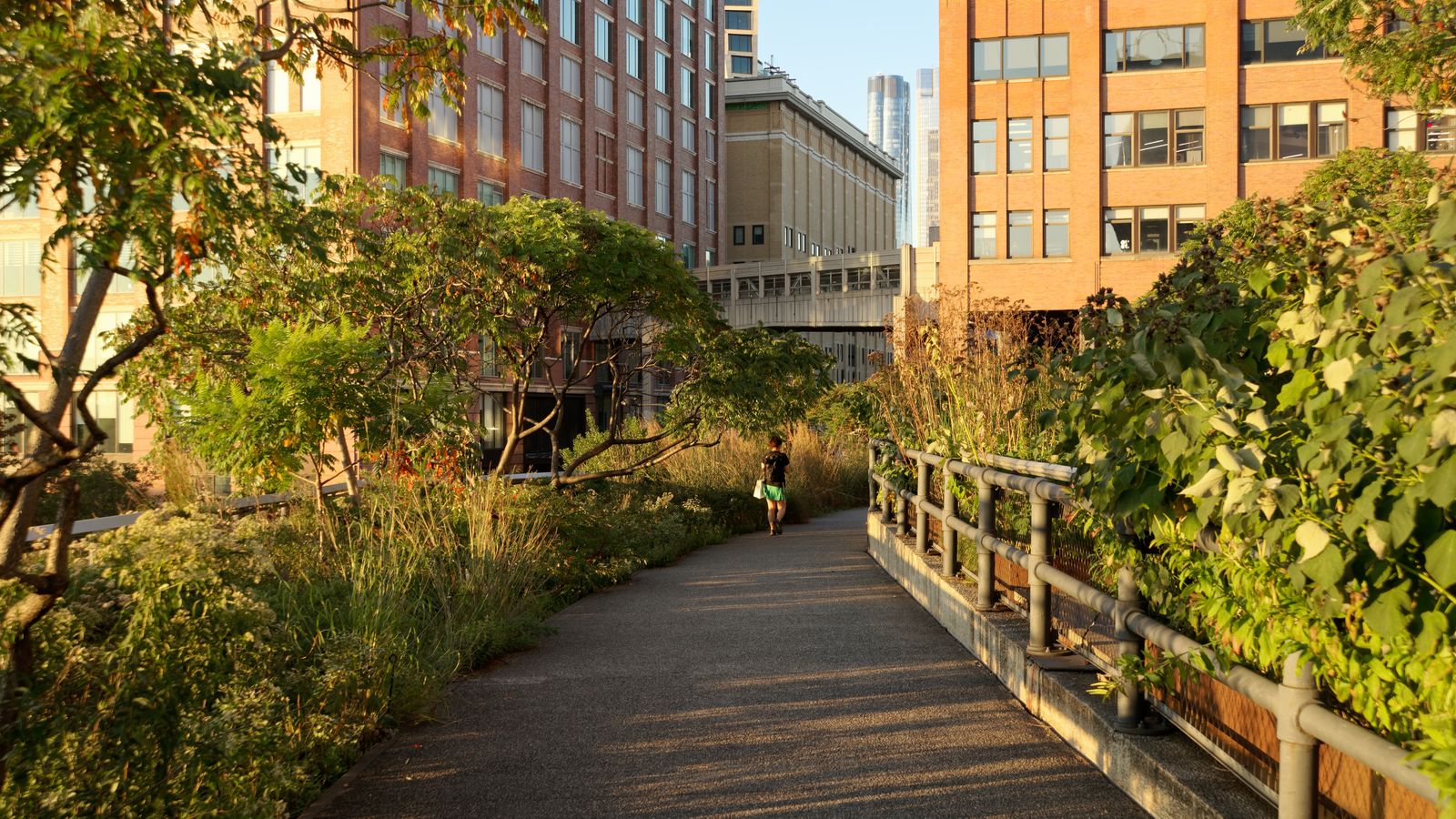
Walking it takes about an hour at a relaxed pace. But most people slow down more than they expect — stopping at viewpoints, sitting on benches with views of the Hudson River, watching the city move below their feet. There is nowhere else quite like it in New York.
From Freight Railway to Urban Park
Engineers raised the elevated railway that became the High Line during the 1930s. They named it the West Side Elevated Line and planned it to lift freight trains off street level, where accidents between lorries and trains had become a serious problem. At its peak, it carried meat, milk, and other goods directly into the upper storeys of factories and warehouses along Tenth and Eleventh Avenues.
The last train ran in 1980. After that, the structure sat unused and slowly fell apart, while wild plants colonised the tracks. By the 1990s, many property owners in the area wanted it demolished. The land underneath was becoming valuable as the neighbourhood changed.
In 1999, two local residents named Joshua David and Robert Hammond founded a group called Friends of the High Line. They argued that the city should preserve the structure and turn it into a public park. Years of campaigning, fundraising, and planning followed. The first section finally opened in 2009, the second section followed in 2011, and the third and final section arrived in 2014. Today the route ranks among the finest of New York’s self-guided walking tours.
Love New York?
Get our weekly guide to the city — stories, tips, and hidden corners straight to your inbox.
What to Expect When You Walk It
The High Line runs from Gansevoort Street in the Meatpacking District to 34th Street near Hudson Yards. There are multiple access points along the route, each with stairs. Several points also have lifts, making the park accessible for visitors with pushchairs or mobility needs.
The surface underfoot is mostly flat, with a mix of paving stones, timber decking, and sections where the original railway tracks still show beneath your feet. Planting on either side changes with the seasons — grasses and wildflowers in summer, seedheads and bare stems in winter, each with its own character.
Your view shifts constantly as you walk. At the southern end, you look out over the Meatpacking District and the Hudson River. In the middle sections, Chelsea stretches to the east, with art galleries and converted warehouses visible below. At the northern end, the vast glass towers of Hudson Yards rise on either side. It is a walk through several different versions of New York at once.
The Three Sections Explained
Each section of the High Line has a slightly different feel, and it is worth knowing what to expect from each.
Section 1 (Gansevoort Street to 20th Street) is the most polished part of the park. The landscaping here is lush and well-established, with mature plantings by Dutch garden designer Piet Oudolf. There are seating areas, sun loungers on rails that slide out over the street, and a water feature at 14th Street where children cool off in summer. The views towards the Hudson River reach their peak here.
Section 2 (20th Street to 30th Street) passes through Chelsea, which has one of the highest concentrations of contemporary art galleries in the world. From the High Line, you can look down into the Chelsea Market building and across towards the brick warehouse blocks that define the neighbourhood. This section includes the Chelsea Thicket — a more densely planted area that feels slightly wilder than the rest.
Section 3 (30th Street to 34th Street) opened last and takes you into the newer part of the park. The Rail Yards section here has a raw, industrial quality. You walk alongside exposed sections of the original railway structure, and the towers of Hudson Yards — the largest private real estate development in American history — rise directly in front of you. It is a striking contrast between old infrastructure and new construction.
Never Miss a New York Story
Our weekly newsletter covers the best of the city — from parks and culture to food and hidden history.
Art and Events on the High Line
The High Line is not just a park. It is also an outdoor art space. Throughout the year, the Friends of the High Line commission large-scale installations placed along the route. Some are sculptures, some are performances, and some are temporary structures that respond to the surrounding architecture. The programme changes regularly, so what you see on one visit may be gone by the next.
Events are held throughout the warmer months. These include free film screenings, live music, and community activities. Check the Friends of the High Line website before your visit for an up-to-date calendar. Most events are free to attend.
The autumn season is particularly good for photography. Piet Oudolf’s plantings look striking even as they die back — seed heads, copper grasses, and the faded browns of late October create a very different atmosphere to the greens of summer.
Practical Information for Your Visit
Entry to the High Line is free, and you need no ticket. The park opens every day of the year, typically from 7am. Closing times vary by season — in summer it stays open until 10pm, while in winter it shuts earlier at around 7pm or 8pm.
Tips for Visiting the High Line
- Arrive early on summer weekends to beat the busiest crowds and enjoy a calmer walk.
- Wear comfortable shoes, as the full route runs for 1.45 miles from end to end.
- Carry a bottle of water, since some sections offer very little shade.
- Enter or exit near a lift if you travel with a pushchair or need step-free access.
- Pair your walk with nearby Central Park or Chelsea Market to fill a full day out.
There are food and drink kiosks at several points along the route. These tend to be more expensive than street-level options, as you would expect in a popular tourist location. If you visit in hot weather, bring water, because some sections offer little shade.
Dogs are welcome on leads. The park can get very busy on summer weekends, particularly in the late morning and early afternoon. For a quieter visit, aim for a weekday morning or early evening. In winter, the crowds thin considerably and the park has a much more peaceful atmosphere.
The closest subway stations depend on which section you want to start from. For the southern entrance at Gansevoort Street, the A, C, E to 14th Street or the L to Eighth Avenue are your best options. For the northern end near Hudson Yards, the 7 train to 34th Street–Hudson Yards brings you out directly at the entrance.
The Hudson Yards Connection
The northern end of the High Line connects directly to Hudson Yards, the large-scale development that opened in stages from 2019. This is where you will find The Vessel — a honeycomb-shaped structure of 154 interlocking staircases that visitors can climb for views over the city. The Vessel requires a ticket at certain times, so check before you visit.
Hudson Yards also has The Shed, a cultural venue that hosts major art and performance events, and a large public square with food options. It is worth combining the two if you have half a day to spend in the area.
Why the High Line Is Worth Your Time
What makes the High Line genuinely interesting is not only the views or the planting, though both are good. It is the experience of moving through the city at a different level — above the traffic, between buildings, on a path that should not exist but does. You are always aware of the infrastructure beneath you, the old tracks and girders that carried freight a century ago. It gives the walk a sense of history that is hard to find elsewhere in Manhattan.
It is also a park that rewards repeat visits. The light changes with the hour, the planting changes with the season, and the art commissions keep the route feeling fresh. For visitors coming to New York for the first time, it should be near the top of the list. For those who live here, it is one of the rare places that earns its reputation.
Frequently Asked Questions
How long does it take to walk the whole High Line?
Most visitors walk the full 1.45-mile route in about an hour, though many linger far longer. Viewpoints, benches, and seasonal planting tempt you to slow down, so allow extra time if you want to soak up the atmosphere.
Is the High Line free to enter?
Yes, the High Line costs nothing to enter, and you need no ticket. The park welcomes visitors every day of the year, and most events along the route stay free too.
What is the best time of day to visit?
A weekday morning or an early evening gives you the quietest, most relaxed walk. Summer weekends draw the heaviest crowds around midday, while winter mornings feel wonderfully peaceful.
Is the High Line accessible for wheelchairs and pushchairs?
Several access points include lifts, so wheelchair users and families with pushchairs can reach the walkway with ease. The surface stays mostly flat and smooth from one end to the other.
More New York, Every Week
Parks, neighbourhoods, history, and food — our free newsletter covers the city in depth.
Image credit: King of Hearts via Wikimedia Commons (CC BY-SA 4.0)
