
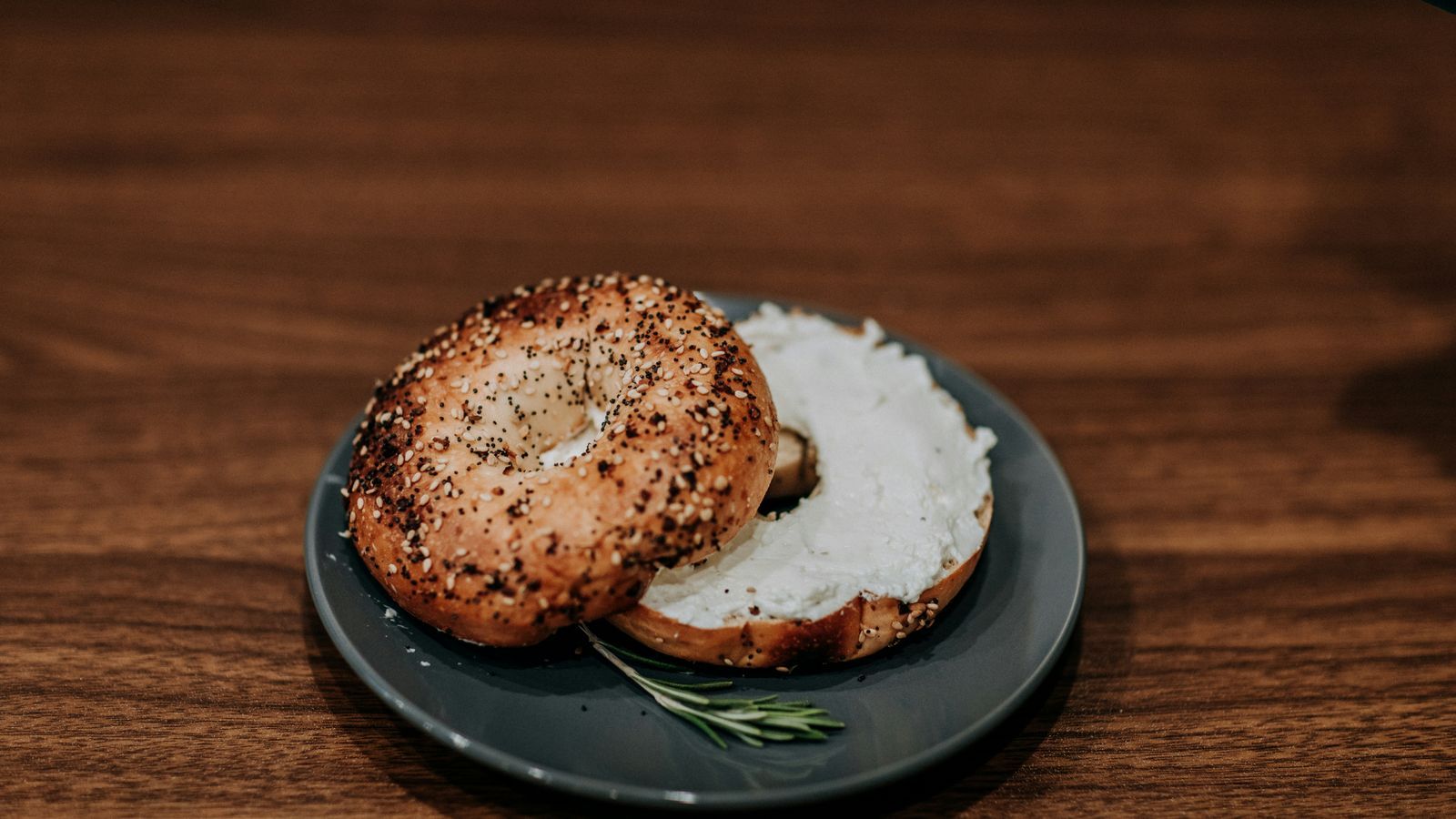
The classic New York bagel starts its life in a pot of water, not an oven — a brief boil before baking is the step that gives it that glossy, chewy crust and dense interior. Purists trace its character to the city’s soft tap water, drawn largely from the Catskill and Delaware watersheds upstate, though bakers still argue about how much the water really matters. What almost everyone agrees on is that a proper bagel is hand-shaped, boiled, and baked the same day it is eaten. This is Guide № 001 in The Love New York Guide series.
Get the Full Collectible Guide (Free PDF)
The New York Bagel — in a beautifully designed, printable booklet. The Love New York Guide № 001.
Where the New York Bagel Came From
The bagel arrived in New York with Eastern European Jewish immigrants in the late 19th and early 20th centuries, who brought a boiled-then-baked bread already common in Poland. By the 1900s the trade had concentrated on the Lower East Side, where production was tightly controlled by Bagel Bakers Local 338, a union whose members passed the craft down through families and closely guarded their techniques.
For decades bagels were shaped entirely by hand, which limited how many a single baker could make. That changed after Daniel Thompson developed a workable bagel-making machine in the 1960s, which — together with frozen distribution — turned a regional specialty into a product sold across the country.
How a Real New York Bagel Is Made
The defining step is boiling. After the dough is shaped into rings and given time to proof, each bagel is dropped into boiling water, often with a little malt, before it goes into the oven. That quick bath sets the crust and locks in the chewy, dense crumb that separates a New York bagel from a soft, fluffy roll baked straight from dough.
Traditional recipes lean on high-gluten flour and a small amount of malt for color and a faint sweetness. Many old-line shops also cold-ferment their dough overnight, a slow rest in the refrigerator that develops flavor before the bagels are boiled and baked the next morning.
The Water Question
New Yorkers have long credited the city’s water for their bagels, and the claim is not baseless: the municipal supply is relatively soft, with a particular mineral balance that some bakers believe affects dough and gluten. It is one of the great local food debates, and you will find respected bakers on both sides.
That said, technique, flour, and the boil-and-bake method almost certainly matter more than any single ingredient. Plenty of excellent bagels are made far from the five boroughs, which suggests the water is part of the story rather than the whole of it.
How to Order Like a Local
The everything bagel — poppy, sesame, garlic, onion, and salt — is a New York fixture, and one origin story credits a Queens teenager, David Gussin, with the idea in the 1980s, though others claim it independently. Beyond seasoning, the classic order is a bagel with cream cheese (“a schmear”) and often lox, the cured salmon that pairs with it.
One point of local etiquette: many purists frown on toasting a fresh bagel, arguing that a bagel made that morning does not need it. Toasting is often seen as a fix for a bagel that is a day old rather than the default. A “bagel with a schmear” simply means cream cheese, no more decoding required.
Bagel and Lox, and the Appetizing Store
The pairing of bagels, cream cheese, and smoked or cured fish comes from the “appetizing” store, a distinctly New York kind of shop selling the foods eaten with bagels — smoked fish, spreads, and salads. The category grew out of Jewish dietary custom, which keeps meat and dairy separate, so fish and dairy foods were sold apart from the butcher.
Lox is salmon cured in salt brine, and it is often confused with nova or smoked salmon, which is milder and cold-smoked. Shops like Russ & Daughters, in business on the Lower East Side since 1914, helped make the bagel-and-lox spread a signature of the city.
Myths Worth Retiring
Myth: A bagel is just a roll with a hole. The hole is functional and the method is the point — a real bagel is boiled before baking, which is why it is chewy and dense rather than soft. Skip the boil and you have a bread ring, not a bagel.
Myth: Lox is smoked. Traditional lox is salt-cured, not smoked. The smoky version most people picture is usually nova or smoked salmon, which is a different preparation.
Myth: The everything bagel is ancient. It is a relatively modern invention, generally dated to the New York area in the 1980s, not a centuries-old recipe.
Frequently Asked Questions
Why are New York bagels boiled?
Boiling before baking gelatinizes the starch on the surface, setting a shiny, firm crust and forcing the interior to stay dense and chewy. It is the single step that most distinguishes a New York-style bagel from an ordinary baked roll.
Is it really the water that makes them special?
The city’s soft water is often credited, and some bakers swear by it, but technique and ingredients likely matter more. Excellent bagels are made in many places, so the water is best understood as one factor among several rather than a magic ingredient.
What is the difference between lox and smoked salmon?
Lox is salmon cured in a salt brine and never smoked, giving it a silky texture and a salty, briny taste. Nova and smoked salmon are cold-smoked, which makes them milder, so ordering one over the other genuinely changes what lands on your bagel.
More Love New York Guides
The Love New York Guide is a numbered series — one tightly focused subject at a time, each with its own downloadable collectible edition. This is Guide № 001. More editions are on the way.
🗽 Join 1,100+ New York Lovers
Every week, get hidden stories, local secrets, and travel inspiration from people who live and love it.
Subscribe free — enter your email:
