
Walk down East Ninth Street on a Tuesday morning and you’ll pass three generations of New York in half a block. A Ukrainian bakery open since 1958. A ramen shop that arrived last spring. A music venue where someone is loading in gear for a show that won’t start until midnight.
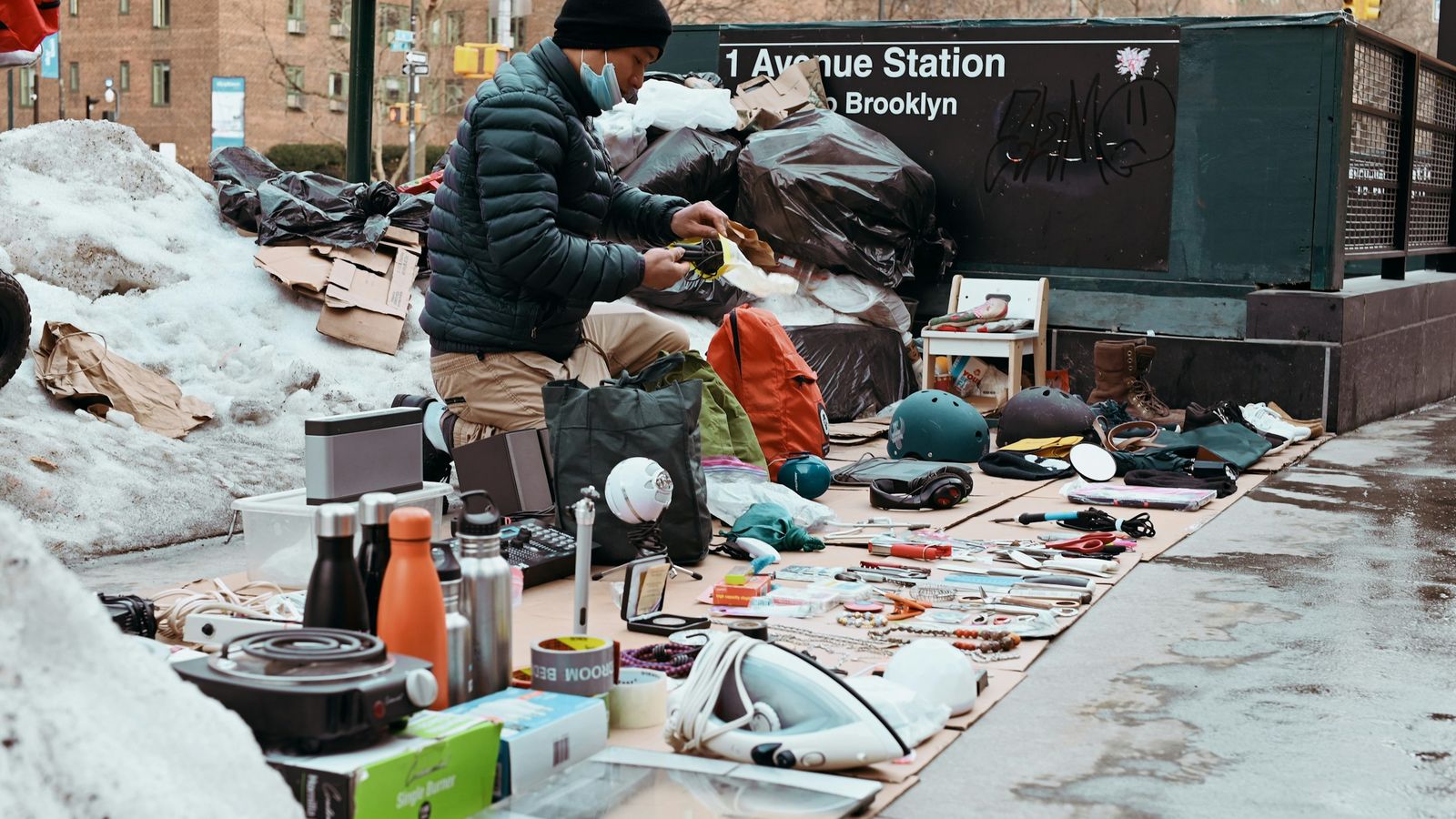
The East Village doesn’t announce itself. But for two centuries, this compact stretch of lower Manhattan has been where America’s next idea arrives first.
A Neighborhood That Has Always Belonged to Someone Else
The East Village has never had a fixed identity, and that’s the whole point.
In the 1800s, German and Irish immigrants crowded into tenements along Avenues A, B, C, and D. Then came Eastern Europeans — Ukrainian families who opened churches, bakeries, and social clubs that still survive on Seventh Street today. Then Puerto Rican and Dominican families who made it one of the most densely packed neighborhoods in the country during the postwar years.
Each group left something behind. The street names stayed the same. The energy never did.
The Ruins That Made It Famous
By the 1970s, the East Village looked like it had been abandoned.
New York City was broke and burning. Entire blocks in Alphabet City — the grid of Avenues A, B, C, and D east of First Avenue — were left to rot. Landlords walked away. Buildings were stripped for scrap metal. The city looked the other way.
But when rents collapse and landlords disappear, something moves in. Artists do.
Painters, poets, musicians, and performers who couldn’t afford SoHo or Greenwich Village showed up here with whatever they owned. They rented spaces that cost almost nothing because they were worth almost nothing. They started galleries in storefronts, painted murals on abandoned building facades, and put on plays in church basements and bars.
When Art Erupted From the Sidewalks
Keith Haring started drawing on the black paper backing of advertisement boards in the subway. He wasn’t famous yet — he was a young man from Pennsylvania who’d moved to the East Village and needed to make work.
His chalk figures — the radiant baby, the barking dog, the dancing figures — started appearing in station after station, then on the walls of the neighborhood itself. They became shorthand for a city that was broken and vital at the same time.
Jean-Michel Basquiat was doing something similar nearby, spray-painting cryptic poetry under the name SAMO on downtown walls before sleeping in Tompkins Square Park. The East Village wasn’t just where these artists lived. It was where the art came from — raw, unsanctioned, unstoppable. The same pull that had drawn writers to nearby Greenwich Village a generation earlier was drawing a different kind of creative to these blocks.
Enjoying this? Join New York lovers getting stories like this every week. Subscribe free →
The Sound That Came From the Bars
The visual art wasn’t the only thing erupting. In the dive bars along Avenue A and the streets around Second Avenue, rock music was being taken apart and rebuilt from scratch.
The Bowery, just at the neighborhood’s western edge, had CBGB — the club where punk rock got its American identity. But the audiences walked over from the East Village. The bands lived here. The whole scene depended on apartments that cost almost nothing and landlords who had stopped asking questions.
The East Village didn’t just host the counterculture. It subsidized it.
Tompkins Square Park and the Neighborhood’s Heartbeat
Every neighborhood has a park. Not every park has served as a community garden, a drum circle, a chess plaza, an outdoor jazz venue, and a neighborhood living room — sometimes in the same afternoon.
Tompkins Square Park is where East Village life spills over. On Sunday afternoons, the park is full: drummers on the east end, older men playing chess near the tables, parents on the grass, skaters at the edge. The park has always been a mirror of whatever the neighborhood is going through.
There’s still something unresolved about it — a refusal to become purely decorative. That refusal is what makes it worth visiting.
The East Village That Survived Itself
The East Village today is expensive. The artists who made it famous were mostly displaced when rents rose through the 1990s and 2000s. The bodegas turned into juice bars. The galleries became condos.
But the neighborhood still has a personality that other parts of Manhattan have lost. Veselka has served borscht and pierogis 24 hours a day since 1954 and shows no sign of stopping. The small theaters and poetry venues are still there. The bars are still a little grungy.
New coffee shops open next to old restaurants. Vegan bakeries share blocks with hardware stores. The East Village doesn’t fully gentrify because it never fully agrees on what it is. That disagreement is the whole point.
Spend an afternoon walking from Tompkins Square Park west toward the Ukrainian churches on Seventh Street, then east toward the lettered avenues. You’ll pass kitchens that have fed immigrants, walls that have held paint from a dozen art movements, and doorways that have opened onto a hundred different versions of New York.
The East Village never promised permanence. It promised energy. That part hasn’t changed.
You Might Also Enjoy
- The Tiny Bowery Club Where New York Accidentally Invented Punk Rock
- Why Every American Writer in the 1950s Needed to Live in Greenwich Village
- The Best Free Experiences in New York City
Plan Your New York Trip
Exploring the East Village is one of the most rewarding ways to understand the real New York. Start at Tompkins Square Park, walk west along St. Marks Place, and stop anywhere that looks interesting. The neighborhood rewards wandering. For more ways to explore the city, see our guide to the best free experiences in New York City.
Join New York Lovers
Every weekday morning, get New York’s hidden gems, neighbourhood stories, food origins, and city secrets — straight to your inbox.
Subscribe free — enter your email:
Love more? Join 65,000 Ireland lovers → · Join 43,000 Scotland lovers →
Free forever · Unsubscribe anytime
