
By the 1960s, the Hudson River was dying. Raw sewage, industrial chemicals, fish so contaminated that catching one was considered an environmental hazard. Standing on any Manhattan pier, you could smell it. Most New Yorkers had simply turned their backs on the river and walked away.
What happened next is one of the most remarkable turnarounds in the city’s history — and it started, of all places, with a folk singer on a wooden boat.
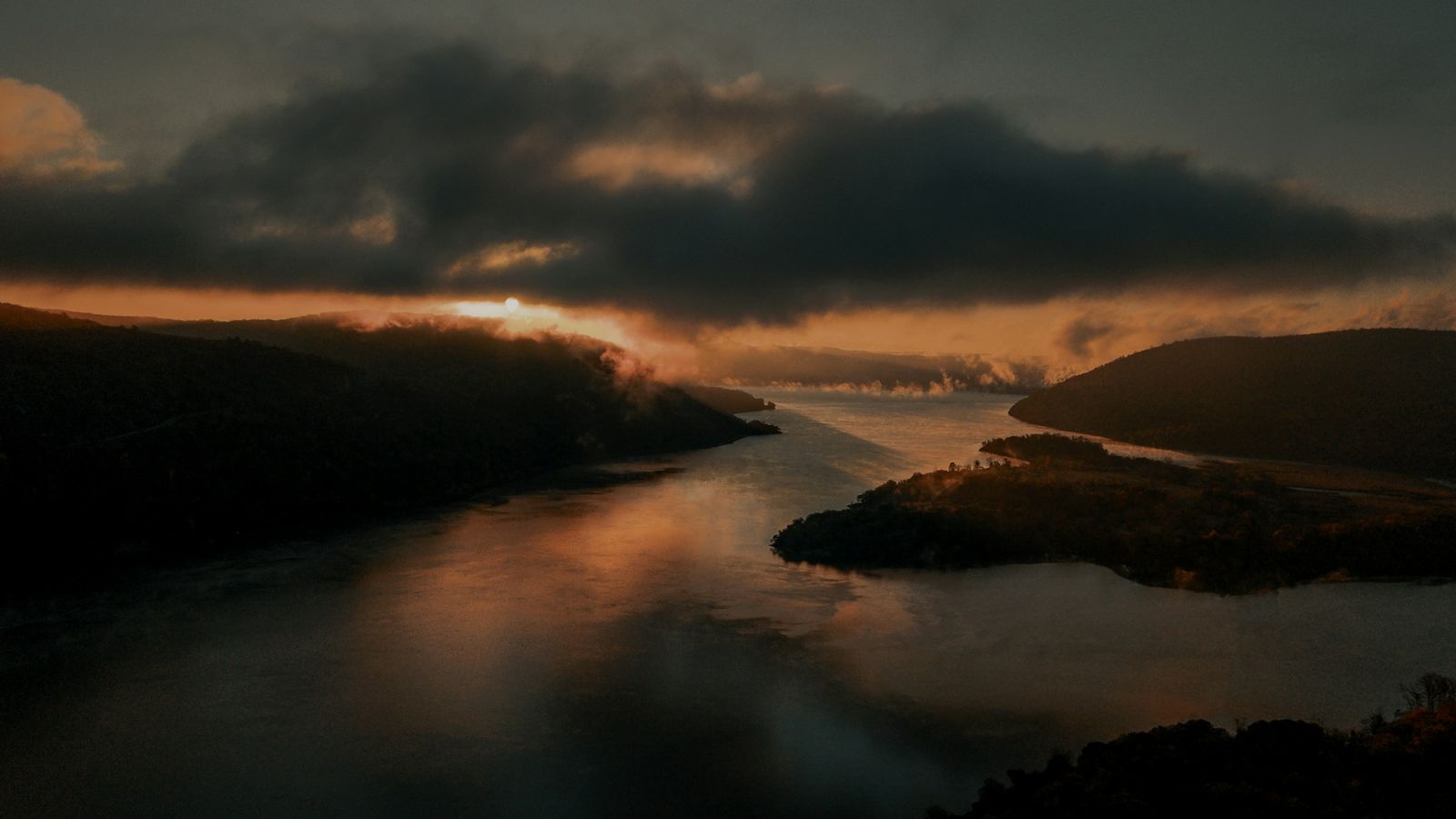
The River at Its Worst
At its nadir, the Hudson was a working river in the worst sense: a highway for industrial waste. General Electric’s plant at Hudson Falls had dumped so many PCBs into the water over the decades that the EPA eventually designated a 200-mile stretch as one of the largest Superfund sites in the country.
Fish kills were common. Commercial fishing collapsed. The stretch running alongside Manhattan smelled so bad that residents kept their windows shut in summer. For a generation, New Yorkers learned to treat the river as something that simply wasn’t theirs.
The water towers on every rooftop were a constant reminder of the city’s relationship with its water supply — but the river right outside the window? That was someone else’s problem.
A Folk Singer and a Wooden Sloop
Pete Seeger didn’t set out to become an environmental crusader. He was a banjo player from upstate New York — a man who had spent his life singing about working people and the land they lived on.
But in the late 1960s, something about the dying Hudson got under his skin. His idea was simple and slightly absurd: build a traditional wooden sloop, sail it up and down the river, and invite people aboard to reconnect with water they had forgotten.
The Clearwater — 106 feet of hand-built white oak — launched in 1969 with no guarantee it would change anything. It changed everything. The sloop became a floating classroom, a stage, a protest vessel, and a love letter to a river that had been written off.
Learning to Love the River Again
The Clearwater brought schoolchildren from the Bronx onto the water for the first time. Scientists came aboard to document what was actually living — and dying — beneath the surface. Fishermen who had stopped fishing talked about what the river used to be, and what it could be again.
More than anything, the sloop reminded New Yorkers that the Hudson existed at all — that it was their river, running right through the city, not just a backdrop to the skyline they’d stopped noticing.
It’s worth noting that New Yorkers have always had an ambivalent love affair with the Hudson — dreaming of swimming in it even when the dream seemed impossible.
Enjoying this? Join New York lovers getting stories like this every week. Subscribe free →
The Law Catches Up
Seeger’s movement helped fuel something larger. The Riverkeeper organization — built on the model pioneered by Scenic Hudson’s legal battles — became a template for citizen-led environmental advocacy that’s now been replicated in over 300 river basins worldwide.
The Clean Water Act of 1972 gave advocates real teeth. Suddenly, dumping into the Hudson wasn’t just bad citizenship — it was a federal crime. For the first time, corporations faced consequences they couldn’t simply absorb as a cost of doing business.
The cases were slow, expensive, and often frustrating. But they worked.
What Lives in the River Now
The turnaround took decades, and the work isn’t finished. PCB levels in the upper river remain a concern. But the change in the lower Hudson — the stretch that runs past Manhattan — is undeniable.
Atlantic sturgeon, thought to be locally extinct, have returned to spawn. Bald eagles nest along the Hudson Valley cliffs. Striped bass populations have rebounded to levels not seen since the mid-twentieth century. Oyster reefs that once filtered the entire estuary are being slowly, painstakingly restored by teams of volunteers who wade into the shallows at low tide.
Dolphins have been spotted in the harbor. In 2024, a humpback whale surfaced near the Verrazzano-Narrows Bridge. The river is alive in ways that nobody in 1965 thought possible.
The River You Can Touch Today
Today, free kayak launch sites line the Manhattan waterfront. The Hudson River Greenway runs 11 miles along the west side of the island, and on summer evenings it fills with cyclists, runners, and people who just want to sit near the water and watch the sun drop behind the Palisades.
Governors Island — once entirely off-limits to the public — sits in the harbor and welcomes hundreds of thousands of visitors each summer. The view of Lower Manhattan from its lawn is one of the best in the city, framed by the very water that was once too toxic to look at twice.
On a clear morning, you can watch the light come off the Hudson and understand, for just a moment, why the Hudson River School painters found the whole valley so extraordinary. The river doesn’t smell. The water moves. Occasionally, someone reports seeing a seal.
The Hudson isn’t healed. But it’s alive — alive in a way that took one folk singer, a wooden boat, thousands of hours in courtrooms, and the stubbornness of people who refused to accept that a river could just die and that would be that.
That is the kind of city New York is, at its best. Not the one that gave up on a dying river, but the one that built a boat and sailed it back into people’s hearts. The Hudson is still there, still flowing, still full of stories. All you have to do is turn around and look at it.
You Might Also Enjoy
- New York Once Had Floating Pools on the Hudson — and the Plan to Bring Them Back
- The Island Just 800 Yards From Manhattan That Was Off-Limits for 200 Years
- The 41-Mile Engineering Miracle That Saved New York — and Nobody Talks About
Plan Your New York Trip
Ready to see the Hudson for yourself? Our New York City travel guide covers everything you need to plan a perfect visit — from the best neighborhoods along the waterfront to where to catch the most unforgettable views of the river.
Join New York Lovers
Every weekday morning, get New York’s hidden gems, neighbourhood stories, food origins, and city secrets — straight to your inbox.
Subscribe free — enter your email:
Love more? Join 65,000 Ireland lovers → · Join 43,000 Scotland lovers →
Free forever · Unsubscribe anytime
