
Chelsea used to be warehouses and meatpacking docks. Now it’s one of the most walkable, art-saturated neighbourhoods in Manhattan — a place where a former freight rail line became the city’s favourite park, a biscuit factory became a food hall, and a stretch of unglamorous side streets quietly became the centre of the contemporary art world. It rewards slow exploration more than almost any other part of the city.
Here is everything you need to know about things to do in Chelsea, from the iconic High Line to the gallery streets most visitors walk straight past.
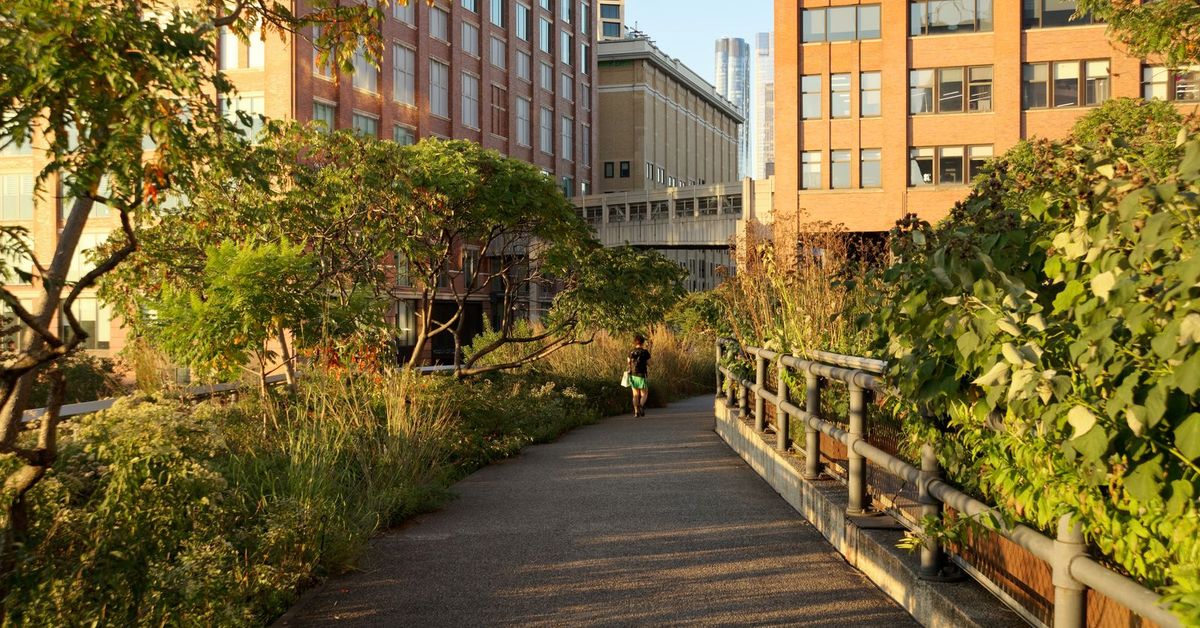
The High Line: Chelsea’s Elevated Park
The High Line is the reason most visitors come to Chelsea in the first place, and it earns the reputation. It runs roughly 1.45 miles along a disused elevated freight rail line that once carried meat, produce, and manufactured goods into the neighbourhood’s warehouses. The trains stopped running in 1980, the tracks sat abandoned and overgrown for two decades, and in 2009 the first section reopened as an elevated public park, planted with grasses and wildflowers chosen to echo what had grown wild there while it sat empty.
Walking it is unlike walking anywhere else in the city — you’re a full storey above the street, moving through planting instead of pavement, with converted warehouse buildings close enough on either side that you can see straight into some of the galleries and apartments built to face it. The park runs from Gansevoort Street in the Meatpacking District up to 34th Street near Hudson Yards, cutting straight through the length of Chelsea.
It’s free, open year-round, and busiest on weekend afternoons — an early morning or a weekday visit gets you a genuinely quiet walk. Access points are staggered roughly every two to three blocks, so you can join or leave the park without walking its full length.
Chelsea Market: New York’s Original Food Hall
Chelsea Market occupies the former factory complex of the National Biscuit Company — the original Nabisco plant, where the Oreo was invented in 1912. The building takes up an entire block between Ninth and Tenth Avenues, and today its ground floor is a covered food hall packed with vendors, from lobster rolls and ramen to a proper Italian bakery and a wall of specialty spice shops.
It connects directly to a High Line entrance at 16th Street, which makes it the natural place to break up a walk along the park — duck down for lunch, then climb back up and continue north or south. The building itself is worth a slow look too: exposed brick, old factory ironwork, and industrial signage left largely intact rather than sanded down into something generic.
The Chelsea Gallery District
West of Tenth Avenue, roughly between 18th and 29th Streets, sits the highest concentration of contemporary art galleries anywhere in the world — several hundred of them, occupying former warehouses and garages that once serviced the Hudson River piers. Major names like Gagosian, David Zwirner, and Pace all keep major spaces here alongside dozens of smaller, independent galleries.
The best part for a visitor: almost every gallery is free to enter, with no ticket or reservation required. Thursday evenings often bring new show openings, when galleries stay open later and the streets fill with an art-world crowd. Even without any background in contemporary art, an hour spent wandering in and out of a handful of spaces gives you a side of Chelsea most tourists never see.
Chelsea Piers: Sports and Entertainment on the Hudson
At the western edge of the neighbourhood, Chelsea Piers occupies a row of piers originally built in the early 1900s for ocean liners — the Titanic was due to dock here on its ill-fated maiden voyage. Today the complex is a sprawling sports and entertainment centre right on the Hudson River waterfront, with a golf driving range, ice rinks, bowling, indoor rock climbing, and one of the best running and cycling paths in the city right at its doorstep.
It’s a good option if you want to break up a day of museums and galleries with something more active, or if you’re travelling with kids who need to burn off energy — few other spots in Manhattan offer this much space to move.
Where to Eat in Chelsea
Beyond Chelsea Market, the neighbourhood has a strong, low-key restaurant scene that doesn’t rely on tourist footfall to survive. Eighth Avenue and the low West 20s hold a solid run of casual spots — diners, wine bars, and neighbourhood Italian restaurants that have been serving the same regulars for years. For something quick between galleries, the food vendors along Ninth and Tenth Avenue near the High Line entrances are reliable and fast.
Getting to Chelsea by Subway
Chelsea is well served by the subway. The C and E trains stop at 23rd Street on Eighth Avenue, right in the heart of the neighbourhood and close to the gallery district. The 1 train runs down Seventh Avenue with stops at 18th and 23rd Streets. The L train’s 8th Avenue station sits at the southern edge, convenient for the Meatpacking District end of the High Line. Whichever station you use, most of Chelsea’s main sights are within a comfortable walk of each other.
Frequently Asked Questions About Chelsea, NYC
What is Chelsea, NYC known for?
Chelsea is known for the High Line elevated park, Chelsea Market’s food hall (built in the former Nabisco factory where the Oreo was invented), and the largest concentration of contemporary art galleries in the world along its western streets.
Is the High Line free to visit?
Yes. The High Line is a free public park, open year-round with no ticket required. It’s busiest on weekend afternoons, so an early morning or weekday visit gives you a much quieter walk.
How do I get to Chelsea by subway?
The C and E trains stop at 23rd Street–Eighth Avenue in the centre of Chelsea. The 1 train stops at 18th and 23rd Streets on Seventh Avenue, and the L train’s 8th Avenue station serves the southern end near the Meatpacking District.
Are Chelsea’s art galleries free to enter?
Almost all of them. Gallery-going in Chelsea doesn’t require tickets or reservations — you can walk in and out of dozens of spaces in an afternoon at no cost, which makes it one of the best free things to do in the neighbourhood.
How much time should I spend in Chelsea?
Half a day covers the highlights — a walk along the High Line, lunch at Chelsea Market, and an hour in the gallery district. A full day lets you add Chelsea Piers or a slower, more thorough gallery crawl.
Join 1,000+ New York Lovers
Every week, get New York’s hidden gems, local secrets, and travel inspiration — the kind you won’t find in any guidebook.
Subscribe free — enter your email:
Love more? Join 64,000 Ireland lovers → · Join 43,000 Scotland lovers → · Join 30,000 Italy lovers →
Free forever · One email per week · Unsubscribe anytime
