
Every June, something shifts in New York. The street-level heat becomes something you can feel before you open your apartment door. And New Yorkers, as they have for more than a century, head for the roof.
It’s not just about escaping the heat. It never was.
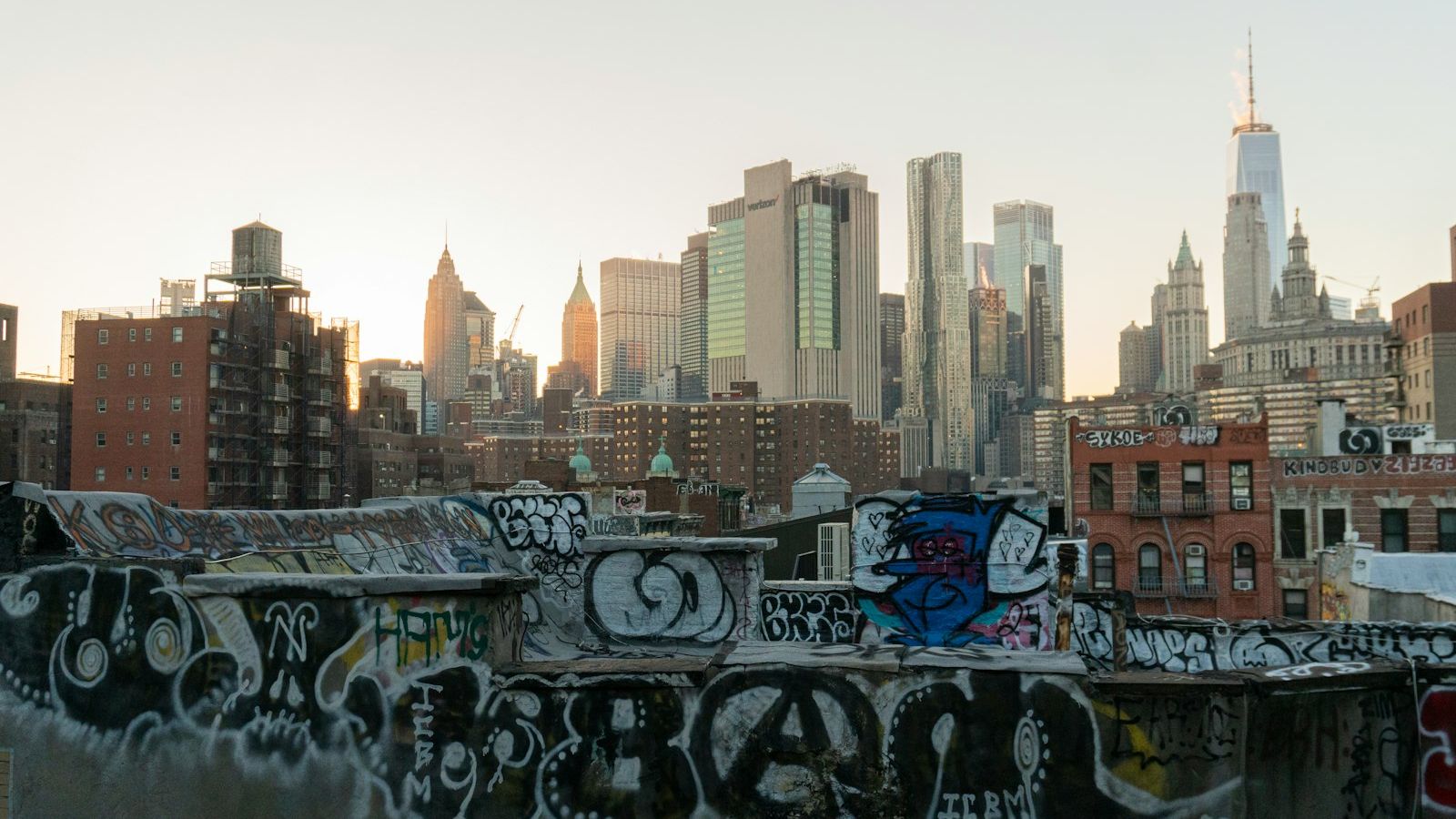
Before Air Conditioning, the Roof Was Everything
In the 1890s, the Lower East Side was the most densely populated place on Earth. Tenements crammed twelve families into buildings with no cross-ventilation, no insulation, and no escape from summer heat that could hold above 90 degrees for weeks.
People slept on rooftops. Not as a novelty. As necessity.
Fire escapes became beds. Rooftops became the only place where a breeze might find you. Families dragged mattresses up six flights of stairs and stayed until dawn. Newspapers from the 1890s described it as so common that entire blocks of Manhattan went quiet at street level after midnight while the rooftops above hummed with whispered conversations, crying children, and a neighbor’s phonograph drifting through the dark.
For the immigrant families new to the city — Italian, Jewish, Irish, Eastern European — the rooftop was one of the first places where nobody’s rules applied. No landlord. No foreman. Just sky.
When the Hotels Took Notice
By the 1910s, New York’s hotels had spotted something. The rooftop wasn’t just functional — it was aspirational.
The Madison Square Roof Garden opened in 1895, offering cool breezes and live music seventeen stories above Fifth Avenue. The Astor Hotel followed with its own rooftop garden, where Manhattan’s well-heeled dined surrounded by potted palms and electric lights while the rest of the city sweltered below.
For a brief window — roughly 1895 to 1940 — the rooftop became a stage. Department stores added rooftop restaurants. Movie theaters moved their summer programming upstairs. The outdoor cinema on the roof of the Brooklyn department store Abraham & Straus became a summertime institution.
The elite had fancy roof gardens. The working class had their tenement tops. Everybody went up.
The Whole City Moves Outside
Through the 1940s and ’50s, window AC units began their slow invasion of New York apartments. You might expect the rooftop tradition to fade with the need that created it.
It didn’t.
Something had shifted. The rooftop wasn’t about temperature anymore — it was about community. The building super with his family grilling on the tar. Teenagers sprawled under the water tower with transistor radios. Block associations holding rooftop fundraisers for the local parish.
In Brooklyn and the Bronx especially, summers in the 1960s and ’70s meant rooftop parties that lasted until 3 AM. The city was broke, the streets could be rough. But the roof belonged to whoever climbed the stairs.
Enjoying this? Join New York lovers getting stories like this every week. Subscribe free →
From Survival to Skyline Ritual
The 1990s changed everything — and changed nothing.
As New York rebuilt itself after decades of fiscal crisis, rooftops evolved from informal gathering spots to designed destinations. The hidden gems of New York had always included its rooftops, but now the secret was reaching a wider audience.
The Standard Hotel opened its rooftop bar overlooking the High Line in 2009. The 230 Fifth became famous for its unobstructed view of the Empire State Building. Across Brooklyn, converted warehouse rooftops became bars, urban farms, cinema screens, and yoga studios.
What had started as survival became a lifestyle. But the underlying impulse — rise above the noise, catch the light, share a moment with the skyline — never changed.
Why the Ritual Never Stopped
Ask any New Yorker what they did last July and there’s a good chance a rooftop features in the answer.
There’s something almost devotional about it. You climb the stairs. You push open the heavy door. The city opens up in every direction — water towers and antennae and glass towers catching the last light of the day. Below, nine million people going nowhere. Up here, just you and the sky.
That feeling isn’t something the boutique hotel industry invented. It’s something the immigrant families of the Lower East Side discovered a century ago, dragging mattresses up six flights because there was nowhere else cool to sleep.
They found the best view in the world up there. New Yorkers have never stopped going back.
You Might Also Enjoy
- Hidden Gems in NYC: The New York Most Tourists Never See
- Free Things to Do in NYC: The Best No-Cost Experiences in New York City
- The New York Nightclub That Lasted Only Three Years but Changed the City Forever
Plan Your New York Trip
Ready to experience New York from every angle — including the best ones up high? The Ultimate New York Travel Guide has everything you need to make the most of the city.
Join New York Lovers
Every weekday morning, get New York’s hidden gems, neighbourhood stories, food origins, and city secrets — straight to your inbox.
Subscribe free — enter your email:
Love more? Join 65,000 Ireland lovers → · Join 43,000 Scotland lovers →
Free forever · Unsubscribe anytime
