
Step off the A train at 181st Street on a Saturday morning. Before you reach the top of the steps, you hear it. Merengue. Loud, joyful, insistent. A man sells mango slices from a cart. Two women laugh in Spanish on a stoop. The smell of coffee and frying plantain drifts from a bodega door. You are still in Manhattan. But you are somewhere else entirely. You are in Washington Heights. A neighbourhood rebuilt, again and again, by people who arrived with nothing and gave everything.
If you love New York’s hidden stories, you’ll love our free weekly newsletter. Subscribe to Love New York →
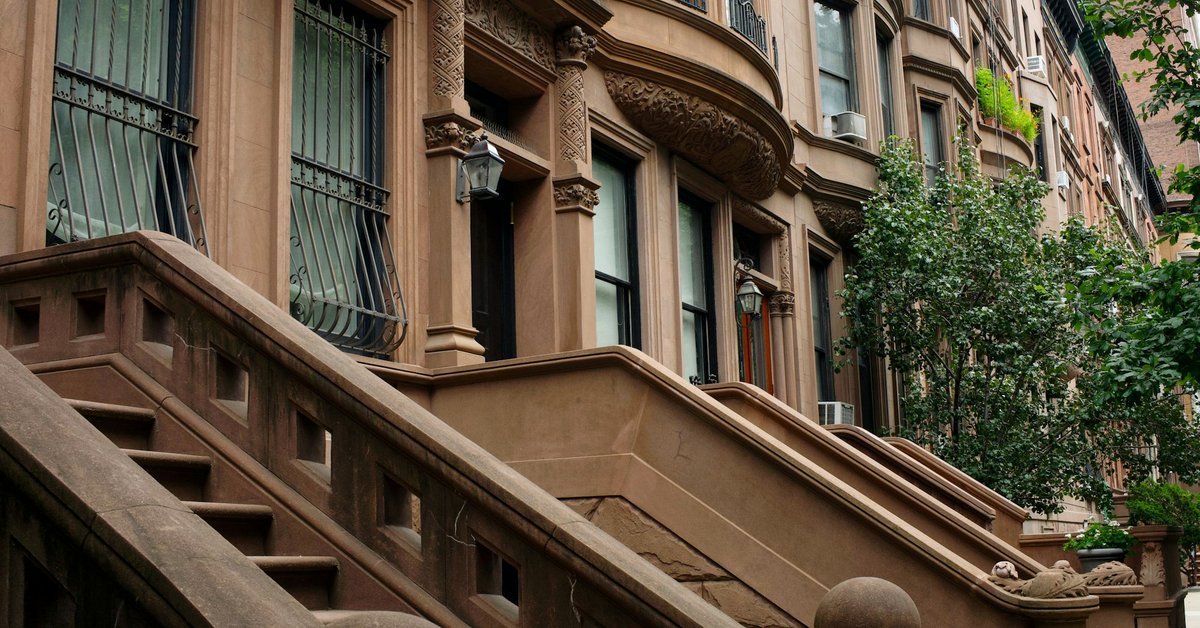
The First Layer: German Jewish Refugees in the 1930s and 1940s
History does not always arrive quietly. Sometimes it arrives on a steamship. A single suitcase. A wound that will not close.
In the 1930s, Europe was becoming unbearable for Jewish families. The Nazi rise to power forced tens of thousands of German-speaking Jews to flee. Many arrived in New York. Many of those made their way to upper Manhattan. To Washington Heights.
They came with their languages, their learning, and their grief. Doctors, lawyers, musicians, scholars, teachers. People who had built full lives in Frankfurt, Berlin, Vienna. They had to start again from nothing. In a city that spoke a different language. Under a sky that felt wrong.
By the early 1940s, the neighbourhood had a nickname. Locals called it “Frankfurt on the Hudson.” Some called it “the Fourth Reich.” They were laughing at their own displacement. That takes courage.
The streets filled with the sounds of German. Delicatessens served familiar food. Synagogues offered a thread of continuity. The Hebrew Immigrant Aid Society worked tirelessly to help new arrivals find housing and work. It was not easy. But it was possible. That was enough.
One family settled at 83 Bennett Avenue. Their name was Kissinger. Their son Henry grew up to become a towering figure of twentieth-century diplomacy. He was fifteen when he arrived. He never fully lost his German accent. That address on Bennett Avenue is a quiet piece of American history.
Yeshiva University was founded in 1928. It gave the community an academic anchor. It offered continuity. It said: your learning matters here. Your tradition matters here.
Think about what it meant to rebuild a life in Washington Heights after fleeing persecution. To walk down a street in America knowing you could never go home. To hear your children speaking English in an accent you did not recognise. To light Shabbat candles in a small apartment. To wonder about the house you left behind.
That community is largely gone now, dispersed across the decades. But the streets remember. Walk along Bennett Avenue and you are walking through a ghost of Frankfurt-on-Hudson. The bones of that world are still here.
Read Ellis Island to Orchard Street: The Immigrant Journey for the wider story. It traces New York’s immigrant history in vivid detail.
The Irish and the Earlier Layers
Before the refugees, before the Dominicans, there were the Irish. They came in the late 1800s. They came with shovels and strong backs. They needed to belong somewhere. Ireland had broken their hearts.
Irish workers built much of upper Manhattan’s infrastructure. They dug the foundations. They laid the stone. They built the elevated railway lines that stitched the neighbourhood into the city. It was hard, dangerous, poorly paid work. They did it anyway.
They built community around St. Elizabeth’s Church on 187th Street. The church was a gathering point. A place of belonging in a city that did not always welcome newcomers. Mass gave the week a shape. The parish gave the neighbourhood a heartbeat.
That Irish story connects to a wider New York narrative. The Five Points That Irish Immigrants Built tells of an earlier Irish generation. What they endured. What they created.
The Dominican Transformation: Quisqueya Heights
If Washington Heights has a soul today, it speaks Spanish. It dances merengue and bachata. It smells of sancocho and fresh bread. It is loud and warm and fiercely proud.
Starting in the 1960s, Dominican families began arriving in Washington Heights. They came looking for work. They came looking for safety. Through the 1980s and 1990s, Washington Heights became the heart of New York’s Dominican community.
Locals gave it a second name: Quisqueya Heights. Quisqueya is the indigenous Taíno name for Hispaniola. The Dominican Republic and Haiti share that island. To call the neighbourhood Quisqueya Heights was to say: we brought our island with us. We planted it here. It is growing.
181st Street became the commercial and social heart of the community. Walk it today and you walk through a living market. Bodegas sell everything you could need. Music shops play merengue at a volume that makes the pavement hum. Barber shops are social clubs as much as places to get a haircut. The smell of coffee is everywhere.
On a weekend morning, 181st Street feels like a village square. People stop to talk. Children run between adult legs. An older man sits outside a café and reads a Spanish-language newspaper. Time moves differently here. The city’s usual urgency softens.
Each August, the Dominican Day Parade fills the streets. Flags fly. Music plays. The neighbourhood dresses up and celebrates itself. It is a joyful, unapologetic statement of identity. We are here. We built this. This is ours.
Washington Heights gave the world something else, too. Lin-Manuel Miranda grew up just north of here, in Inwood. That neighbourhood and Washington Heights share a heartbeat. He spent his childhood inside this Dominican world. He watched it. He felt it. He loved it.
That love became In the Heights. First a Tony Award-winning Broadway musical. Then a 2021 film. The story is set in a fictionalised Washington Heights. It is about a bodega owner dreaming of going home to the Dominican Republic. It is about a community holding together under the pressure of change. It is about what it means to belong somewhere. Miranda did not invent that story. He listened to Washington Heights until it told him.
What makes Dominican Washington Heights feel like a village inside a city? It is not one thing. It is the way strangers greet each other on the street. It is the way music spills from windows without apology. It is the way a bodega owner knows your order before you say it. It is the way the neighbourhood looks after its own.
The story of Harlem offers a parallel. Another community arrived with little, built everything, and created a culture the whole world loves. The Harlem That African Americans Built tells that story with the depth it deserves.
Want more stories like this? Our weekly newsletter goes deeper into New York’s heritage every week. It’s free. Subscribe here →
The Audubon Ballroom and the Weight of History
Not every layer of Washington Heights history is joyful. Some of it is heavy.
On Broadway at 165th Street stands a building that carries an enormous weight. The Audubon Ballroom was once a famous entertainment venue. For decades it hosted dances, concerts, political gatherings. It was part of the neighbourhood’s life.
On 21 February 1965, Malcolm X was assassinated there. He was speaking to an audience when gunmen opened fire. He died that day. The building fell silent in a way it never entirely recovered from.
Today, the Audubon Ballroom houses the Malcolm X and Dr. Betty Shabazz Memorial and Educational Centre. It honours Malcolm X and his wife Betty Shabazz. It stands as a reminder that Washington Heights has witnessed not only joy but tragedy. Not only arrival but loss. The neighbourhood holds all of it.
What to Visit Today
Washington Heights rewards slow walking. Give it a morning, or a full day. Here is where to go.
Fort Tryon Park is one of Manhattan’s most beautiful parks. John D. Rockefeller Jr. donated the land in 1935. The park sits on a ridge above the Hudson River. On a clear day, the views are extraordinary. The wide river. The cliffs of the Palisades. The sky. It is easy to forget you are inside one of the world’s most crowded cities.
Inside Fort Tryon Park sits The Cloisters. This is the Metropolitan Museum of Art’s branch for medieval European art and architecture. The building is assembled from parts of actual medieval cloisters brought from Europe. The collection includes tapestries, sculptures, illuminated manuscripts, and stained glass. Set aside at least two hours. Admission is around $30 for adults. The Cloisters is open Tuesday through Sunday.
181st Street is the neighbourhood’s main Dominican commercial strip. Walk it on a weekend morning. Stop for coffee. Buy a mango. Listen. This is Washington Heights at its most alive.
The George Washington Bridge connects upper Manhattan to New Jersey. Walk across it. The views are among the finest in the city. The bridge is free to walk across.
The Malcolm X and Dr. Betty Shabazz Memorial and Educational Centre stands at the Audubon Ballroom. It is a place for quiet reflection. Check ahead for opening times.
J. Hood Wright Park is a neighbourhood park beloved by locals. It sits between Fort Washington Avenue and Haven Avenue. On warm evenings it fills with families. It is the kind of place that reminds you what a neighbourhood actually is.
Inwood Hill Park lies just north of Washington Heights. It contains the last original forest in Manhattan. Ancient trees. Rocky outcrops. A wildness that the city never managed to pave over. It is extraordinary to find it here.
Washington Heights is one of many remarkable neighbourhoods. For a full guide, Best Neighbourhoods in New York City covers the whole city in detail.
Plan Your Heritage Visit
Washington Heights is easy to reach. Take the A or C train to 181st Street. The journey from Midtown takes around thirty minutes. The station sits deep beneath the neighbourhood. The lift brings you up into the sound and life of the street.
The best time to visit is summer. The street life is at its fullest in the warm months. The park is glorious. The pavement cafés and bodegas spill their activity out onto the street.
The neighbourhood is completely safe for visitors. Walk slowly. Look up. Eat at a Dominican restaurant. Order pernil, rice and beans, fried plantain. Talk to people if they talk to you. They often will.
Allow The Cloisters at least two hours. Allow 181st Street at least one. Allow yourself to simply sit in Fort Tryon Park and watch the Hudson move.
Frequently Asked Questions
What immigrant groups settled in Washington Heights?
Washington Heights has been home to many immigrant communities. Irish workers arrived in the late 1800s and built much of the neighbourhood’s infrastructure. In the 1930s and 1940s, German-speaking Jewish refugees fled Nazi persecution and settled here in large numbers. The neighbourhood earned the nickname “Frankfurt on the Hudson.” From the 1960s onwards, Dominican immigrants arrived in great numbers. They made Washington Heights the heart of New York’s Dominican community. Locals call it Quisqueya Heights.
When did Dominican immigrants begin arriving in Washington Heights?
Dominican families began arriving in significant numbers during the 1960s. Through the 1970s, 1980s, and 1990s, the community grew steadily larger. By the late twentieth century, Washington Heights was the Dominican centre of New York City. Today its Dominican character remains strong and deeply rooted in daily life.
What is the connection between Washington Heights and “In the Heights”?
Lin-Manuel Miranda created both In the Heights and Hamilton. He grew up in Inwood, just north of Washington Heights, and was immersed in the Dominican community throughout his childhood. That community became the heart of In the Heights, which ran on Broadway and won multiple Tony Awards. The 2021 film brought the story to a global audience. Miranda has spoken often about how Washington Heights shaped him as an artist.
What can visitors see today in Washington Heights?
Washington Heights offers a great deal. Fort Tryon Park has sweeping views of the Hudson River and houses The Cloisters, the Metropolitan Museum’s branch for medieval art. The Dominican strip on 181st Street is vibrant and welcoming. The Malcolm X and Dr. Betty Shabazz Memorial stands at the historic Audubon Ballroom. Inwood Hill Park holds the last original forest in Manhattan. The George Washington Bridge is free to walk across and offers exceptional views.
Ready to explore the New York your ancestors knew? Subscribe to Love New York — free weekly stories, heritage guides, and hidden history. Join us →
