
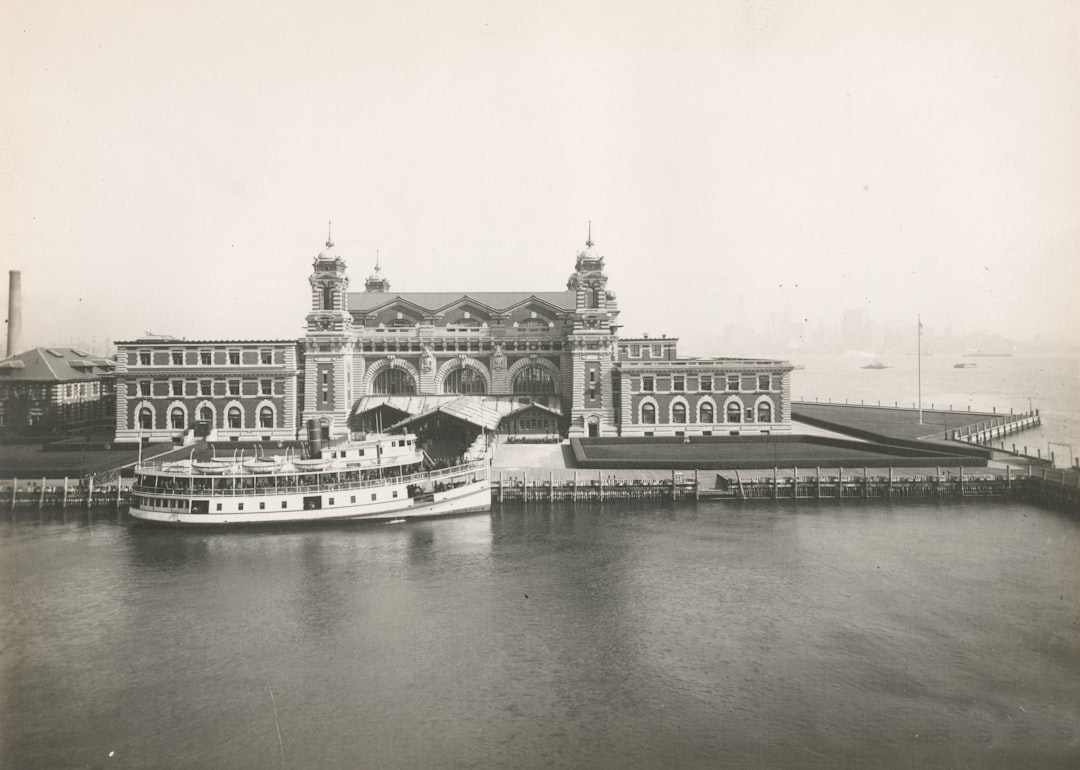
More than twelve million people passed through Ellis Island between 1892 and 1954. Most had left everything behind. They arrived with a trunk, a name, and a hope. Many of them ended up a short walk from the water — in the streets of Lower Manhattan and the Lower East Side. This afternoon walk traces their journey. It goes from the ferry terminal at Battery Park to Orchard Street, through some of the most historically layered ground in America.
If your family came through New York, this walk is for you.
If you love New York’s hidden stories, you’ll love our free weekly newsletter. Subscribe to Love New York →
The Walk at a Glance
Distance: Approximately 3.5 miles on foot (not counting the ferry).
Time: Allow a full afternoon — 4 to 5 hours, including 1 to 2 hours on Ellis Island.
Start: Battery Park Ferry Terminal, Lower Manhattan.
End: Orchard Street and Delancey Street, Lower East Side.
Best for: Families tracing immigrant roots, first-time visitors who want history, heritage tourists, anyone with Irish, Italian, Jewish, or Eastern European ancestry.
Nearest subway (start): Bowling Green (4, 5 trains) or Whitehall Street (R, W trains).
Nearest subway (end): Delancey Street / Essex Street (F, M, J, Z trains).
Stop 1 — Battery Park Ferry Terminal
Address: Battery Park, Manhattan (south tip)
Subway: Bowling Green (4, 5) or Whitehall St (R, W)
Time here: 10–15 minutes before your ferry departs
Start where the journey ends — and where it began. Battery Park is the southern tip of Manhattan. It was farmland when the Dutch first settled here in the 1620s. By the nineteenth century, it was where ships unloaded their human cargo from Ireland, Germany, and Eastern Europe.
Stand at the water’s edge and look south. That is New York Harbour. In 1848, during the Great Famine, over 100,000 Irish men and women sailed into this harbour in a single year. Most had never seen a city before. They were arriving into one of the largest on earth.
Buy your Ellis Island ferry ticket here. The round-trip ferry departs regularly throughout the day. Book in advance at peak times.
Stop 2 — Castle Clinton
Address: Battery Park, Manhattan
Admission: Free (National Park Service)
Time here: 10–15 minutes
Before Ellis Island, there was Castle Clinton. From 1820 to 1890, this circular stone fort processed over eight million immigrants. It was the first stop in America for millions of Irish, German, and Scandinavian arrivals. Many passed through this door with nothing more than a letter of introduction in their pocket.
The building still stands. You can walk through it today. The interior is spare. But stand in the middle of it and imagine the noise. Eight million people, over seven decades, all arriving here first.
Stop 3 — Ellis Island National Museum of Immigration
Address: Ellis Island, New York Harbour (ferry from Battery Park)
Hours: Generally 9am to 5pm (check nps.gov for current times)
Admission: Ferry ticket required (~$25 adults, includes Statue of Liberty); museum entry is free
Time here: 1 to 2 hours
Ellis Island is the centrepiece of this walk. It opened as an immigration station on 1 January 1892. The first immigrant to be processed was Annie Moore, a fifteen-year-old from County Cork. Over the next 62 years, 12.4 million people followed her through its doors.
The Great Hall is the place to stand and be still. In 1907 — the peak year — 1.25 million people were processed here. On a single day in April 1907, 11,747 people were admitted. The room was never quiet. It smelled of fear and hope in equal measure.
Use the American Family Immigration History Centre while you are here. It holds over 65 million passenger records. Search your family surname. The records go back to 1820. Many families have found their ancestors’ names here — the exact ship they arrived on, the village they left behind, the amount of money they carried.
For a deeper guide to tracing your own New York ancestry, see our complete step-by-step guide: How to Trace Your New York City Ancestry.
Stop 4 — Bowling Green
Address: Broadway at Bowling Green, Manhattan
Subway: Bowling Green (4, 5)
Time here: 5–10 minutes
After the ferry, walk north from Battery Park along Broadway. You reach Bowling Green in about five minutes. It is New York’s oldest public park. The Dutch used it as a cattle market in the 1630s. Later, a statue of King George III stood here. New Yorkers tore it down in 1776, the night after the Declaration of Independence was read aloud.
For immigrants walking north from the docks, this was the first open space in the city. Many paused here. Some sat down and cried. Many had been at sea for six weeks.
Want more stories like this? Our weekly newsletter goes deeper into New York’s heritage every week. It’s free. Subscribe here →
Stop 5 — The Site of Five Points
Address: Columbus Park / Foley Square area, Chinatown
Subway: Brooklyn Bridge–City Hall (4, 5, 6) or Chambers Street (J, Z)
Time here: 10–15 minutes
Walk north from Bowling Green through the Financial District. After about 15 minutes, you reach the Foley Square area. This was once Five Points — the most infamous neighbourhood in nineteenth-century America.
Five Points no longer exists. It was demolished in the 1890s and replaced with courts and civic buildings. But the ground is the same ground. Tens of thousands of Irish immigrants lived here during the Famine years. They lived ten to a room in converted breweries and cellars. The death rate was extraordinary. But so was the community that formed.
We have written the full story of this neighbourhood. Read The Five Points That Irish Immigrants Built for the complete history of what happened here.
Stop 6 — Mulberry Street and Little Italy
Address: Mulberry Street between Canal Street and Broome Street
Subway: Canal Street (N, Q, R, W, 6, J, Z)
Time here: 15–20 minutes (longer if you stop to eat)
Continue north to Mulberry Street. This is the heart of what was once Little Italy. By 1900, 40,000 Italians lived within a few blocks of here. Most had come from Sicily and southern Italy. They worked as labourers, pushcart vendors, and garment workers. They brought with them the food, the language, and the saints’ day processions that still echo in this neighbourhood.
Little Italy has shrunk since then. Chinatown has expanded around it. But Mulberry Street retains the feel of the old neighbourhood. The feast of San Gennaro is still held here every September — one of the oldest street festivals in New York.
For the full story, read The Little Italy That Italian Immigrants Built.
Stop 7 — The Tenement Museum, Lower East Side
Address: 103 Orchard Street, Manhattan
Hours: Daily 10am to 6pm (closed major holidays)
Admission: Tours from $30 per adult (book in advance — tours sell out)
Subway: Delancey Street / Essex Street (F, M, J, Z)
Time here: 1 to 1.5 hours (guided tour)
This is the emotional centre of the walk.
The Tenement Museum occupies a building at 97 Orchard Street that was home to nearly 7,000 immigrants from over 20 countries between 1863 and 1935. The apartments were sealed and forgotten in 1935. When they reopened in 1988, they were almost perfectly preserved — furniture, wallpaper, cooking pots, and all.
The guided tours follow specific families. You walk through the Levine family apartment — a garment workshop and home of eight people, all in 325 square feet. You see the Rogarshevsky apartment, a Jewish family who arrived from Lithuania in the early 1900s. The tour guides are extraordinary. By the end, many visitors are in tears.
Book this in advance. Weekend tours especially sell out weeks ahead.
Stop 8 — Orchard Street and the Lower East Side
Address: Orchard Street between Broome and Grand Streets
Time here: 15–20 minutes, or longer to explore
After the museum, walk Orchard Street itself. In 1900, this street was one of the most densely populated blocks on earth. Pushcarts lined both sides. Merchants shouted in Yiddish, Italian, and Polish. Children ran under the feet of horses. The noise and the smell were overwhelming to anyone who hadn’t grown up with them.
Today Orchard Street is full of independent shops and cafés. It is one of the most characterful streets in New York. The bones of the old neighbourhood are still there — in the width of the pavement, the height of the buildings, and the density of the street grid.
For the complete story of this neighbourhood, read The Lower East Side That Jewish Immigrants Built.
Stop 9 — Essex Street Market (The Walk Ends Here)
Address: 88 Essex Street, Manhattan
Hours: Monday to Saturday, 8am to 6pm
Subway: Delancey Street / Essex Street (F, M, J, Z)
Time here: As long as you like
End at Essex Street Market. It was founded in 1940 to get the pushcart vendors off the streets. It still holds dozens of independent food vendors. You can find Jewish pickles, Dominican pastries, artisan cheese, and fresh-cut flowers — all within a few metres of each other.
Sit down. Eat something. Think about the twelve million people whose descendants fill this city. Every neighbourhood you walked through today exists because someone arrived with nothing and built something here. The walk is over. The story never really ends.
Practical Tips for the Walk
- Start time: Aim for an early morning ferry (9am or 10am). Ellis Island gets busy by midday.
- Book in advance: Ellis Island ferry tickets and Tenement Museum tours both sell out. Book both before you go.
- Wear comfortable shoes: You will walk 3 to 4 miles on pavements. There is nothing flat about Manhattan in summer heat.
- Water and snacks: Battery Park has food vendors. Little Italy has restaurants. Essex Street Market is your meal at the end.
- Rainy day version: Ellis Island and the Tenement Museum are both fully indoor. The walk between them is exposed. Bring a light waterproof in spring and autumn.
- Accessibility: Ellis Island is fully accessible by wheelchair. The Tenement Museum tours involve narrow staircases — check their website for accessible tour options.
Frequently Asked Questions
How long does the Ellis Island to Orchard Street walk take?
Allow a full afternoon — around 4 to 5 hours in total. Ellis Island alone takes 1 to 2 hours, and the Tenement Museum guided tour is roughly 1 hour. Walking between stops adds another hour or so depending on your pace.
Do I need to book tickets for Ellis Island in advance?
Yes, especially at weekends and during summer. The ferry from Battery Park sells out on busy days. Book your ferry ticket online through the National Park Service or the official Statue of Liberty website before you visit.
Can I find my immigrant ancestors at Ellis Island?
Yes. The American Family Immigration History Centre on Ellis Island holds records for over 65 million immigrants who arrived between 1820 and 1957. Search by surname and country of origin. The records include the ship name, date of arrival, and sometimes the exact village the person emigrated from.
What is the best time of year to do this walk?
Spring (April to June) and autumn (September to November) offer the best walking conditions — mild temperatures and fewer summer crowds. Summer works too, but start early to avoid midday heat and peak ferry queues.
Ready to explore the New York your ancestors knew? Subscribe to Love New York — free weekly stories, heritage guides, and hidden history. Join us →

Subscribe Free