
Between 1880 and 1924, more than two million Jewish immigrants arrived in New York City. Most came from Eastern Europe. They fled poverty, persecution, and pogroms. And most of them landed on the Lower East Side.
Today, Orchard Street still echoes with that history. The pickle barrels and pushcarts are gone. But the buildings remain. The stories remain. And for millions of Americans with Eastern European Jewish heritage, this cramped, lively, extraordinary neighbourhood is where their family’s American story began.
If you love New York’s hidden stories, you’ll love our free weekly newsletter. Subscribe to Love New York →
Life in the Tenements
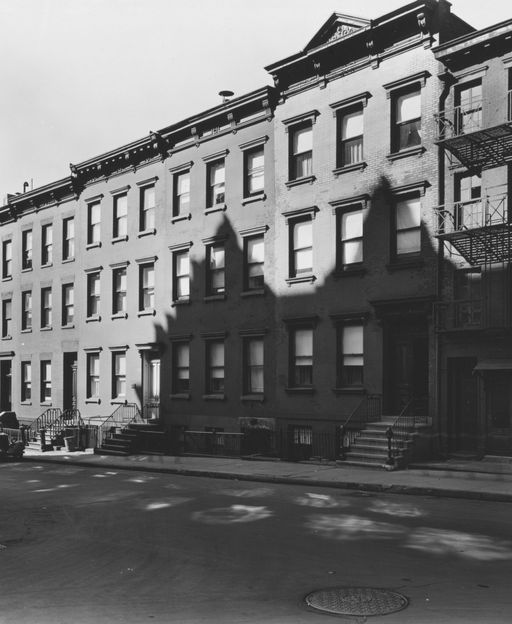
The blocks of the Lower East Side were among the most densely populated places on earth. In 1900, some blocks housed more than 1,000 people per acre.
Families of six or eight lived in two-room apartments. The rooms were tiny. Windows faced air shafts, not streets. In summer, people slept on fire escapes to escape the heat.
A typical tenement flat had no indoor plumbing until the early 1900s. Toilets were in the yard. Water came from a shared tap on each floor. Disease spread quickly. Tuberculosis was common in these conditions.
But the neighbourhood was also alive with energy. Pushcart markets filled Hester Street and Orchard Street every day. Vendors sold herring, pickles, fabrics, and secondhand clothing. The noise was constant. The smells were overwhelming. The competition was fierce.
A skilled garment worker might earn five or six dollars a week. It was never enough. Many families took in boarders to make ends meet. Children worked alongside their parents. Some sold newspapers on street corners. Others learnt their father’s trade in cramped basement workshops.
The Streets That Built a Community
The geography of the Lower East Side tells the story of its people.
Orchard Street was the heart of the Sunday market. On that day, no one worked. Thousands of shoppers and vendors crowded the street from dawn to dusk.
Hester Street was the centre of the pushcart economy. This was where one of the earliest documentary films ever made in New York was shot, in 1906.
Delancey Street was the main artery, wide enough for the trams. It connected the neighbourhood to the bridges and the rest of the city.
Essex Street housed the Essex Street Market, which still operates today. It moved indoors in 1939, when Mayor LaGuardia cleared the pushcarts from the streets.
Canal Street marked the southern boundary. Here the Lower East Side blended into the older immigrant layers of Five Points — a place where Irish immigrants had carved out their own piece of New York a generation earlier.
Faith and Culture in Every Block
Religion was the centre of community life. Dozens of synagogues occupied the Lower East Side. Many were housed in converted tenement flats — tiny shtiebls where men gathered to pray and debate and tell stories.
The most famous was the Eldridge Street Synagogue. It opened in 1887. It was the first great house of worship built by Eastern European Jews in America. Its ornate interior was a statement of permanence. The community had arrived. It intended to stay.
Yiddish was the language of the street. It filled the theatres along Second Avenue. It filled the newspapers — the Forverts (Jewish Daily Forward) had a circulation of over 200,000 at its peak. It filled the arguments between socialist workers and their bosses, between old-world rabbis and new-world secularists.
The debate was constant. How much of the old world to keep? How much to let go? Should you speak English at home? Send your children to public school? Join a union? These were not abstract questions. They shaped daily life in every tenement flat on every block.
The Triangle Shirtwaist Factory Fire
In March 1911, a fire broke out at the Triangle Shirtwaist Company on Washington Place, just north of the neighbourhood.
One hundred and forty-six workers died. Most were young Jewish and Italian women. Many were teenagers.
The doors had been locked from the outside. The owners wanted to prevent theft. They also wanted to prevent workers from taking breaks.
The fire changed New York. It changed America. It sparked the labour movement in the garment industry. It led directly to fire safety laws, factory inspection laws, and worker protection legislation.
The names of the 146 dead are read aloud every year on the anniversary. The building still stands at the corner of Washington Place and Greene Street. A plaque marks what happened there. This is one of the most important sites in American labour history.
From Survival to Success
The first generation worked. The second generation went to school.
The public schools of the Lower East Side were packed. Children of immigrants filled the classrooms at PS 2, PS 110, and dozens of others. These schools took in children who spoke Yiddish, Russian, Polish, and Rumanian. They sent back Americans.
Want more stories like this? Our weekly newsletter goes deeper into New York’s heritage every week. It’s free. Subscribe here →
The graduates of those schools transformed American culture. They became writers, musicians, scientists, and politicians. Some of the most influential figures in 20th-century American life grew up in tenement flats on these blocks.
Anti-Semitism was real and constant. Jewish applicants were turned away from universities, law firms, and social clubs. But the community built its own institutions. Its own hospitals. Its own banks. Its own social clubs. And eventually, its children broke through.
The Food That Defined the Neighbourhood
No account of the Lower East Side can ignore the food.
Bagels came from Poland and Ukraine. Bakers in New York adapted them, boiling them longer and making the crust harder and chewier. By the 1900s, hundreds of bagel bakeries operated on the Lower East Side. Today, the debate about what makes an authentic New York bagel is still going strong.
Pickles came from the Ashkenazi Jewish tradition of brining vegetables. They were practical food — they lasted through the winter. Barrels of pickles lined the kerbs on Orchard Street. The smell drifted for blocks. Gus’s Pickles on Orchard Street keeps that tradition alive today.
The egg cream — a drink of milk, seltzer, and chocolate syrup with no eggs and no cream in it — was born in this neighbourhood. Its exact origins are disputed. Every family tells a different version of the story. The truth about the egg cream is more complicated than you might expect.
Kosher delis fed the community. Katz’s Delicatessen on Ludlow Street opened in 1888 and is still there. The pastrami is still hand-sliced. The lines are still long.
What You Can See Today
The Lower East Side has changed dramatically since the peak immigrant years. Many original families moved to the Bronx, Brooklyn, and eventually the suburbs. New communities have layered on top. But the bones of the old neighbourhood remain.
The Tenement Museum at 97 Orchard Street is one of the most extraordinary museums in New York. It preserves actual tenement flats as they were lived in by real immigrant families between 1863 and 1935. You walk through the rooms where those families slept, cooked, and argued. Guides bring the residents back to life with genuine historical detail. Book ahead — tours fill up fast.
The Museum at Eldridge Street occupies the restored 1887 synagogue. Guided tours run daily. The rose window — shattered in 1944 and replaced in 2010 — is worth the visit alone.
The Essex Street Market still operates as an indoor food market. It has been reinvented in recent years with new stalls alongside old ones.
Katz’s Delicatessen at 205 East Houston Street is not a museum but it might as well be. Order the pastrami. Take a ticket. Do not lose the ticket.
The Forward Building at 175 East Broadway still stands. It once housed the most widely read Yiddish newspaper in the world.
To walk the whole story on foot, the Ellis Island to Orchard Street itinerary traces the exact journey that most of these immigrants took — from the harbour to their first home in New York.
Tracing Your Own Lower East Side Roots
If your family came through the Lower East Side, records exist.
Ellis Island passenger records are searchable for free at libertyellisfoundation.org. You may find the ship’s manifest — with your ancestor’s age, their hometown in Eastern Europe, and the name of the relative they were going to meet in New York.
New York City vital records (births, marriages, deaths) are held by the NYC Department of Records at 31 Chambers Street. Many early 1900s records are accessible with a family history enquiry.
The YIVO Institute for Jewish Research on Fifth Avenue holds an extraordinary archive of Eastern European Jewish life. If your family came from a specific shtetl or region, YIVO may have records, photographs, or memoirs from that exact place.
The New York Public Library has digitised many street photography collections that document Lower East Side life between 1890 and 1940. The historical image in this article comes from that archive.
Frequently Asked Questions
When did Jewish immigrants first arrive on the Lower East Side?
The great wave of Eastern European Jewish immigration began around 1880 and continued until 1924, when US immigration laws dramatically restricted entry. By 1910, approximately 350,000 Jewish immigrants lived in the Lower East Side neighbourhood.
What can you visit at the Tenement Museum on the Lower East Side?
The Tenement Museum at 97 Orchard Street preserves actual flats lived in by immigrant families between 1863 and 1935. Guided tours take you through the preserved rooms of real families and bring their daily lives to life with genuine historical research. Booking in advance is strongly recommended.
How can I trace Lower East Side ancestry?
Start with Ellis Island passenger records at libertyellisfoundation.org (free to search). Then try NYC vital records via the NYC Department of Records, and the YIVO Institute for Jewish Research for Eastern European Jewish family records. The New York Public Library also holds extensive digitised archives of early 20th-century neighbourhood life.
Is the Lower East Side worth visiting today?
Yes — particularly for anyone with immigrant heritage. The Tenement Museum, the Museum at Eldridge Street, and Katz’s Delicatessen are all exceptional. The original street grid and many buildings survive, making this one of the most intact immigrant-era neighbourhoods in the United States.
Ready to explore the New York your ancestors knew? Subscribe to Love New York — free weekly stories, heritage guides, and hidden history. Join us →
