
In 1910, New York City held more immigrants per square mile than anywhere on earth. Over 4.7 million people lived here. More than 40 per cent of them were born outside the United States. They came from Russia, Poland, Italy, Ireland, Germany, Austria-Hungary, and China. They spoke dozens of languages. They shared walls, staircases, and outdoor privies. They built the city you walk through today.
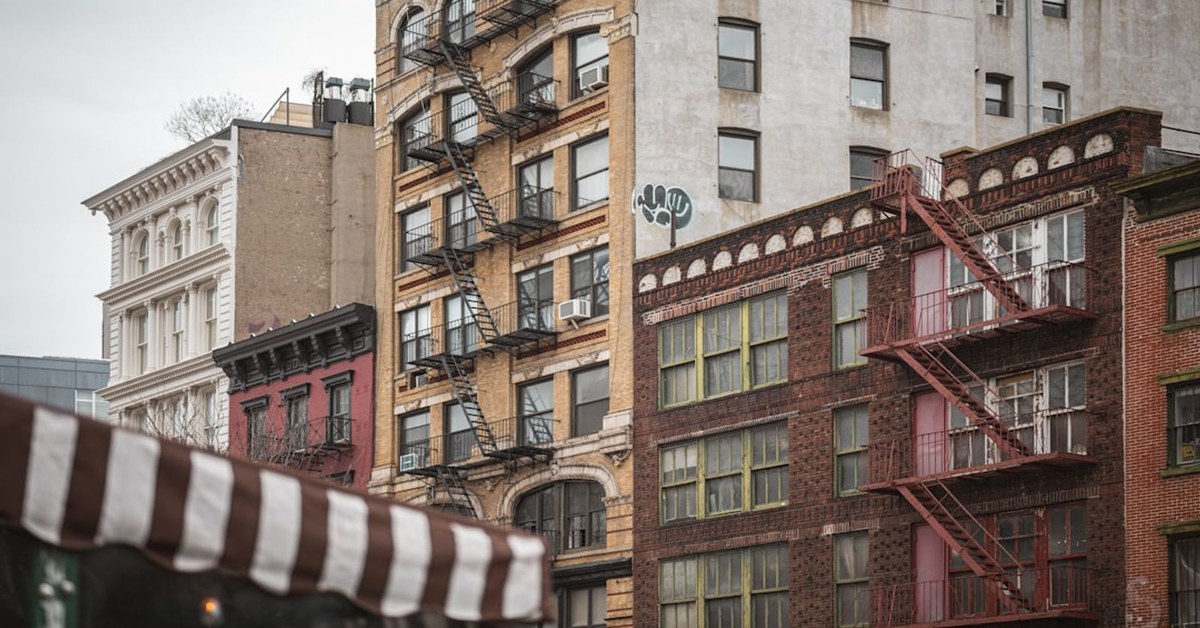
If your family came through New York in those years, this is what they found. Not the New York of postcards. The New York of dark hallways, Sunday markets, and children who grew up speaking two languages before they turned ten.
If you love New York’s hidden stories, you’ll love our free weekly newsletter. Subscribe to Love New York →
The Tenement: A Home in Three Dark Rooms
Most immigrants rented a tenement apartment on the Lower East Side, East Harlem, or the Bronx. A typical apartment had three rooms. No windows in the middle room. A communal toilet in the hall, shared between four or five families. Hot water was a luxury most tenants never had.
Rent ran between eight and fourteen dollars a month. For a factory worker earning eight to ten dollars a week, that was nearly a week’s wages. Families paid it by taking in boarders — strangers who slept in shifts on the kitchen floor.
The Lower East Side was the most densely populated place on earth in 1910. It held over 700 people per acre. In some blocks of Orchard Street, a single building housed more than 100 residents. You could not open a window without hearing your neighbour’s argument, their prayers, or their baby crying at three in the morning.
Yet people made homes there. Mothers nailed religious pictures to the walls. Fathers built shelves from packing crates. Children slept four to a mattress and remembered it as warmth, not deprivation.
The Workday: Six Days, Ten Hours, No Overtime
Most immigrant men in 1910 worked in garment factories, construction, or the docks. Most immigrant women worked too — in factories, or as pieceworkers sewing shirtwaists at home on kitchen tables. Children under fourteen often worked alongside them.
A factory shift ran ten to twelve hours. Six days a week. On the seventh day, no one forgot to rest — many families had no choice, as Sunday was the only day foremen did not unlock the factory gates.
The pay was meagre. A skilled garment cutter earned twelve dollars a week. A buttonhole stitcher earned four. From that, families paid rent, food, coal for winter heating, and sent money back to relatives in Europe or the Caribbean. Saving for anything beyond the next month was a rare achievement.
Working conditions in 1910 were dangerous. The garment district had factories with locked fire doors and broken staircases. One year later, in March 1911, 146 workers — mostly young Jewish and Italian women — died in the Triangle Shirtwaist Factory fire, just a few blocks from where thousands of their neighbours lived and worked.
The Street: Market, Meeting Place, and Escape
The street was everything the apartment was not. Open, loud, alive. On Orchard Street and Hester Street, pushcart vendors sold pickles, herring, live chickens, bolts of cloth, and shoes. You could haggle in Yiddish, Russian, Italian, or Greek. You could buy a hot knish for two cents or a cup of coffee for one.
The street was also a playground. Children played stickball between the pushcarts. They swam in the East River in summer. They stole coal from delivery wagons in winter and brought it home without shame. Survival required a kind of quick, sharp intelligence that school alone could not teach.
Sunday mornings on Orchard Street were the closest thing to a public holiday. The Sabbath was over for Jewish families. The street filled with shoppers and vendors. Neighbours argued prices, caught up on news from the old country, and checked whether relatives had written from back home. Letters from Poland or Sicily took three weeks to arrive.
Community: Faith, Language, and Mutual Aid
Immigrants did not arrive into a void. Each group built its own dense network of support. Jewish families in the Lower East Side founded hundreds of landsmanshaftn — burial societies and mutual aid organisations formed by people from the same town in Europe. If you came from Vilna, you joined the Vilna society. They helped pay your doctor, bury your dead, and lend you money when times collapsed.
Italian families in Little Italy organised around their parish church. The church from your home province held the feast day you celebrated. San Gennaro for Neapolitans. Santa Rosalia for Sicilians. The feast was a chance to hear the dialect of home in a city where everything spoke in English.
Yiddish newspapers printed half a million copies daily by 1910. The Jewish Daily Forward — still publishing today — gave immigrants news, advice, and a voice. The “Bintel Brief” column printed letters from readers asking for help with loneliness, family conflict, and the shame of poverty. Thousands wrote in. Thousands read the answers.
Want more stories like this? Our weekly newsletter goes deeper into New York’s heritage every week. It’s free. Subscribe here →
Food: How Families Ate on Very Little
In 1910, a loaf of bread cost five cents. A pound of potatoes cost two cents. A pound of beef cost fifteen cents — a luxury most families reserved for Friday night or Sunday. On weekdays, most working-class immigrants ate bread, herring, beans, cabbage soup, and whatever vegetables the pushcarts sold cheap near closing time.
Mothers fed families on careful arithmetic. They knew which vendors sold day-old bread. They knew which markets discounted fish after noon. They stretched one chicken through three days. The recipes that came to define “American” cooking — brisket, pasta e fagioli, corned beef — began here, in tiny tenement kitchens on stoves that burned coal and soot.
Children: Between Two Worlds
Children born to 1910 immigrants had a peculiar double life. At home, they spoke Yiddish, Italian, Polish, or Gaelic. At school — the New York public schools, which educated more immigrants per year than any institution on earth — they spoke English. They were translators before they were teenagers. They wrote letters for their parents. They negotiated with landlords. They read the English-language newspapers aloud at the kitchen table.
Education was the stated goal of almost every immigrant family. In 1910, New York’s public schools enrolled over 600,000 children. Many families sent children to school instead of to the factory, even when they could not afford to. That choice, made under enormous financial pressure, shaped the city’s professional and intellectual life for the rest of the century.
Some children of 1910’s immigrants became writers, scientists, judges, and artists. George Gershwin grew up in this world — his father was an immigrant from Russia, and the family moved between tenement apartments across Brooklyn and Manhattan. Irving Berlin wrote “God Bless America” in English while his mother still spoke Yiddish at home. The Lower East Side was their classroom.
The Great Wave: What It Left Behind
The peak years of immigration ran from roughly 1880 to 1924, when Congress passed the National Origins Act and largely closed the door. By then, millions of families had arrived, fought to survive, and built the city’s factories, bridges, subways, and cultural institutions.
The neighbourhoods they shaped have changed. The Lower East Side today has brunch restaurants where the pushcarts stood. Little Italy covers fewer blocks each decade. But the buildings remain — the same brick facades, the same fire escapes, the same narrow windows that looked out onto the alley where a child once played stickball in 1910.
And the records remain too. If your family came through New York in those years, their names are in the archives — in ship manifests, census rolls, and naturalisation papers. You can find them.
How to Find Your 1910 New York Ancestor Today
Family History Month runs through October. It is the best time to start searching for your New York ancestors. Here is where to look:
- Ellis Island records — Search free at libertyellisfoundation.org. Over 51 million names from 1892 to 1954.
- 1910 US Federal Census — Free search at FamilySearch.org. Find your ancestor’s address, occupation, and neighbours in 1910.
- NYC birth, marriage, and death records — Available through the NYC Department of Records and Information Services at nyc.gov/nycrecords.
- YIVO Institute for Jewish Research — Holds records of Jewish immigrants from Eastern Europe, including landsmanshaft archives. Find them at yivo.org.
- Tenement Museum — The museum at 97 Orchard Street holds records for every family who lived in the building from 1863 to 1935. Book a tour at tenement.org.
Frequently Asked Questions
How many immigrants lived in New York City in 1910?
New York City held 4.7 million people in 1910. Over 40 per cent — roughly 2.3 million — were born outside the United States. The city was the largest immigrant city in the world at that time.
Where did most immigrants live in New York City in 1910?
Most newly arrived immigrants settled in dense urban neighbourhoods. Jewish and Eastern European immigrants crowded into the Lower East Side. Italian immigrants filled Little Italy and East Harlem. Irish families spread across Hell’s Kitchen and the Bronx. Each group clustered near its own community, churches, and employers.
What did a tenement apartment look like in 1910?
A typical tenement apartment had three rooms: a kitchen, a parlour, and a bedroom. The middle room had no windows. Communal toilets sat in the hallway. Families of six to ten people shared this space, often taking in boarders to help pay rent. Iron fire escapes doubled as sleeping spots in summer heat.
How can I trace my New York City ancestors from the 1910 era?
Start with the 1910 US Federal Census at FamilySearch.org — it is free and searchable by name and address. Cross-reference with Ellis Island ship manifests at libertyellisfoundation.org. The Tenement Museum in Manhattan also holds residential records for families who lived at 97 Orchard Street between 1863 and 1935.
What is the best museum to visit to understand 1910 immigrant life in New York?
The Tenement Museum on Orchard Street is the single best place to understand what daily life looked like for 1910 immigrants. Guided tours recreate the lived experience of actual families who occupied the building. Book at tenement.org. The Museum of Jewish Heritage and the Italian American Museum in Little Italy also hold rich collections from this era.
Ready to explore the New York your ancestors knew? Subscribe to Love New York — free weekly stories, heritage guides, and hidden history. Join us →
