
Every day, millions of people say the word “Manhattan” without thinking twice. They use it for the skyline, for the borough, for the cocktail. But that word existed long before New York did — and it comes from a people who called this island home for thousands of years before anyone else arrived.
An Island With a Name
The Lenape people lived along the northeastern coast of North America for millennia before European contact. Their name for what we now call Manhattan was Mannahatta — meaning, roughly, the island of many hills.
When Henry Hudson sailed into New York Harbor in 1609, he found an island covered in dense forest, open meadows, and freshwater streams running down to the shore. The Lenape were not visitors passing through. They were intimately knowledgeable about every corner of the land.
This was not wilderness. It was home — mapped, named, and tended by people who had lived here longer than most civilizations have existed anywhere.
A Landscape That No Longer Exists
Manhattan in the early 1600s would be almost unrecognizable today. Research by ecologists working with historic maps and surveys has estimated that the island once had around 578 hills, some rising as high as a modern ten-story building. Dozens of streams threaded down to the shoreline. Oyster beds filled the shallows. Eagles nested in the canopy overhead.
The Lenape had named different parts of the island for what distinguished them: one area known for the roots gathered there, another for its beaver ponds, another for the way fish gathered at a particular bend in the water. Their geography was rich with detail that European settlers, arriving fresh, had no words for.
Centuries of development graded most of those hills flat. The streams were buried underground, channeled into the sewer system that now runs beneath city streets. The shape of the coastline itself was extended, filled in, and reshaped. Almost nothing of the original landscape survives above ground.
The Trail That Became Broadway
The Lenape were skilled traders who maintained an extensive network of paths across the island and beyond. One of those paths ran the full length of Manhattan from south to north — following the natural ridgeline, avoiding the wet lowlands, connecting the island’s communities to the wider landscape.
The Dutch settlers found the trail already worn into the earth. They widened it for their own use. The English widened it further. Over time, it became a road, then a proper street, then one of the most famous thoroughfares in the world.
Today it’s called Broadway. When you walk it from the Financial District all the way up to the Upper West Side, you are following a route that the Lenape walked long before this city existed — before there was a single building to navigate around.
Enjoying this? Join New York lovers getting stories like this every week. Subscribe free →
The “Purchase” and What It Actually Meant
In 1626, the Dutch recorded a transaction in which Manhattan was purchased from a local group for sixty guilders’ worth of trade goods. That story has lodged itself in popular history as one of the great bargains of all time — a whole island for a handful of trinkets.
The reality was more complicated. The Lenape concept of land use differed fundamentally from the European idea of permanent, exclusive ownership. Agreeing to share or use a territory was not the same as surrendering it forever. The exchange meant different things to each party involved.
Neither reading makes the history simple. But understanding that gap — between two entirely different ways of thinking about land — explains a great deal about why the early decades of European settlement in the region were so tense and contested.
The Name That Survived Everything
The Dutch called their settlement New Amsterdam. The English renamed it New York in 1664. Every ruler left a new name on top of the old one. But Mannahatta held on.
Anglicized, shortened, and shifted over generations, it became “Manhattan” — and no government, no empire, no city planner ever replaced it. The island kept the name the Lenape gave it through every conquest, every rebuild, and every reinvention.
You can fill in the coastline. You can level the hills. You can bury every stream and pave over every meadow. But that word — the one meaning island of many hills, spoken first in a language that predates this city by thousands of years — is still on every map, every address, every borough sign pointing downtown.
A Culture That Continues
The Lenape were pushed west over generations by land pressure and forced relocations. But their descendants are alive and present today — in communities in Oklahoma, Kansas, Wisconsin, Ontario, and elsewhere across North America.
The Lenape language, severely endangered, is being actively documented and revived by descendants and linguists working together. In New York City, the Lenape Center works to make the culture visible in the city that still bears the Lenape name — hosting events, language programs, and cultural education for New Yorkers who want to understand what came before.
The hills are gone. The beaver ponds are sealed beneath concrete. But when you say “Manhattan,” you are — whether you know it or not — still speaking Lenape.
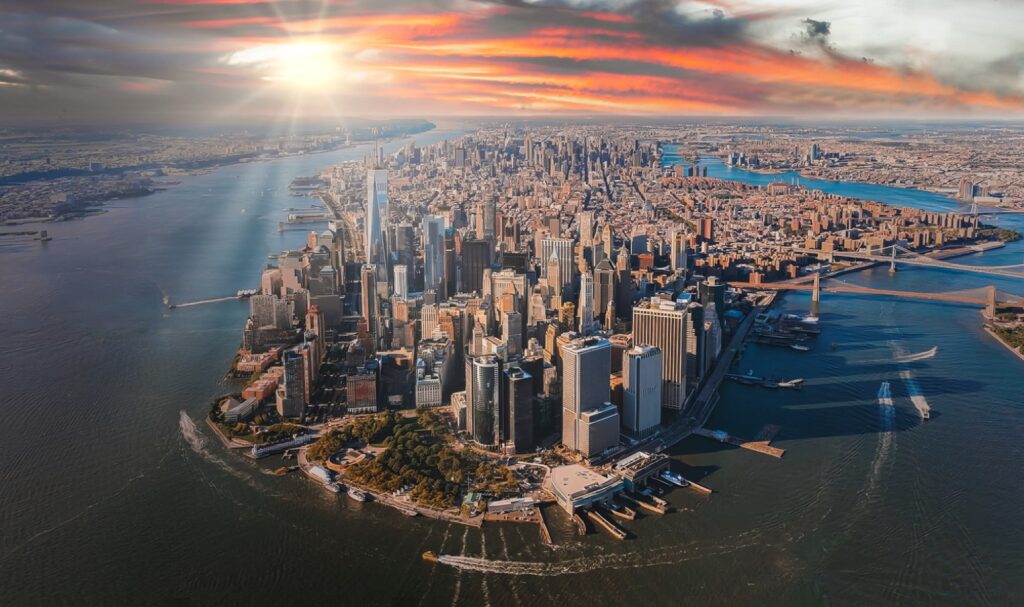
Stand at the edge of the Hudson on a clear morning and look north. The island stretches out ahead of you, water on every side, exactly as the Lenape would have seen it. The shape hasn’t changed. Only what’s been built upon it.
That name — given with care by people who knew this place more intimately than anyone since — is still here. It never really left.
You Might Also Enjoy
- Hidden Gems in NYC: The New York Most Tourists Never See
- The Best Neighbourhoods in NYC for Tourists: Your Essential Planning Guide
- Why Manhattan Has Numbers Instead of Names — and Who Made That Decision
Plan Your New York Trip
Ready to walk streets that carry ten thousand years of history? Our New York City travel tips guide covers everything you need to know before you go — from neighborhoods to navigate to the best times to visit the sites that matter most.
Join New York Lovers
Every weekday morning, get New York’s lesser-known corners, neighborhood stories, food origins, and city secrets — straight to your inbox.
Subscribe free — enter your email:
Free forever · Unsubscribe anytime
