
In the 1960s, painters and sculptors began quietly moving into abandoned factories in lower Manhattan. They were breaking the law — residential living was strictly prohibited in the industrial zone. They hid their mattresses in closets and kept tools near the door in case inspectors arrived.
What happened next changed how cities think about art, space, and the places where people actually want to live.
The District Nobody Wanted
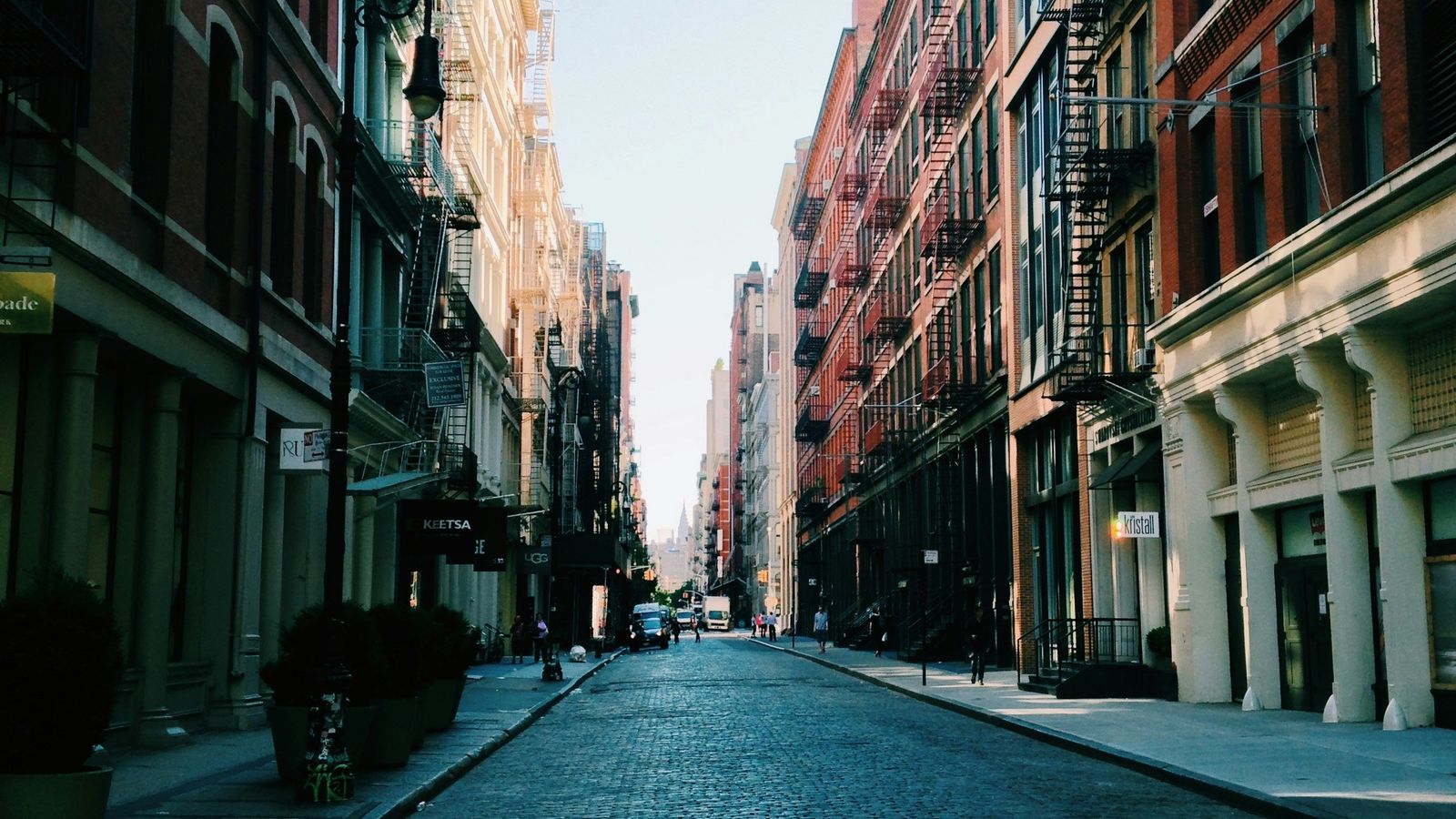
SoHo stands for South of Houston Street. In the 1950s, it was one of Manhattan’s most densely industrial neighborhoods — printing presses, glass cutters, textile mills, machine shops packed into cast-iron loft buildings that stretched from Canal Street to Houston.
After World War II, manufacturing started leaving New York. Cheaper labor elsewhere, changing logistics, and automation gradually emptied the factories. Building owners couldn’t find industrial tenants. The city had a new ghost district on its hands.
Firefighters called it Hell’s Hundred Acres. The old wooden elevator shafts in the cast-iron buildings caught fire regularly, and the blazes spread fast. The city floated plans to demolish the whole area and replace it with an expressway. SoHo came within a few political votes of not existing at all.
The Illegal Lofts
Artists discovered SoHo for the same reasons manufacturers had built there: the cast-iron buildings had soaring ceilings, oversized windows, and open floor plans unbroken by interior walls.
A sculptor needed vertical clearance. A painter needed northern light. A ceramicist needed drainage and heavy floors. The empty lofts had all of it — and rents were almost nothing because nobody legal wanted them.
They moved in quietly throughout the 1960s, word spreading through art schools and studios. Mattresses went into closets during the day. Easels and armatures came out at night. The city inspected occasionally, but the buildings were many and the inspectors were few. The community grew, and then it began to organize.
The Architecture That Made It Possible
SoHo has the largest concentration of cast-iron architecture anywhere in the world. The style was invented in New York in the 1840s — iron components were cast in foundries, shipped to the building site, bolted together, and painted to mimic stone. A factory owner could order an ornate facade from a catalog the way you’d order furniture.
It was faster than masonry, more flexible than carved stone, and fireproof in theory — though in practice the interiors burned just as readily. The large windows that attracted artists were a by-product of industrial logic: before electric lighting, factories needed as much natural light as possible to keep workers productive.
Those windows are now among the most coveted architectural features in New York real estate. When natural light became a luxury, SoHo had it built into every facade.
Enjoying this? Join New York lovers getting stories like this every week. Subscribe free →
The City Changes the Rules
By the late 1960s, the artist community in SoHo was too large and too organized to ignore. Painters, sculptors, and photographers formed advocacy groups, lobbied city council, and made a simple argument: we are saving these buildings, we pay taxes, and we are not hurting anyone.
In 1971, New York City officially rezoned part of SoHo as a Joint Live-Work Quarters for Artists district. To qualify, residents had to apply for an artist certification issued by a city panel. It was the first time any major American city had legally sanctioned the conversion of industrial loft space into residential use.
Urban planners across the world studied the SoHo model. Cities from London to Berlin to Los Angeles would eventually adapt versions of it. The idea that an industrial building could legally become a home — if the right people were in it — began here.
The Gallery Years
With legal status came galleries. Leo Castelli, one of the most powerful art dealers in the world, moved his gallery to West Broadway. Paula Cooper followed. Then Sonnabend. Then dozens more in a single decade.
Saturday afternoons became a ritual. New Yorkers with no particular connection to the art world came to browse. Young painters and sculptors from across the country moved to SoHo just to be near the scene. The names that define American contemporary art — Basquiat, Haring, Richard Serra, Cindy Sherman — were all part of the neighborhood’s orbit during this period.
The neighborhood that had been nobody’s first choice was suddenly everyone’s destination. And that success would undo everything the artists had built.
What Success Does to a Place
Through the 1980s, boutiques and luxury retailers began signing leases. Prada opened a landmark flagship on Broadway. Louis Vuitton, Chanel, and major department stores followed. Rent rose with every renewal cycle, and the galleries — which had made the neighborhood famous — started looking elsewhere.
By the mid-1990s, most of the significant galleries had relocated to Chelsea, where rents were lower and floor plans were larger. The artists who had built SoHo found they could no longer afford to live or work there.
Urban planners now call this cycle the SoHo Effect. A neglected neighborhood attracts artists seeking cheap space. The artists create cultural energy. That energy attracts investment. Investment prices out the artists. The pattern has repeated across Brooklyn, in Williamsburg and Bushwick, and in the area around the Meatpacking District, which made the same transformation within a single generation.
If you’re planning a trip that includes multiple New York neighborhoods, SoHo still rewards a slow morning walk — especially along Greene Street and Broome Street, where the original cast-iron facades survive above the brand-name storefronts. Look up past the logos. The bones of an extraordinary place are still there.
What is the best time to visit SoHo in New York?
Saturday mornings before noon are ideal — the neighborhood is lively without the afternoon shopping crowds. Spring and early fall offer pleasant temperatures for walking the cobblestone streets and exploring the cast-iron architecture at a comfortable pace.
What is SoHo famous for in New York City?
SoHo is famous for three things: its 19th-century cast-iron architecture (the largest surviving collection in the world), its role as the center of the American contemporary art world in the 1970s and 1980s, and its transformation into one of New York’s premier luxury shopping districts.
Where can I find the best cast-iron architecture in SoHo?
Walk along Greene Street and Mercer Street between Canal and Houston. The block of Greene Street between Prince and Spring is particularly well preserved and features some of the most ornate cast-iron facades in the city. Look for the decorative columns and cornices above the storefronts.
How do I get to SoHo from Midtown Manhattan?
Take the N, Q, R, or W subway to Prince Street Station, or the 6 train to Spring Street. Both stations are within a five-minute walk of the main SoHo shopping and gallery streets. The neighborhood is also easily walkable from Tribeca and the West Village.
SoHo today is not what it was. But it is still extraordinary — a neighborhood that was saved by people who had nothing to lose, transformed by those who saw its potential, and changed again by the forces that follow any place the moment it becomes desirable. The cast-iron facades that look down on the boutiques were already old when the artists arrived. They will outlast what replaced them, too.
You Might Also Enjoy
- The New York Block That Went From Slaughterhouse to Runway in One Generation — the Meatpacking District’s remarkable transformation
- The Best Neighbourhoods in NYC for Tourists: Your Essential Planning Guide — find the right New York neighborhood for your trip
Plan Your New York Trip
New York City Itinerary: 5 Days of the Best the City Has to Offer — a day-by-day guide to getting the most out of New York, including the best neighborhoods to explore on foot.
Join 1,100+ New York Lovers
Every weekday morning, get New York’s hidden gems, neighbourhood stories, food origins, and city secrets — straight to your inbox.
Subscribe free — enter your email:
Love more? Join 65,000 Ireland lovers → · Join 43,000 Scotland lovers →
Free forever · Unsubscribe anytime

Subscribe Free