
You’re standing on a platform somewhere in Manhattan. The uptown train is three minutes out. And then you hear it — a saxophone, clean and bright, bouncing off the tile walls in a way that stops you mid-step.
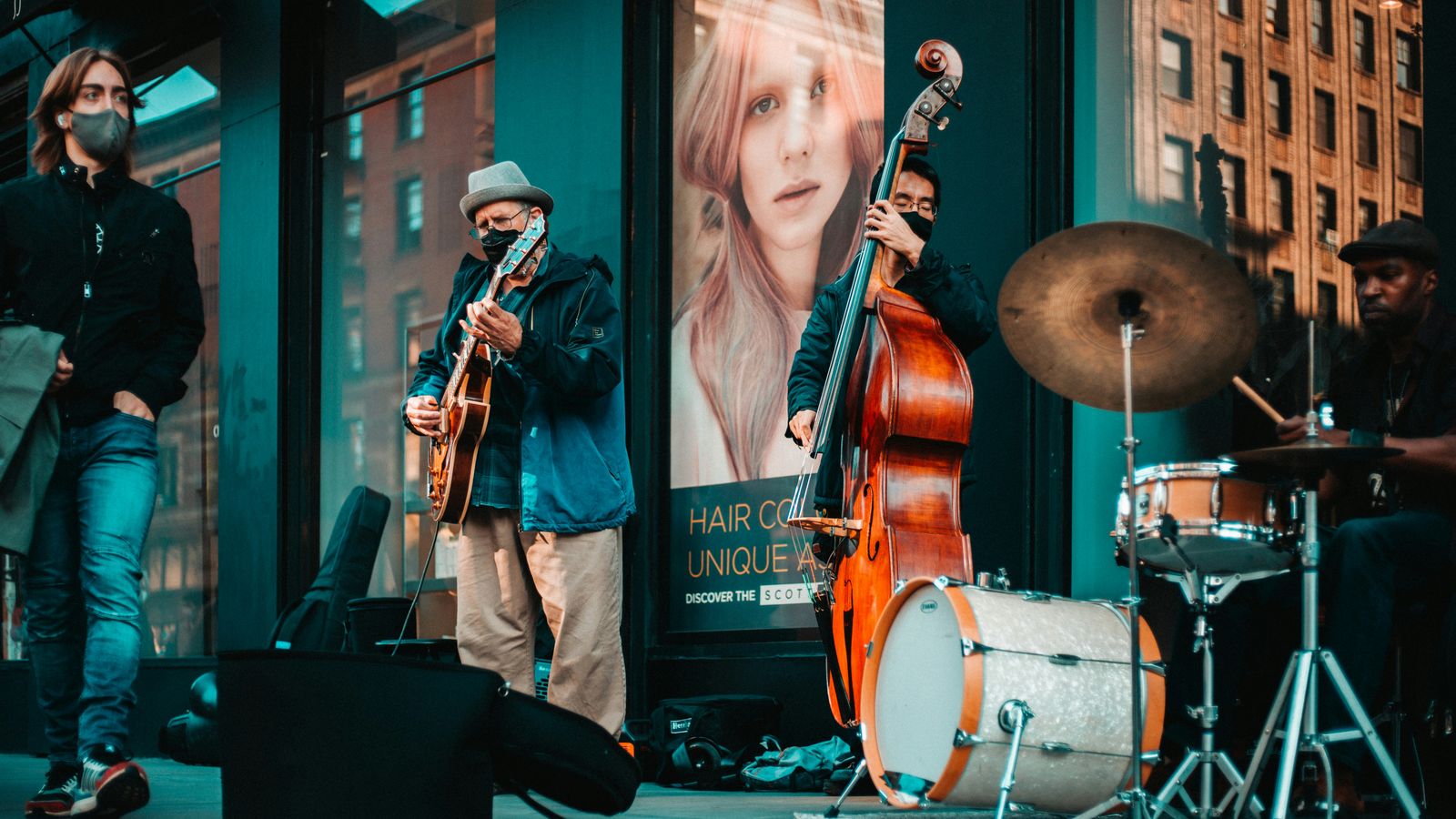
The commuter next to you doesn’t look up. She’s heard it before. But you haven’t. And something about the sound settles into the station in a way that makes the whole underground feel a little more human.
That musician didn’t just show up. They earned the right to be there.
The Program Most New Yorkers Forget Exists
Since 1985, the Metropolitan Transportation Authority has run a program called Music Under New York — MUNY for short.
Its purpose is deceptively simple: put talented musicians in the subway system and let them play.
But “put” understates what actually happens. Every spring, thousands of musicians apply for a chance to perform in the world’s most famous underground. They travel to audition venues across the city — Grand Central Terminal being the most iconic — and perform in front of a panel of judges.
All genres are welcome. Jazz. Classical. Mariachi. Folk. Bluegrass. West African drumming. Opera. The MTA isn’t looking for a particular sound. It’s looking for the ability to stop a room.
Only a fraction of applicants are selected each year.
What the Audition Actually Involves
Auditioning for a subway performance slot is not casual. Musicians prepare polished sets, bring their own equipment, and compete against performers who have been applying — and reapplying — for years.
The judges are looking for technical skill and originality. But they’re also looking for something harder to define: the ability to hold an audience in a place where no one came to watch.
A subway platform is not a concert hall. The audience is distracted, moving, often wearing headphones. Many are late. Many are exhausted. Winning even thirty seconds of genuine attention requires something extra.
Accepted musicians receive designated time slots and specific locations throughout the system — from major hubs like Union Square and Times Square to quieter underground corridors that most riders pass without a second glance.
Enjoying this? Join New York lovers getting stories like this every week. Subscribe free →
A Stage No Architect Planned
The acoustic properties of the New York subway were never designed for music. Tile walls, vaulted ceilings, and steel platforms create unpredictable reverb that shifts by station, by time of day, and by the number of people present.
But the best performers don’t fight the acoustics. They use them.
A cellist on the platform at 72nd Street on the Upper West Side. A jazz quartet whose sound fills the tiled tunnels at Fulton Street. A solo violinist at Union Square, her music weaving through the crowds like something alive.
These aren’t street performances in the traditional sense. They’re something closer to site-specific concerts — shaped by a city that built its underground without a single thought for how beautiful it might one day sound. And music isn’t the only art the subway is hiding: the NYC subway’s world-class art collection is another underground secret most riders walk past every day.
The Unofficial Side
Not all subway musicians are part of MUNY. Unauthorized busking has always existed alongside the official program, and enforcement has been inconsistent across the decades.
But the distinction matters to the performers who went through the official process. They competed. They prepared. They showed up to be judged against thousands of other musicians — and they were chosen.
Many MUNY performers display a small program sign near their instrument case. It’s easy to miss. But once you know to look for it, you start seeing it everywhere — a quiet credential in a city that respects results above almost everything else.
Where to Find the Best Subway Music in New York
Different parts of the system have their own musical character, and it shifts with the time of day.
Grand Central Terminal’s lower concourse and connecting tunnels have some of the best acoustics in the entire system. Classical ensembles and solo instruments sound extraordinary there — the tile and stone amplify every note.
Union Square is known for variety: jazz, folk, soul, and everything in between. It’s a transfer hub for four subway lines, which means a constant flow of new audiences throughout the day.
The Bleecker Street stop and the stretch through Greenwich Village lean toward singer-songwriters — a fitting tradition in a neighborhood that shaped American folk music for decades.
Times Square-42nd Street is loud and unpredictable. But catching the right performer in that space is one of the most memorable experiences the city offers. The chaos of it only adds to the feeling that you are, unmistakably, in New York. For more unexpected pleasures worth seeking out, the hidden gems guide to NYC is a useful place to start.
Frequently Asked Questions
What is the Music Under New York (MUNY) program?
Music Under New York is the MTA’s official program for placing auditioned musicians throughout New York City’s subway stations. Launched in 1985, it brings live music across all genres — from classical and jazz to mariachi and folk — to millions of daily riders, completely free of charge.
How do musicians get selected to perform in the NYC subway?
The MTA holds open auditions each spring, typically at Grand Central Terminal, where musicians perform before a judging panel. All genres are welcome, and competition is intense — only a portion of applicants are accepted each year. Those selected receive designated time slots and performance locations throughout the system.
Where are the best places to hear live music in the New York subway?
Grand Central Terminal’s lower level tunnels offer outstanding acoustics and frequently host classical performers. Union Square, the Times Square-42nd Street complex, and the Bleecker Street station near Greenwich Village are consistently strong spots. Morning and evening rush hours are when you’re most likely to encounter performances.
Is watching subway musicians in New York free?
Yes — entirely free beyond your standard subway fare. Most musicians have a case open for tips, but tipping is completely voluntary. Showing up, stopping for a moment, and listening is participation enough.
New York moves fast. It always has. But the subway musicians — officially auditioned, carrying instruments through the turnstiles before the city fully wakes up — are one of New York’s quiet arguments for slowing down.
Even for thirty seconds on a Tuesday morning, with a saxophone echoing off ninety-year-old tile and a train on its way, the city is asking you to stop and listen.
Most days, it’s worth it.
You Might Also Enjoy
- New York’s Subway Hides One of the World’s Great Art Collections — And It’s Free
- Hidden Gems in NYC: The New York Most Tourists Never See
- The Best Free Things to Do in New York City
Plan Your New York Trip
Ready to explore New York City for yourself? Our 5-day New York City itinerary is a curated guide to the city’s best experiences — neighborhoods, food, culture, and all the underground surprises you won’t find in a standard guidebook.
Join 1,100+ New York Lovers
Every weekday morning, get New York’s hidden gems, neighbourhood stories, food origins, and city secrets — straight to your inbox.
Subscribe free — enter your email:
Love more? Join 65,000 Ireland lovers → · Join 43,000 Scotland lovers →
Free forever · Unsubscribe anytime

Subscribe Free