
Walk down 18th Avenue in Brooklyn and you can still hear Italian in the bakeries. Walk a few blocks south, under the elevated train on 86th Street, and Cantonese fills the air. Bensonhurst holds both worlds. Its story is a map of how New York families have moved, settled and started over.
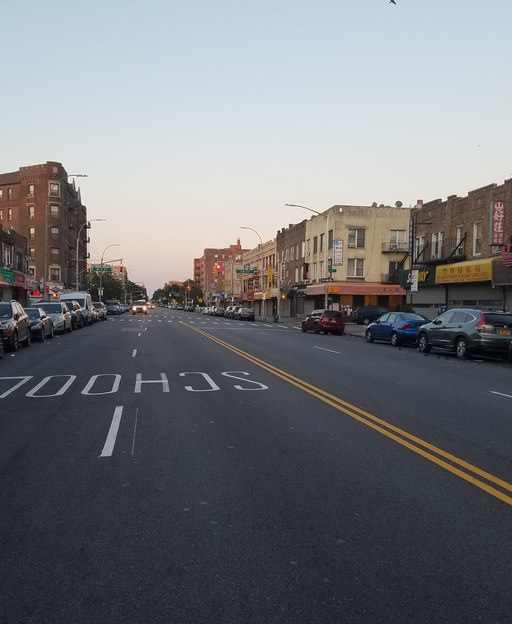
This guide follows the families who built Bensonhurst. It covers the Italian and Jewish years, the newer arrivals, and how you can trace your own family here.
Get our free Hidden Gems of New York guide →
From Farmland to Streetcar Suburb
The neighborhood takes its name from Egbert Benson, who lived from 1789 to 1866. His children and grandchildren sold the family farmland to a real estate developer named James D. Lynch. According to this neighborhood history, Lynch bought the old farms in the mid-1880s. By 1888 he was selling lots.
That first sale covered a seaside resort area. Today we call that area Bath Beach. Over the next decades, the farms gave way to rows of houses. Families who wanted more space than a Manhattan tenement offered came looking for a yard and a front stoop.
When Italians and Jews Shared the Same Blocks
In the early 20th century, many Italian and Jewish families moved in. Before World War II, the neighborhood was about equally Jewish and Italian. Neighbors shopped at the same stores and rode the same trains.
Many families of that era left crowded Manhattan streets for the outer boroughs. You can read about one of those older neighborhoods in our guide to the Lower East Side that Jewish immigrants built. For Bensonhurst, think of the move as a step up. It meant a private house, a small garden and a short ride to work.
In the 1940s, a new wave of southern Italian families arrived. They left the area mostly Italian. They brought their food, saints and dialects with them.
18th Avenue: Brooklyn’s Little Italy
For decades, Bensonhurst counted as the main Little Italy of Brooklyn. Its main street is 18th Avenue, also called Cristoforo Colombo Boulevard. The stretch between 60th Street and Shore Parkway has long held small, family-run Italian businesses. Many stayed in one family for generations.
The census of 2000 counted more than 20,000 Italian speakers here. That number has since shrunk. The Italian-speaking community has grown older. In the 2020 census, Italian Americans made up 9.2% of the neighborhood.
One tradition keeps the old world alive. Every year, in late August or early September, neighbors hold the Festa di Santa Rosalia on 18th Avenue. Locals call it “the Feast.” Rosalia is the patron saint of Palermo, and many Sicilians also honor her across the island. Dates change each year, so check the local listings before you plan a visit.
For another Brooklyn Italian story, read about Carroll Gardens and its Italian immigrants. The Bronx has its own version too: Belmont, the real Little Italy.
86th Street and the New Chinatown
Around 1989, a new wave of immigrants began to arrive. Most came from southern China, Russia and Ukraine. By the 1990s, Bensonhurst had grown far more diverse.
Today you can find a second Brooklyn Chinatown below the elevated West End Line. It runs along 86th Street from 18th Avenue toward Stillwell Avenue. Newer clusters of Chinese shops also sit near 18th Avenue and Bay Parkway. Most of the Chinese families here speak Cantonese, with smaller groups of Fuzhou and Mandarin speakers.
The numbers show how fast the change came. Based on data from 2007 to 2011, Bensonhurst held 9.5% of the city’s 330,000 Chinese-born residents. That gave it the largest Chinese-born population of any New York neighborhood. In the 2020 census, Asian residents outnumbered white residents for the first time.
Chinese families also built Sunset Park, further north along the same N and W subway lines. Read how that neighborhood grew in Sunset Park’s Finnish, Norwegian and Chinese heritage.
A Neighborhood of Many Homelands
Bensonhurst is also home to Polish, Ukrainian, Russian, Albanian, Georgian, Uzbek, Pakistani, Egyptian, Mexican and Guatemalan families. In 2013, the city reported that Bensonhurst had the second-highest number of foreign-born residents in New York. It counted 77,700 people. Only Washington Heights had more.
That mix looks familiar if you know Brighton Beach and its Soviet Jewish community, a short ride away on the same coast.
Walk the neighborhood slowly and you read it in layers. A shop sign in Italian sits near a storefront in Chinese. A Buddhist temple stands in a neighborhood that once held mostly churches and synagogues. Each sign marks a family that crossed an ocean and picked this part of Brooklyn. Each one added a new chapter to a story that began with Egbert Benson’s farms.
Get our free Hidden Gems of New York guide →
How to Trace Your Bensonhurst Roots
Start with what your family already knows. Ask relatives for old addresses, parish names and the names of shops. Then follow the steps in our step-by-step guide to tracing your New York City ancestry.
Three kinds of records help most. Census pages show who lived at an address in each decade. Passenger lists show when your family arrived. City birth, marriage and death records show where they settled. Together, they can place a grandparent on a specific Bensonhurst block.
Keep a notebook as you go. Write down each street, each shop name and each story you hear. Those notes can become the start of your own family file. Many Bensonhurst families have lived on the same block for three generations, and neighbors often remember who lived where.
Plan Your Heritage Visit
Take the D train to 18th Avenue for the Italian side. Walk the avenue and notice the family names above the shop doors. Then continue to 86th Street under the elevated tracks to see the Chinese commercial strip. Allow a half day to see both. Bring a camera and an appetite, and go in daylight.
Bensonhurst is a living neighborhood, not a museum. Be respectful when you take photos, and ask before you photograph people. Many shops are family-run, and a friendly question often leads to a good story.
Frequently Asked Questions
Where is Bensonhurst in Brooklyn?
Bensonhurst sits in southwestern Brooklyn. It is bordered by 14th Avenue, 60th Street, Avenue P and 86th Street, and it neighbors Dyker Heights, Borough Park and Bath Beach.
Which immigrant groups settled in Bensonhurst?
Italian and Jewish families arrived first in the early 20th century. Chinese, Russian, Ukrainian and many other families came from about 1989 on.
Is Bensonhurst still Little Italy today?
It is still known as Brooklyn’s Little Italy, but its Italian-speaking community has shrunk. In 2020, Italian Americans made up 9.2% of residents, and Asian residents now form the largest group.
What can visitors see in Bensonhurst today?
You can walk 18th Avenue for Italian-American family businesses and 86th Street for the second Brooklyn Chinatown. The Feast of Santa Rosalia fills 18th Avenue each late summer.
How do I get to Bensonhurst by subway?
The D train runs above 86th Street and 18th Avenue on the West End Line. Check the current MTA map before you go, since service changes often.
Get our free Hidden Gems of New York guide →
