
Look up from almost any sidewalk in Manhattan or Brooklyn. The first thing you’ll notice isn’t the skyscrapers. It’s the iron. Hundreds of metal ladders and landings climbing the sides of brick buildings, zigzagging from sidewalk to roofline, empty and waiting.
New York has an estimated one million fire escapes. They are so common that most people stop seeing them. But look again. These iron structures are one of the most distinctly New York things in existence — and they carry more history than most of the landmarks people pay to visit.
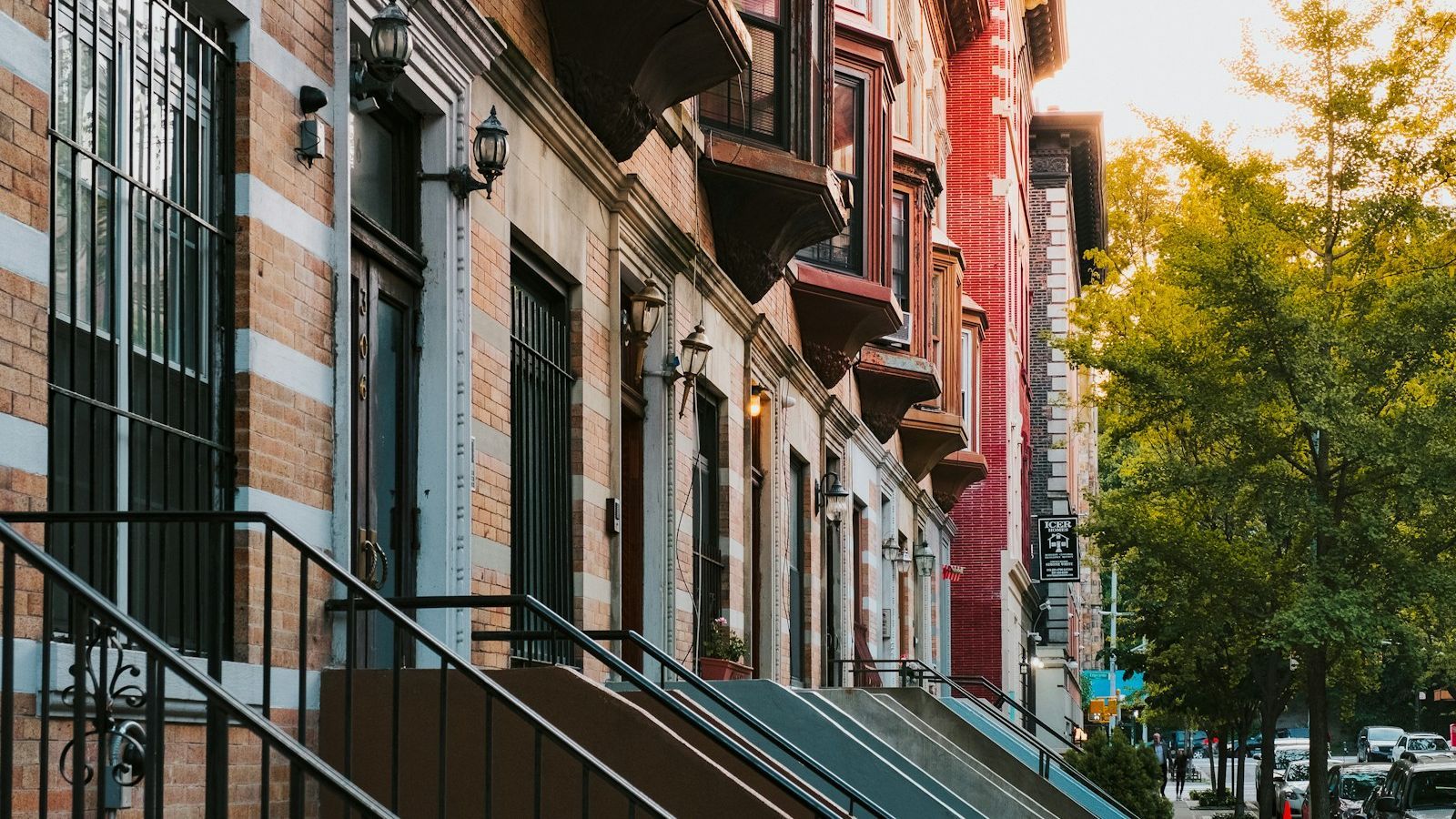
The Iron Skeleton of a New York Building
Fire escapes became a legal requirement across New York in the late 19th and early 20th centuries. As buildings went up faster than regulations could keep pace, city codes began demanding a second means of exit from every occupied floor.
The design that won out was straightforward: a small iron platform bolted to the exterior wall, connected by steep ladders to the floors above and below. Simple, cheap, and highly visible from the street.
By the 1920s, the fire escape was a fixture on nearly every tenement, rowhouse, and apartment building in the five boroughs. No other city in the world ended up with quite this many of them.
They Were Never Supposed to Be Beautiful
The original fire escape was purely functional. Cast iron gave way to wrought iron and eventually to the pressed steel drop-ladder systems common today. Early designs were often crude — landlords built the minimum the law required, and nobody gave much thought to aesthetics.
But New York has a way of transforming necessity into identity. Alongside the wooden water towers that crown New York City’s rooftops — another feature that was never meant to be beautiful — fire escapes became inseparable from the city’s visual character.
Photographers discovered that fire escapes create extraordinary geometry against brick. Step back and look at a block of tenements in the East Village or Crown Heights: the iron grids stack against red brick in a pattern that looks almost deliberately designed.
The Unofficial Living Room
Here is what no architect or building inspector anticipated: New Yorkers would actually live on their fire escapes.
In the decades before air conditioning, a fire escape was the only relief during a New York summer. Families dragged mattresses out through windows and slept in the open air three stories above the street. Mothers set up folding chairs and watched the neighborhood below. Card games ran late into the night on metal platforms four feet wide.
Plants came next. Then small tables, string lights, and tiny grills. Visit blocks in the East Village, Harlem, or Park Slope today and you’ll still see tomato plants in pots, mismatched chairs, and window boxes balanced on iron railings. The brownstone buildings of Brooklyn are especially famous for this — residents have spent generations making every outdoor inch their own.
Enjoying this? Join New York lovers getting stories like this every week. Subscribe free →
Fire Escapes in Film, Art, and Song
If you have seen New York on screen, you have seen fire escapes. They appear in the opening of West Side Story, in the long chases of countless crime dramas, and in nearly every romantic scene where someone in the city needs a private moment and finds one just outside the window.
Fire escapes became a visual shorthand for a particular kind of New York intimacy: the idea that in a city of millions, you can find a few square feet of iron that are entirely yours.
Poets wrote about them. Painters included them in skyline portraits. Jazz musicians in Harlem used the ambient sound drifting up from the street to tune their ears to the city’s rhythm. Photographers from the 1930s through the 1960s built entire careers shooting the fire escape life of the Lower East Side.
What the City Is Debating Now
Modern building codes require interior fire stairs in all new construction. New York no longer mandates exterior fire escapes for new buildings — and some architects argue the old ones should be quietly removed as buildings are renovated.
There is a real tension here. Fire escapes are expensive to maintain and require regular inspection. Poorly kept ones can become genuinely hazardous. Cities like London and Paris moved away from exterior emergency infrastructure decades ago.
But ask almost any New Yorker what they would miss if fire escapes disappeared, and the answer comes quickly. Not the function — the feeling. The silhouette. The sense that the city’s buildings have bones you can see from the sidewalk, and that those bones have lived-in lives attached to them.
Where to Find the Most Iconic Fire Escapes
Some of the most photogenic fire escapes in New York line the old tenement blocks of the Lower East Side, particularly around Orchard Street and Delancey. The East Village and West Village are also exceptional — on almost any block, the contrast between weathered brick and black iron is at its sharpest.
In Brooklyn, the neighborhoods around Fort Greene and Crown Heights offer block after block of brownstone facades loaded with elaborate ironwork. In Harlem, especially along 116th Street and Frederick Douglass Boulevard, fire escapes climb buildings that have stood for over a century.
These are not tourist attractions, exactly. They are just the city, doing what the city does: turning something practical into something that looks, from a certain angle, like it was always meant to be there.
What neighborhoods in New York City have the most iconic fire escapes?
The Lower East Side, East Village, and parts of Harlem have the densest concentration of photogenic fire escapes. Look along Orchard Street, Delancey Street, or any block in Fort Greene or Crown Heights for the most striking examples of iron against brick.
Why do so many New York City buildings have fire escapes on the outside?
New York law required exterior fire escapes on older multi-story buildings as a mandated second means of emergency exit. The regulations were tightened in the late 1800s and early 1900s, and the iron platform-and-ladder design became standard on nearly all pre-war residential buildings across the five boroughs.
Are New York City fire escapes still used as emergency exits?
Yes — on pre-war buildings they remain a designated emergency exit and must pass regular city inspections. In modern buildings, interior fire stairs have replaced them as the primary safety feature, but on older apartment buildings the exterior fire escape is still a legal and functional exit route.
Can you sit on a New York fire escape?
Fire escapes are designed for emergency use, but New Yorkers have used them as informal outdoor space for generations — for sleeping on summer nights, growing plants, and watching the street below. The practice is deeply ingrained in city culture, even if fire escapes are technically emergency infrastructure.
You Might Also Enjoy
- Why New York City Still Has Thousands of Wooden Water Towers on Its Rooftops — another iconic feature of the New York skyline with a fascinating story behind it.
- Why New Yorkers Are Still Obsessed With Brooklyn’s Brownstones After 150 Years — the full story of New York’s most beloved residential architecture.
- Best Neighbourhoods in New York City: Your Essential Visitor’s Guide — the definitive guide to finding your perfect corner of the city.
Plan Your New York Trip
Ready to explore the city in person? Our Ultimate New York Travel Guide covers everything from neighborhoods to navigate, hidden spots worth finding, and practical tips for getting the most out of every day in the city.
Join 1,100+ New York Lovers
Every weekday morning, get New York’s hidden gems, neighbourhood stories, food origins, and city secrets — straight to your inbox.
Subscribe free — enter your email:
📲 Know someone who’d love this? Share on WhatsApp →
Love more? Join 65,000 Ireland lovers → · Join 43,000 Scotland lovers →
Free forever · Unsubscribe anytime
Frequently Asked Questions
How many fire escapes are in New York City?
New York has an estimated one million fire escapes, more than any other city in the world. They're so common that most people stop noticing them as they walk down the street.
When and why did fire escapes become required in New York?
In the late 19th and early 20th centuries, as buildings rose faster than regulations could keep up, the city required a second means of exit from every occupied floor. The fire escape—a simple iron platform connected by steep ladders—was the cheap, practical solution that became standard.
What makes NYC's fire escapes different from other cities?
No other city ended up with nearly as many fire escapes as New York. By the 1920s, they were fixtures on nearly every tenement, rowhouse, and apartment building in the five boroughs.
Why are fire escapes such an iconic part of New York's visual identity?
Though they were built purely for function with no regard for aesthetics, fire escapes became inseparable from how the city looks. Photographers have long recognized that fire escapes create striking geometric patterns against brick, transforming this practical necessity into an iconic element of New York's landscape.

Subscribe Free