
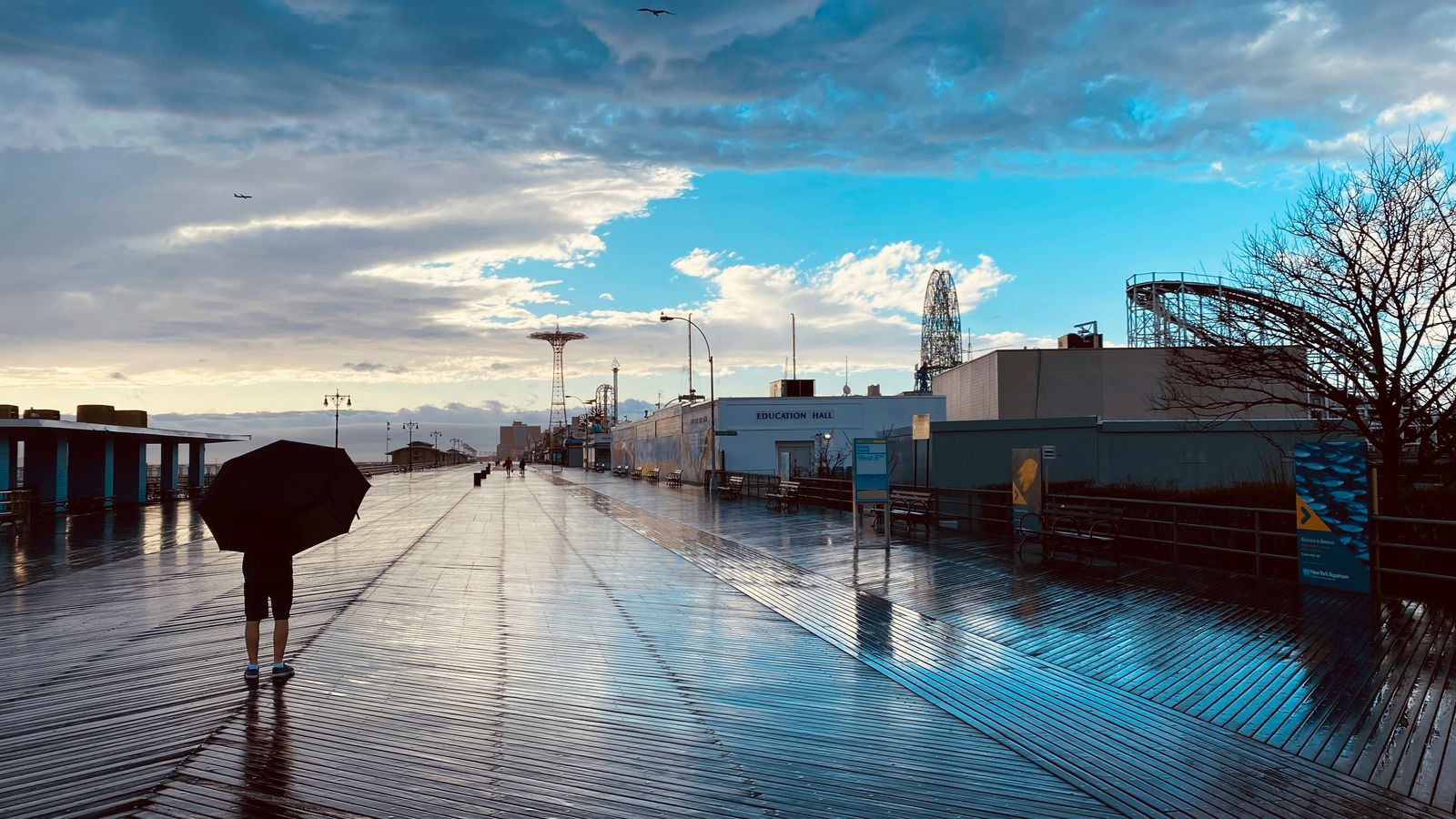
There’s a stretch of Brooklyn shoreline where time works differently. On a hot July afternoon, the Cyclone creaks and drops against a hazy sky, Nathan’s grills spit salt into the ocean breeze, and the Wonder Wheel turns in its slow, enormous circle. Coney Island isn’t just a beach. It’s a feeling New York has been chasing since before the subway existed.
The Playground America Invented
Before Disneyland. Before Las Vegas. Before any modern conception of an amusement park, there was Coney Island.
In the 1880s, three competing parks — Steeplechase Park, Luna Park, and Dreamland — transformed a remote strip of Brooklyn sand into the most-visited entertainment destination on Earth. On summer Sundays, a million people could arrive by trolley, train, and ferry.
These weren’t genteel amusements. They were wild, electric, slightly dangerous — and New Yorkers loved them exactly for that reason. The city had found its relief valve, and it ran all summer long.
The Rides That Defined Generations
The Cyclone roller coaster opened in 1927 and has been terrifying riders ever since. At its peak, passengers hit 60 miles per hour on a wooden track that shakes and groans as if it might not hold.
The Wonder Wheel — a 150-foot Ferris wheel built in 1920 — offers something stranger than a simple spin. Riders in the swinging cars slide toward the centre on rails, catching first-timers completely off guard.
Both rides are still running. Both are now New York City landmarks. In an era when theme parks are demolished and rebuilt constantly, this is remarkable. They have outlasted empires and outlasted better-funded competitors. They are still here because New Yorkers refused to let them go.
Nathan’s and the Hot Dog That Became Mythology
Nathan Handwerker opened Nathan’s Famous in 1916 at the corner of Surf and Stillwell Avenue with a simple pitch: a nickel hot dog, better than anyone else’s.
He was right. By the 1920s, Nathan’s was serving politicians, celebrities, and working-class New Yorkers in the same long line. The July 4th hot dog eating contest — started in 1972 — turned the stand into a global media spectacle.
But the real draw has never changed. It’s a hot dog on a paper plate, eaten standing up, with the ocean wind in your face. Some experiences are just immune to improvement.
Enjoying this? Join New York lovers getting stories like this every week. Subscribe free →
The Immigrant Summers
For decades, Coney Island was the summer of the immigrant New Yorker.
Eastern European Jews from the Lower East Side. Italians from Brooklyn’s row houses. Puerto Rican families from East Harlem. The beach was one of the few places in the city that didn’t require a ticket beyond the subway fare.
The ocean erased some of the hierarchies that defined the rest of city life. On a summer Saturday, you were just someone on a blanket in the sun. That tradition is still very much alive. The demographics have shifted across generations, but the ritual is exactly the same.
The Decline and the Comeback
By the 1970s and 1980s, Coney Island had fallen hard. The grand parks were gone — Dreamland burned in 1911, Luna Park fire-destroyed in 1944, Steeplechase demolished in 1964. The rides that remained were aging. The neighbourhood surrounding them was struggling.
City planners debated the area’s future for decades. Then something unexpected happened: it held on.
The Cyclone survived. The Wonder Wheel survived. The boardwalk — four miles of wooden planks running along the water — survived every storm, including Hurricane Sandy in 2012. Today, Luna Park (the name revived by a new operator) runs modern rides alongside the historic ones. The neighbourhood is changing, but the beach still belongs to everyone.
What Actually Draws People Back
Ask any New Yorker why they go to Coney Island and they rarely give a practical answer.
It’s not the rides, exactly. Not the hot dogs, exactly. Not the beach — which is not particularly pristine by beach standards. It’s something about the scale of it: the enormous sky, the open water, the sense of being at the edge of the city where it stops pretending to be serious for a day.
New York is relentless. Coney Island is the place where it puts that down for a few hours. And on a summer afternoon, with the Wonder Wheel turning and the smell of sunscreen and salt in the air, that’s more than enough.
If you’re exploring more of Brooklyn’s outdoor spaces, our Prospect Park guide covers a completely different side of the borough — quieter, greener, and equally beloved by locals.
For Brooklyn’s creative transformation, the story of Williamsburg’s artist community shows how another neighbourhood reinvented itself — and what it cost.
Frequently Asked Questions About Coney Island
When is the best time to visit Coney Island in New York?
Late June through August is peak season, with the beach busiest on weekends. Weekday mornings in July offer shorter lines, cooler crowds, and full access to all rides and vendors. For a quieter experience, late May and early September are ideal — mild weather, fewer tourists, and the full boardwalk still open.
How do you get to Coney Island by subway from Manhattan?
Take the D, F, N, or Q train to Coney Island–Stillwell Avenue — the last stop on each line. The trip from Midtown takes about 50 minutes and costs a standard MetroCard fare. It’s one of the most satisfying end-of-the-line rides on the entire New York subway system.
Is Coney Island worth visiting even if you don’t like rides?
Absolutely. The boardwalk alone is worth the trip — four miles of open ocean views with no entry fee. Nathan’s Famous, the beach, the neighbourhood restaurants, and the sheer spectacle of the place make it worthwhile on any day. The Wonder Wheel can be enjoyed from the ground too.
What is the history of the Wonder Wheel at Coney Island?
The Wonder Wheel opened in 1920 and was designated a New York City landmark in 1989. Its distinctive design features both stationary and swinging gondola cars. The swinging ones slide toward the centre as the wheel turns, giving riders an unexpected lateral motion that surprises first-timers every time.
Every summer, the boardwalk fills again. The hot dogs get eaten. The Cyclone runs its course. And New York remembers, just for a day, that it was always supposed to be this good.
You Might Also Enjoy
- Prospect Park, Brooklyn: A Local’s Guide to the Borough’s Beloved Green Space
- The Brooklyn Neighbourhood That Artists Built — and Then Could No Longer Afford
- Free Things to Do in New York City
Plan Your New York Trip
Heading to Coney Island? It costs nothing to walk the boardwalk, swim the beach, or watch the Wonder Wheel turn. Use our guide to free things to do in New York City to build an itinerary around the city’s best no-cost experiences — Coney Island included.
Join 1,100+ New York Lovers
Every weekday morning, get New York’s hidden gems, neighbourhood stories, food origins, and city secrets — straight to your inbox.
Subscribe free — enter your email:
📲 Know someone who’d love this? Share on WhatsApp →
Love more? Join 65,000 Ireland lovers → · Join 43,000 Scotland lovers →
Free forever · Unsubscribe anytime

Subscribe Free