
Few stories in New York City are as bittersweet as the story of Little Italy. At its peak in the early 20th century, this neighbourhood stretched across more than 40 blocks of Lower Manhattan. Over a million Italian immigrants called it home. Today, it has shrunk to a few streets — mostly Mulberry Street between Canal and Spring. But the heritage runs deep. This walk takes you through what survived.
If your family came from southern Italy — from Sicily, Calabria, Campania, or Puglia — then someone who carried your surname almost certainly walked this pavement. They bought bread here. They prayed here. They buried their dead from the churches on these streets.
If that connection pulls at you, our weekly newsletter goes deeper into New York’s heritage every week. Subscribe to Love New York — it’s free →
The Great Migration That Built This Neighbourhood
Between 1880 and 1920, more than four million Italians arrived in the United States. Most came from the poor south of Italy. They were escaping poverty, drought, and a feudal system that had kept their families landless for generations.
New York was their first stop. Many stayed. They crowded into tenements on Mulberry, Mott, and Elizabeth Streets. They worked in construction, in the garment trade, and on the docks. They built their own churches, their own banks, and their own mutual aid societies.
By 1900, more than 100,000 Italian immigrants lived within a few square blocks. The neighbourhood was loud, fragrant, and alive with dialects from dozens of Italian regions.
The 1960s and 1970s changed everything. As Italian-American families prospered, they moved to the outer boroughs and to New Jersey. The neighbourhood shrank from all sides as Chinatown expanded northward. What was once a living community became a tourist destination.
But heritage does not disappear. It just moves underground. This walk will help you find it.
If you want to trace exactly where your Italian ancestors settled, our guide to the Italian immigrants who built Little Italy goes into the full history of the neighbourhood’s rise and transformation.
The Walk: What You Need to Know
Allow two hours. Start at the corner of Mulberry Street and Spring Street and walk south. The distance is less than half a mile.
The nearest subway stations are Spring Street (C, E), Prince Street (N, R, W), or Canal Street (1, 6, A, C, E, J, Z). The walk works any day of the week. Sunday mornings are quieter. Weekend afternoons bring tourist crowds to the central blocks.
Stop 1: Mulberry Street at Spring Street
Stand at this corner and look south. The street stretches before you. In the 1920s, every building on this block was a tenement. Every window held a family. Pushcarts lined the pavement selling fruit, fish, and vegetables. The air smelled of garlic and fresh bread.
Walk slowly. Watch the buildings, not the restaurant menus.
Stop 2: 247 Mulberry Street — The Ravenite Social Club Site
This building is now a clothing shop. For much of the 20th century, it was a social club. Italian immigrant men formed social clubs to stay connected to people from their home regions. These were spaces for men who worked hard, spoke limited English, and needed somewhere they could talk in their own language.
The building stands. The community it served does not.
Stop 3: The Italian American Museum, 155 Mulberry Street
This is the most important stop on the walk. The building was originally the Banca Stabile, opened in 1885 by Charles Stabile. It was one of the first Italian-owned banks in America.
Immigrants who could not speak English trusted this bank with their savings. They sent money home to Italy through it. Today, the building houses the Italian American Museum. Inside, you will find photographs of early immigrant life, artefacts from the tenement years, and a research archive. The library holds original bank records. You may find an ancestor’s name.
Admission is free. The museum is open Thursday to Sunday.
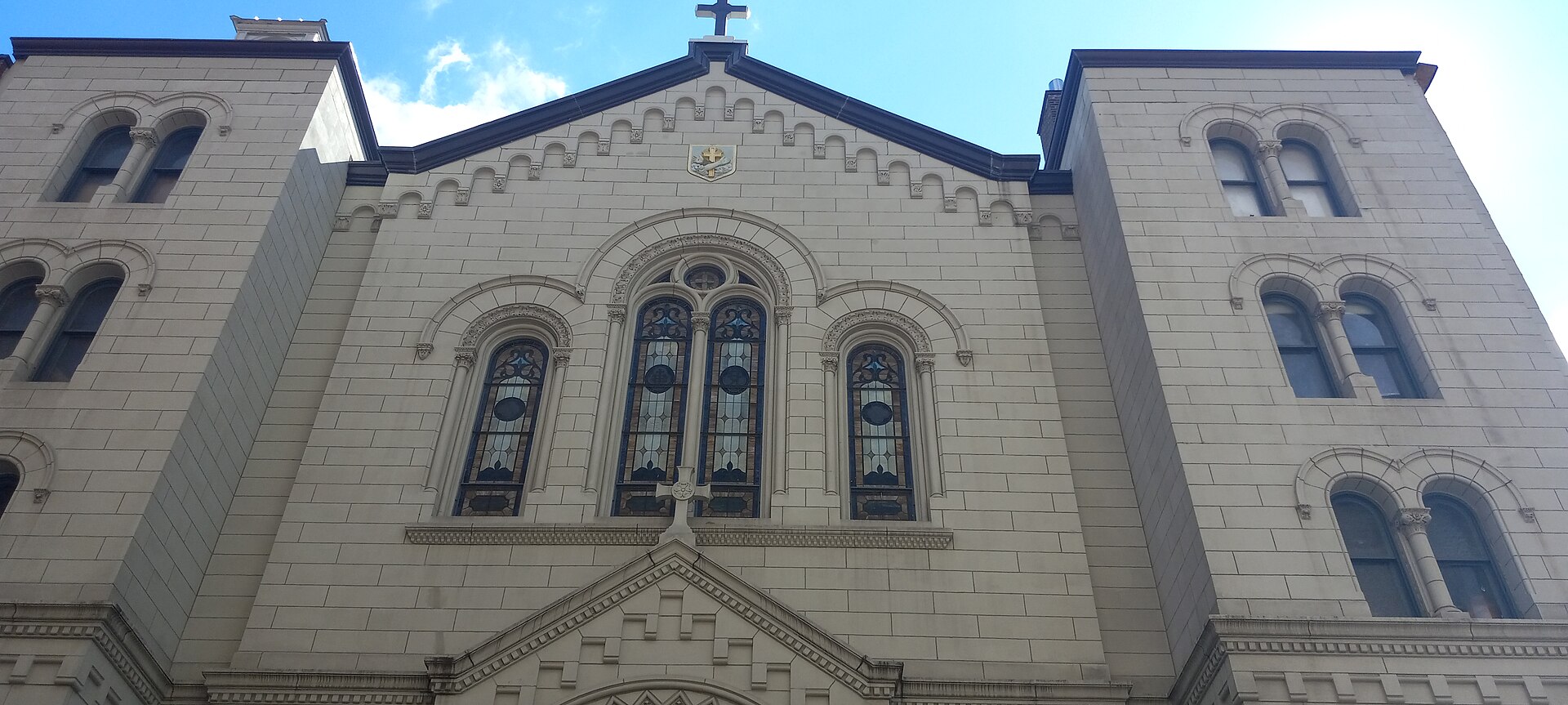
Stop 4: Old Saint Patrick’s Cathedral, 260–264 Mulberry Street
This is the oldest surviving Catholic cathedral in New York. It was built in 1809, originally to serve Irish immigrants. By the 1880s, its congregation had shifted to the wave of Italian newcomers flooding into the surrounding blocks.
The cathedral’s burial vaults beneath the church hold some of the most prominent early New York families. The church was designated a minor basilica in 2010.
Walk inside. Sit for a moment. It is quieter than it looks from the street.
Stop 5: DiPalo’s Fine Foods, 200 Grand Street
Luigi DiPalo arrived in New York from Calabria in the late 19th century. He opened a small dairy shop on Grand Street. Today, five generations of the DiPalo family still run the shop.
This is not a tourist attraction dressed up as an authentic shop. It is an authentic shop that tourists have discovered. The cheeses, the cured meats, the olive oils — all sourced from small Italian producers, many from the same regions the DiPalo family came from.
If you buy nothing else, buy a piece of aged Parmigiano-Reggiano. Eat it on the street. Think about the man who started this shop with almost nothing.
Stop 6: The Corner of Grand Street and Mulberry
Stop at this corner and look in all four directions.
To your north is what remains of Little Italy — the restaurants, the cafés, the green-white-red decorations. To your south is Chinatown. The two communities share this corner. It is one of the most striking moments in New York heritage geography.
The Chinese community began moving into this area in the 1950s and 1960s. They were also immigrants. They were also building a new life in a new country. Their story is as valid as the Italian story. But standing here, you can feel the transition.
Want more stories like this? Our weekly newsletter digs into New York’s layered immigrant history every week. Subscribe free here →
Stop 7: 113 Baxter Street — Church of the Most Precious Blood
This church was built in 1891 to serve the Italian community. It hosted the Feast of San Gennaro for generations — the great street festival of Little Italy that fills Mulberry Street every September for eleven days.
The building stands. The congregation is smaller now. But in September, the feast returns. It is loud and joyful and smells of fried dough and sausages. Your great-grandparents would recognise it instantly.
Stop 8: The Tenement Facades on Mott Street
Walk one block east from Mulberry to Mott Street. Look up.
The buildings on the north end of Mott Street between Broome and Prince are original late 19th-century tenements. They were built quickly and cheaply to house as many immigrants as possible. A family of eight might have shared two rooms. There was no running water in the early decades.
You are looking at the walls that held your ancestors.
Stop 9: Church of the Transfiguration, 29 Mott Street
This church has served more communities than almost any building in New York. It began as an English Lutheran church. Then it became Episcopal. In the mid-19th century it became Catholic and served Irish immigrants. By the 1880s, it was serving Italian immigrants. Today it serves the Chinese community.
It is known informally as the Church of the Immigrants. The name fits.
Step inside. Look at the photographs on the walls. The faces in the earliest photographs are faces like your family’s.
Stop 10: Petrosino Square, Kenmare Street and Cleveland Place
End your walk here, at this small triangular plaza.
Joseph Petrosino was born in Padula, in the Campania region of southern Italy, in 1860. He came to New York as a child. He became a police detective. He spent his career fighting the Black Hand — the extortion rings that preyed on Italian immigrant families.
He was assassinated in Palermo, Sicily, in 1909, while investigating criminal networks. He is buried in Calvary Cemetery in Queens.
This small square bears his name. It is easy to miss. Most people who walk past it every day have no idea who he was. He was someone who came from the same place your family came from. He made a different kind of life. His square is your final stop.
Practical Information
The walk is approximately half a mile. It takes two hours if you stop at each location. Wear comfortable shoes.
Most of the restaurants on Mulberry Street between Hester and Canal are tourist-focused. For a better meal, try Mott Street or the lower stretch of Kenmare Street. Di Palo’s (Stop 5) is the standout food stop on the walk itself.
The Italian American Museum (155 Mulberry Street, Stop 3) is open Thursday to Sunday. Check their website before visiting as hours can vary by season.
The Feast of San Gennaro runs for eleven days each September. The crowd is large and festive. If you prefer a quieter walk, come on a Tuesday or Wednesday morning.
Tracing Your Italian Family History
The Italian American Museum holds archival material including early bank records from the Banca Stabile. The New York Public Library has digitised Italian-language newspapers from 1880 to 1940.
Ellis Island passenger records are searchable free of charge at the Ellis Island Foundation website. For village-level records in Italy, the FamilySearch database holds Italian civil registration records dating back to 1809.
Our full guide to tracing New York City ancestry will help you take the next steps. If you want to combine this heritage walk with a broader immigrant journey, our Ellis Island to Orchard Street itinerary follows the full arc from arrival to settlement.
Most Italian immigrants came from specific villages. If you know the province — Sicily, Calabria, Campania — the records become much easier to search. This walk is the beginning of a longer journey. These streets will point you in the right direction.
Frequently Asked Questions
What is the best time to visit Little Italy in New York City?
Tuesday and Wednesday mornings are the quietest times to explore the heritage district. Weekend afternoons bring the largest crowds. The Feast of San Gennaro in September fills Mulberry Street for eleven days with food, music, and a festive atmosphere — wonderful for the experience, but expect large crowds throughout.
How much of the original Little Italy still exists?
At its peak in the early 20th century, Little Italy covered more than 40 blocks of Lower Manhattan. Today the core heritage area is roughly three blocks of Mulberry Street between Canal and Spring. Many original buildings survive, and a few authentic businesses remain — notably DiPalo’s Fine Foods at 200 Grand Street, in operation since 1910, and the Italian American Museum at 155 Mulberry Street.
Where can I research my Italian-American family history in New York?
The Italian American Museum at 155 Mulberry Street holds archival material including records from the Banca Stabile (established 1885). The New York Public Library holds digitised Italian-language newspapers from 1880 to 1940. Ellis Island passenger records are searchable free at the Ellis Island Foundation website, and FamilySearch holds Italian civil registration records dating back to 1809 for village-level searches.
Ready to explore the New York your ancestors knew? Subscribe to Love New York — free weekly heritage stories, hidden history, and New York guides. Join us →
