
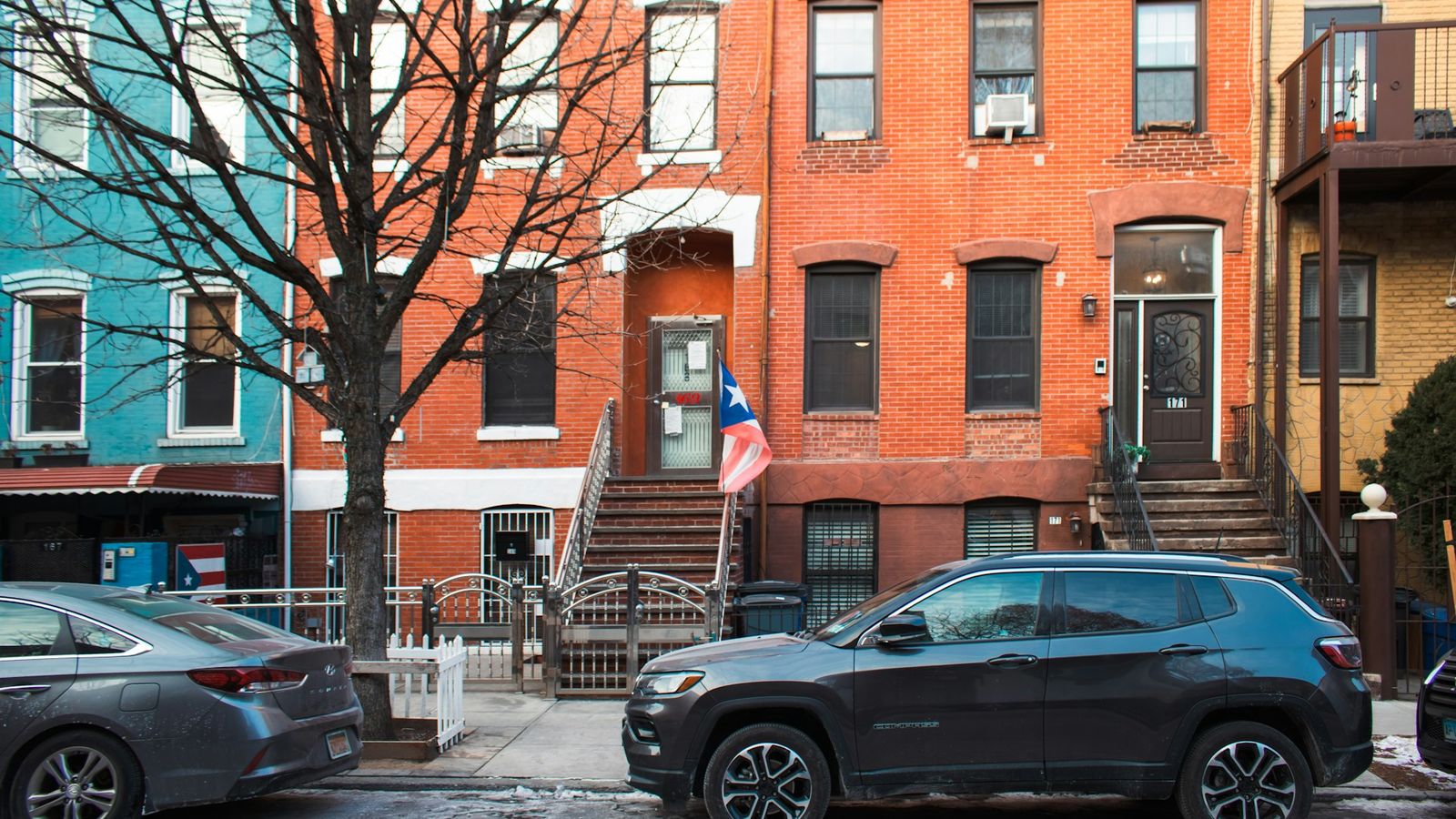
The most famous jazz musician who ever lived — the man whose trumpet silenced Carnegie Hall, whose gravel voice floated out of radios from Paris to Pretoria — came home every night to a modest red-brick row house on a quiet street in Corona, Queens. Not the Plaza Hotel. Not a penthouse on the Upper West Side. Queens.
Louis Armstrong did not stumble into Queens. He chose it. And he never left.
The House That Pops Built
In 1943, Armstrong and his wife Lucille Wilson purchased a two-story brick house at 34-56 107th Street in Corona, Queens. They paid $8,600. It was a working-class neighbourhood, home to Italian-American families and a growing Black community. It was the kind of street where people sat on their stoops in summer and knew each other by name.
Armstrong was already one of the most recognised figures in American music. He could have lived anywhere. He bought a house in Queens.
He stayed there for the rest of his life. Through the 1950s. Through the turbulent 1960s. Until July 6, 1971, when he died in his bedroom on the second floor. Twenty-eight years in the same house, on the same street, in the same borough that Manhattan had always overlooked.
What You Find Inside
The Louis Armstrong House Museum is one of New York City’s most quietly extraordinary places. The rooms are preserved almost exactly as they were during Armstrong’s lifetime. His furniture. His record collection. His den where he spent late nights listening back to recordings and talking into his tape machine.
Because Armstrong was an obsessive archivist. He kept reel-to-reel tapes of himself, his friends, his conversations, his late-night sessions. He documented his own life with the dedication of a man who understood that the moment would not last forever. The museum holds thousands of recordings, scrapbooks, photographs, and letters — a window into not just his career, but the daily texture of his life.
The kitchen is particularly striking — Lucille designed it herself, a bold departure from the modest exterior of the house. Upstairs, Armstrong’s recording den feels intimate and lived-in. Walking through, you get the sense that he might have just stepped out to the corner store and will be back shortly.
Why Queens, Not Manhattan?
This question gets at something essential about who Armstrong actually was — as opposed to who the world imagined him to be.
In Corona, he was “Pops” to the neighborhood. Not a celebrity on a pedestal — a neighbor. He could walk to the store. Children knocked on his door. He knew the families on the block. He gave out gifts compulsively: to friends, fans, acquaintances, strangers. His wife gardened. He recorded music in his spare bedroom.
Manhattan in the 1940s and 50s offered Armstrong fame and glamor. Queens offered him something rarer: an ordinary life. For a man who spent most of the year on the road — 300 nights at a stretch, playing concerts across America and Europe — that ordinary life was the thing worth protecting.
Enjoying this? Join New York lovers getting stories like this every week. Subscribe free →
The Neighbourhood Then and Now
The Corona of Armstrong’s era was a tightly knit community, a patchwork of Italian immigrants and African-American families who had moved north during the Great Migration. It was not wealthy. It was not glamorous. It had a realness to it that Armstrong valued deeply.
Today, Corona is predominantly Latino — a testament to the borough’s constant reinvention. The neighbourhood around 107th Street is busy and unpretentious, full of taquerias and fruit stands and the rumble of the No. 7 train heading toward Flushing, one of New York’s great food destinations. Flushing Meadows-Corona Park, where the 1964 World’s Fair was held, is a short walk away.
The house sits on its block like a quiet monument. It does not announce itself. There is no blinking marquee. It is just a house. Which was, of course, the whole point.
Visiting the Louis Armstrong House Museum
The museum runs guided tours only, which last about 45 minutes. Groups are small, which means you can actually ask questions and stand in rooms without being jostled by a crowd. Booking ahead is strongly recommended — tours sell out, especially on weekends.
The nearest subway stop is the 103rd Street-Corona Plaza station on the 7 line. From Midtown Manhattan, you are looking at about 30 to 35 minutes on the train — a small investment for one of the most singular museum experiences in the city.
If you are already making a day of Queens — and you should be, because the borough’s jazz history runs deeper than most visitors ever realise — the Armstrong House pairs beautifully with a meal in Flushing or a walk through the park afterward.
What Louis Armstrong Left Behind
After Armstrong died in 1971, Lucille stayed on in the house until her own death in 1983. She donated it to the City University of New York, which worked to preserve and open it as a museum in 2003. It was designated a National Historic Landmark in 1977 — one of the few jazz-related sites in the country to hold that distinction.
The archive Armstrong left behind — the tapes, the scrapbooks, the photographs — has become an invaluable resource for music historians. But the house itself tells a different kind of story. It tells you who the man was when the concert was over and the crowd had gone home.
FAQ: Louis Armstrong House Museum
What are the visiting hours for the Louis Armstrong House Museum in Queens?
The museum is generally open Wednesday through Friday from 10am to 5pm, and Saturday through Sunday from noon to 5pm. Guided tours must be booked in advance, as group sizes are small and spaces fill quickly, especially on weekends.
How do I get to the Louis Armstrong House Museum from Manhattan?
Take the No. 7 train from Times Square-42nd Street to the 103rd Street-Corona Plaza station. The museum is a short walk from the station. Total journey time from Midtown is roughly 30 to 35 minutes.
Is the Louis Armstrong House Museum worth visiting?
Absolutely. The house is preserved almost exactly as it looked during Armstrong’s lifetime, and the guided tour provides remarkable insight into both the musician and the man. It is considered one of the most intimate and moving museum experiences in New York City.
What neighborhoods are near the Louis Armstrong House in Queens?
The house is in Corona, Queens, close to Flushing Meadows-Corona Park. Flushing — one of the best food neighborhoods in the entire city — is a few stops east on the 7 train, making it easy to combine both into a single Queens day trip.
You Might Also Enjoy
- Why Every Jazz Musician Who Has Ever Mattered Has Played This New York Basement
- Why Flushing, Queens Is the Food Capital Nobody Taught You About
- Best Neighbourhoods in New York City: Your Essential Visitor’s Guide
Plan Your New York Trip
For a full overview of New York City’s most rewarding neighborhoods — including how to get the most out of a day in Queens — visit our New York City neighbourhood guide.
Join 1,100+ New York Lovers
Every weekday morning, get New York’s hidden gems, neighbourhood stories, food origins, and city secrets — straight to your inbox.
Subscribe free — enter your email:
Know someone who’d love this? Share on WhatsApp →
Love more? Join 65,000 Ireland lovers → · Join 43,000 Scotland lovers →
Free forever · Unsubscribe anytime

Subscribe Free