
Step off the train and something shifts. The Bronx noise fades. Traffic disappears. You’re standing in a 50-acre forest of tulip poplars and ancient oaks — trees that were already old when New York was still a Dutch trading post. This is not what most people picture when they think of the Bronx.
The New York Botanical Garden sits in the northwest Bronx. At 250 acres, it’s one of the largest botanical gardens in the world. But it’s the secret at its center — a primeval old-growth forest that has never been logged — that makes it unlike anywhere else in the five boroughs.
A Forest That Survived New York
The Thain Family Forest is something genuinely rare in the Eastern United States: a true old-growth forest, never cleared for farming or development.
While the rest of Manhattan and the Bronx was stripped of trees over three centuries of city-building, these 50 acres survived. The tulip poplars here are enormous — some reaching 150 feet into the sky. There are beeches, red oaks, and hickories that have been growing since well before the American Revolution.
In fall, the forest glows gold and amber. In spring, the treetops fill with migrating warblers. In summer, the canopy closes overhead and the city completely disappears. Walking the forest trail feels like a time slip. And you realize, standing there: this is what the whole island once looked like.
The Victorian Crystal Palace in the Bronx
The Enid Haupt Conservatory is the NYBG’s most dramatic building. Constructed in 1902, it’s a grand Victorian glasshouse modeled on the great palm houses of Europe — iron, glass, and light on an extraordinary scale.
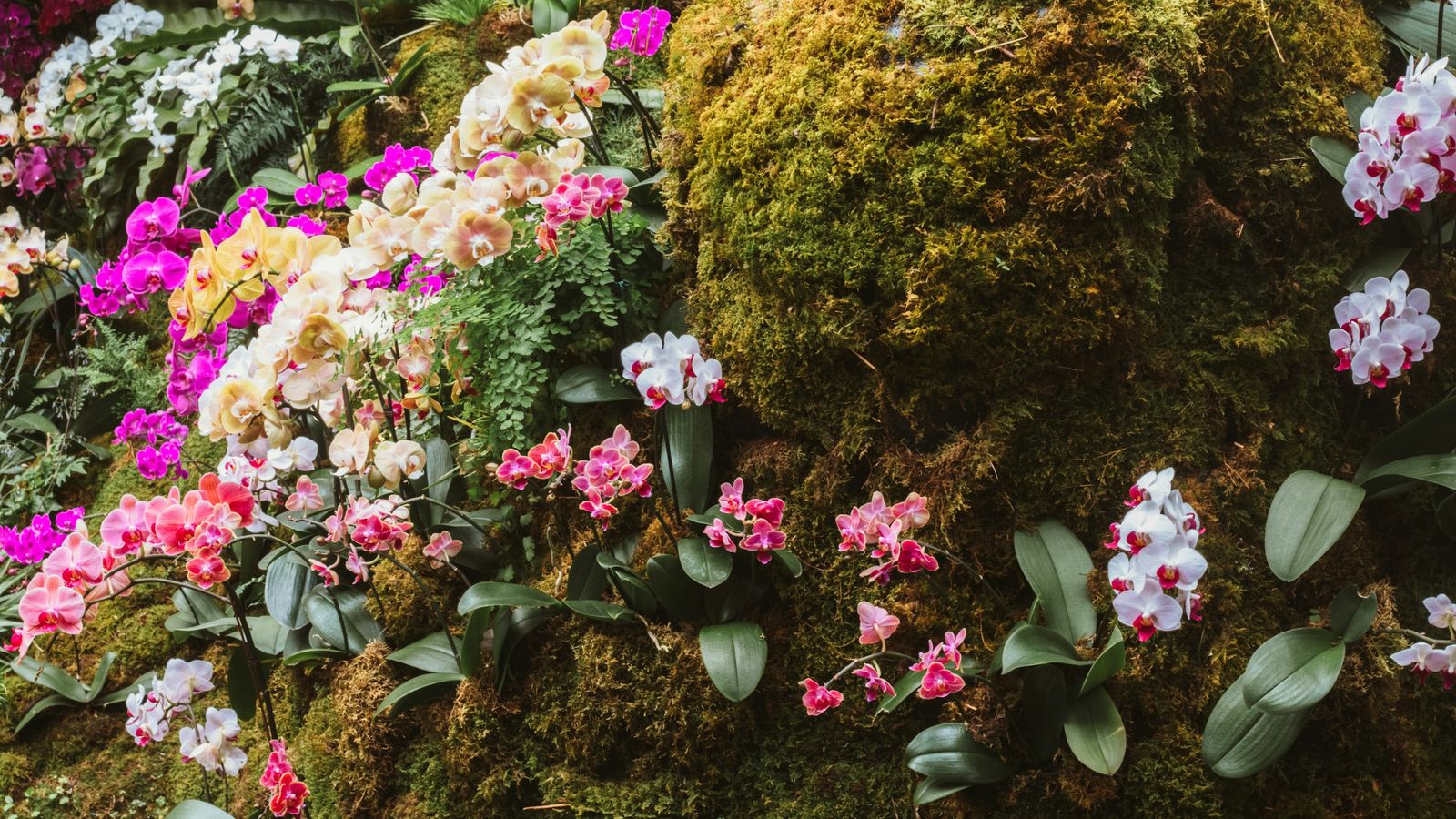
Inside, you move through entirely different worlds. A humid tropical palm court. A misty fern forest. A sun-baked desert gallery of cacti and succulents. An elegant orchid wing that smells of nothing you’d expect to find in the Bronx.
Every spring, the Conservatory hosts its world-famous Orchid Show — a transformation that fills every corner with tens of thousands of blooms. Even outside orchid season, the Conservatory alone is worth the price of admission.
Enjoying this? Join New York lovers getting stories like this every week. Subscribe free →
Gardens for Every Mood
Beyond the forest and conservatory, the NYBG spreads across acres of carefully tended spaces, each with a distinct character.
The Peggy Rockefeller Rose Garden blooms from late spring through autumn with over 6,000 plants across hundreds of varieties. It’s one of the most celebrated rose collections in North America, and in June, the fragrance alone is worth the trip.
The Native Plant Garden tells the story of what New York looked like before European settlement — an ecological time machine planted with wildflowers, grasses, and woodland plants native to the Northeast. The Rock Garden offers something quieter: a hillside of alpine plants, tumbling water, and stone paths that reward slow walking.
The LuEsther T. Mertz Library — housed in a Beaux-Arts building near the garden’s entrance — holds one of the world’s largest collections of botanical literature and art. Even if you’re not a reader, the building itself is worth five minutes of your time.
Getting There Is the Easy Part
Most New Yorkers assume the NYBG is far away and complicated to reach. It isn’t.
Metro-North trains depart from Grand Central Terminal on the Harlem Line and stop directly at the Botanical Garden station — a journey of about 20 minutes. That’s faster than crossing midtown Manhattan by taxi on a busy afternoon.
The station deposits you at the garden’s front gate. No transfers, no confusion. Trains run frequently, and a day trip to the NYBG and back is genuinely simple.
If you want to make a full Bronx day of it, pair your visit with the Arthur Avenue neighborhood — the Bronx’s legendary Italian enclave, with old-school butchers, pasta makers, and restaurants that have barely changed in 70 years. It’s a short cab ride from the garden.
When to Go and What to Expect
The NYBG rewards visitors in every season, but spring and fall offer the most.
Spring brings the annual Orchid Show (typically February through April) and the rose garden’s first blooms. The forest comes alive with bird migration, and the whole garden feels charged with energy. Fall turns the Thain Family Forest into one of the finest leaf-peeping destinations in New York State — without the traffic jams of the Hudson Valley or the Catskills.
Summer is lush and beautiful but draws the largest crowds, especially on weekends. Winter is quiet and underrated — the Conservatory becomes a warm escape, and the snow-covered garden has a stillness that’s hard to find anywhere in the city.
Frequently Asked Questions
What is the best time to visit the New York Botanical Garden?
Spring and fall are the most rewarding seasons. Spring brings the world-famous Orchid Show and the blooming rose garden. Fall transforms the Thain Family Forest into a spectacular display of autumn color, rivaling any leaf-peeping destination in the Northeast.
How do I get to the New York Botanical Garden from Manhattan?
Take Metro-North from Grand Central Terminal (Harlem Line) to the Botanical Garden stop — the ride takes about 20 minutes. The station lets you off at the main entrance. You can also reach the garden by subway (B, D, or 4 train to Bedford Park Blvd, then an 8-minute walk).
What is the Thain Family Forest at the NYBG?
The Thain Family Forest is a 50-acre old-growth forest at the heart of the New York Botanical Garden — one of the last surviving remnants of the original forest that once covered the entire New York region. Its trees have never been logged and include tulip poplars and oaks several hundred years old.
Is the New York Botanical Garden worth visiting for non-gardeners?
Absolutely. The ancient forest, the Victorian glasshouse, the bird life, and the sheer scale of the space make the NYBG compelling for anyone who loves the outdoors. You don’t need to know a tulip poplar from a red oak to feel the power of a forest that predates the city around it.
Most visitors to New York never make it to the Bronx. That’s their loss. The NYBG has been sitting here, growing quietly, for over 130 years. The forest at its heart has been growing for far longer. It will still be there whenever you’re ready — but a 20-minute train ride is a small investment for one of New York’s genuinely unforgettable experiences.
You Might Also Enjoy
- The Bronx Neighborhood That Kept Italian New York Alive When Manhattan Couldn’t — Arthur Avenue, where the old ways never left
- The Tiny Fishing Village Hiding in the Bronx That Most New Yorkers Have Never Visited — City Island, a New England escape without leaving the city
- What Grand Central Terminal Is Really Hiding From Its 750,000 Daily Visitors — the secrets of your departure point
Plan Your New York Trip
Looking for more ways to explore the city? Our 5-day New York City itinerary covers the highlights of all five boroughs — including spots most visitors never reach.
Join 1,100+ New York Lovers
Every weekday morning, get New York’s hidden gems, neighbourhood stories, food origins, and city secrets — straight to your inbox.
Subscribe free — enter your email:
📲 Know someone who’d love this? Share on WhatsApp →
Love more? Join 65,000 Ireland lovers → · Join 43,000 Scotland lovers →
Free forever · Unsubscribe anytime

Subscribe Free