
New York City is built on islands, so it is a city of bridges. Most carry cars, trains, or pipes. But a handful are open to walkers, and the views from them are some of the best you can get in the city without spending a cent.
Love New York? Get articles like this delivered to your inbox every week. Subscribe to our free newsletter →
This guide covers the top bridges worth walking in New York, with practical details on how to get there, what to expect underfoot, and what you’ll see at each crossing.
Brooklyn Bridge
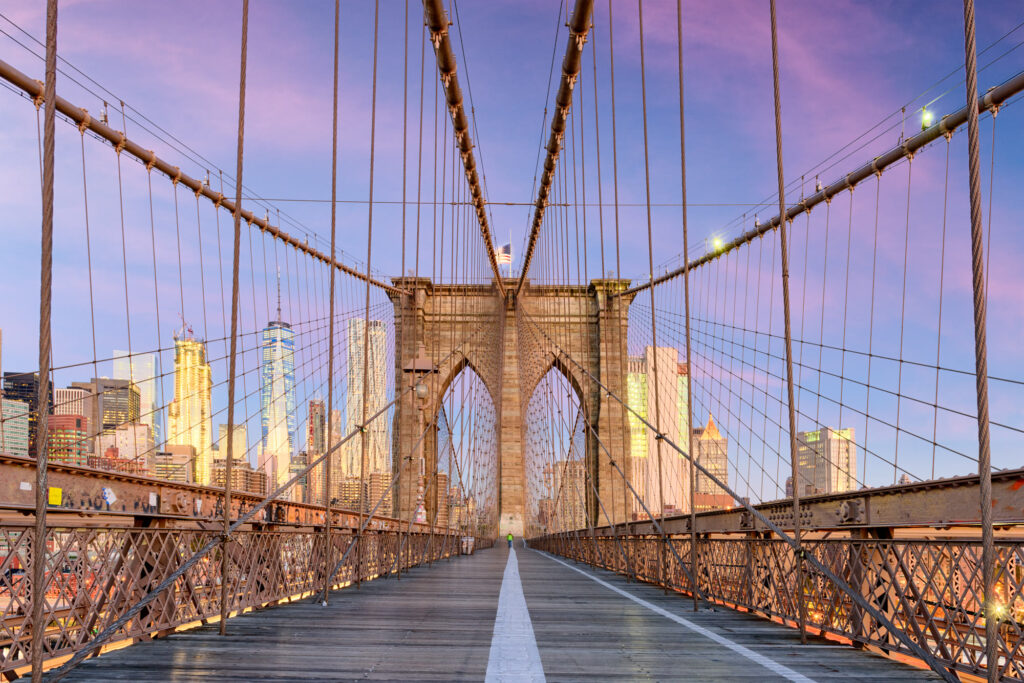
The Brooklyn Bridge is the most famous bridge walk in New York, and for good reason. Opened in 1883, it has a main span of 1,595.5 feet (486 meters) across the East River between Lower Manhattan and Brooklyn. Our full guide to walking the Brooklyn Bridge has every detail.
The pedestrian promenade runs along the upper center of the bridge, raised above the traffic lanes below. The walk takes about 30 to 45 minutes one way, depending on how often you stop. Many people start on the Manhattan side near City Hall and walk to DUMBO in Brooklyn, then turn around, so the Manhattan skyline is in front of them all the way back.
What to know before you go:
- Going before 9am means fewer crowds and softer light.
- The wooden boardwalk gets busy during peak tourist hours. Late morning to mid-afternoon in summer is the most congested.
- Since September 2021, cyclists have had their own protected two-way bike lane on the roadway level, which has freed up the promenade for people on foot (checked October 2026 with NYC DOT). Keep an eye out for the odd bike anyway.
- Nearest subway stations: Brooklyn Bridge–City Hall (4/5/6 lines) on the Manhattan side; High Street (A/C) on the Brooklyn side.
On a clear day you can see the Statue of Liberty to the south and the Manhattan Bridge to the north. Brooklyn Heights Promenade is a short walk from the Brooklyn end if you want to extend the views along the waterfront.
Manhattan Bridge
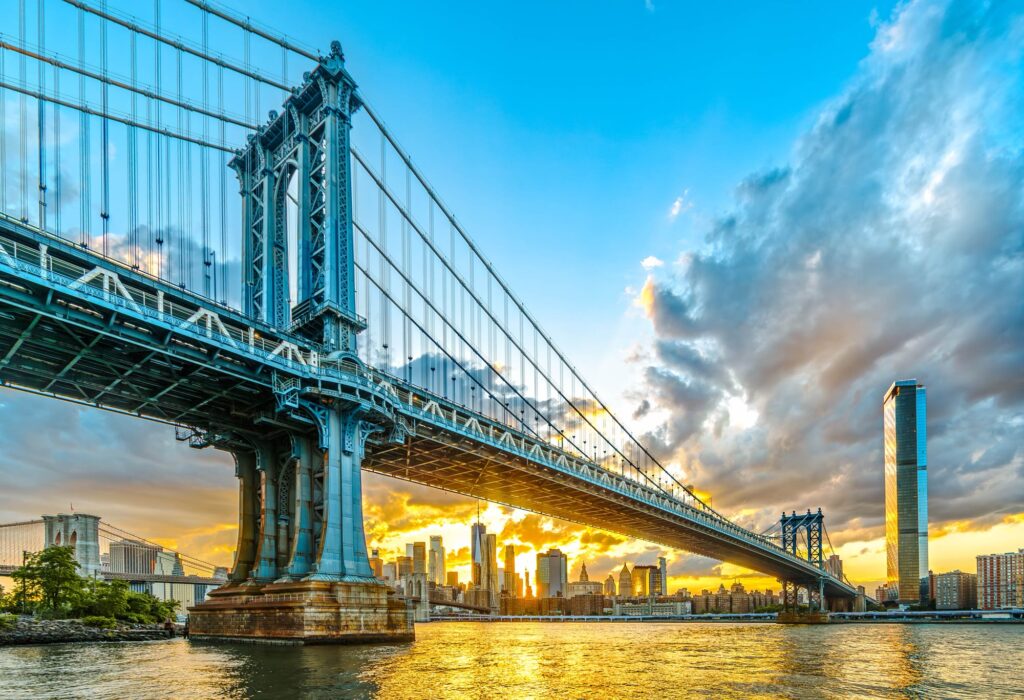
The Manhattan Bridge, completed in 1909, runs parallel to the Brooklyn Bridge and is often overlooked by visitors. That is a good reason to try it: the crowds are much smaller, the views are strong, and you get an excellent angle on the Brooklyn Bridge itself.
The bridge has a pedestrian walkway on the south side and a separate bikeway on the north side. It connects Canal Street in Manhattan to the DUMBO neighborhood in Brooklyn.
What to know:
- Use the south walkway. The north side is for bikes.
- Subway trains (the B, D, N and Q lines) run across the bridge, so you’ll hear and see them passing close by.
- The view of the Brooklyn Bridge from the mid-point of the Manhattan Bridge is one of the best in the city for photography.
- Manhattan access is at Canal Street and Bowery, by the grand stone arch and plaza designed by Carrère and Hastings, the team behind the main branch of the New York Public Library. In Brooklyn you come down near Jay Street and Sands Street, on the edge of DUMBO.
This walk suits people who want the East River experience without the crowds. The views are comparable to the Brooklyn Bridge, and the walk itself feels more local.
Enjoying this guide? We send weekly New York tips, hidden spots, and local stories straight to your inbox. Sign up free here →
Williamsburg Bridge
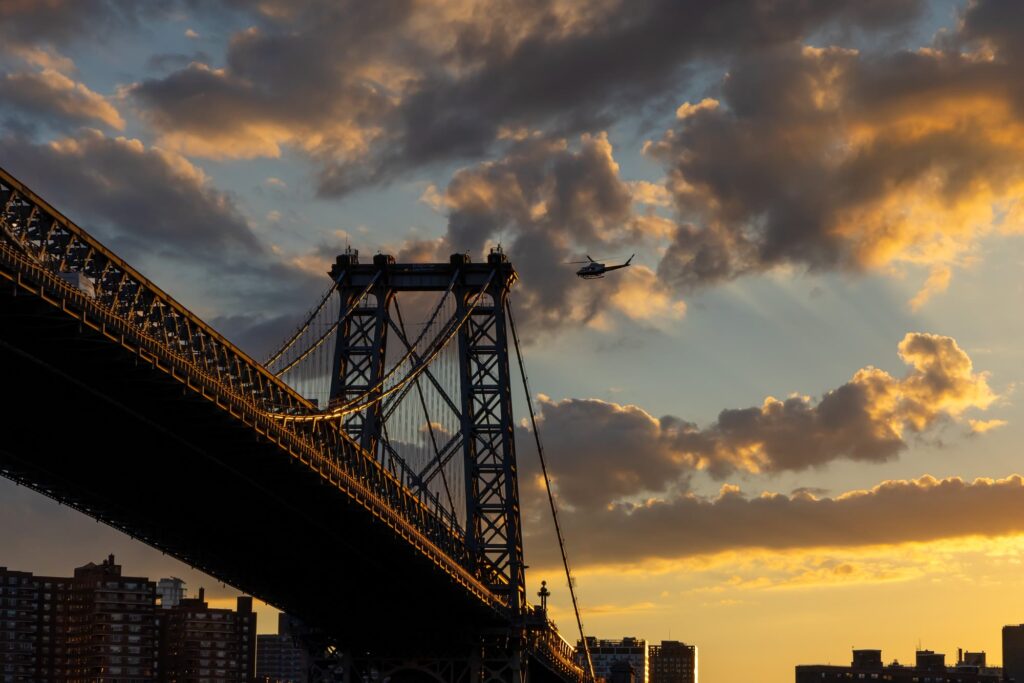
The Williamsburg Bridge opened in 1903 and connects the Lower East Side of Manhattan to the Williamsburg neighborhood of Brooklyn. Its main span of 1,600 feet (488 meters) is the longest of the three East River bridges in this guide, and at 7,308 feet end to end it is the longest overall too.
It draws far fewer visitors than the Brooklyn Bridge, which means the walkway is usually quiet. The views of the Manhattan skyline are good, and the steel lattice structure of the bridge frames them in a distinctive way.
What to know:
- A walkway and a separate bikeway run across the bridge. Follow the signs at each entrance and keep to the walkers’ side.
- The walk takes 30 to 45 minutes one way at a steady pace, with a noticeable climb to the middle.
- Access in Manhattan is off Delancey Street; in Brooklyn it’s near Bedford Avenue.
- Nearest subway: J/M/Z at Delancey St–Essex St in Manhattan, or Marcy Avenue in Brooklyn.
The Williamsburg end drops you into one of Brooklyn’s most active areas for food, coffee, and independent shops — worth factoring in if you’re planning a longer day out.
George Washington Bridge
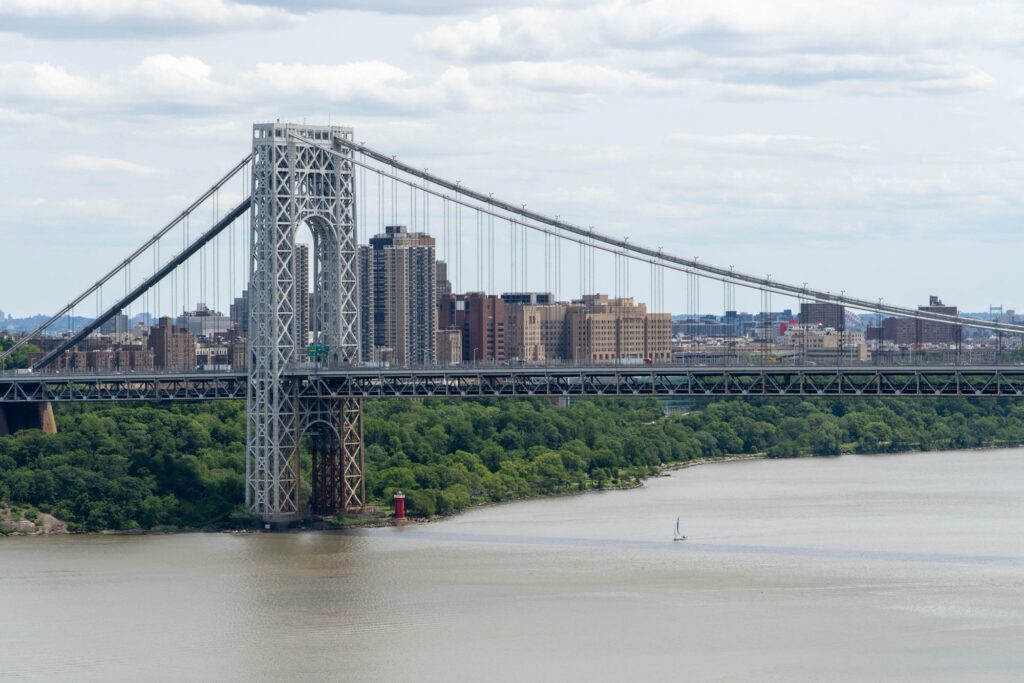
The George Washington Bridge (the GW Bridge) crosses the Hudson River between Washington Heights in upper Manhattan and Fort Lee, New Jersey. It opened in 1931, and its main span of 3,500 feet (1,067 meters) is more than twice as long as any East River crossing in this guide.
Walkers use the bridge’s sidewalk, high above the water. The views here are different from the East River bridges: you’re looking out over the Hudson, the Palisades cliffs to the west, and the upper Manhattan waterfront.
What to know:
- Sidewalk hours, and which side is open to walkers, can change with maintenance work. Check the Port Authority’s George Washington Bridge page before you go (checked October 2026).
- The bridge sits high above the river and is very exposed to wind. Bring a layer regardless of season.
- Allow about an hour there and back at an easy pace, longer with photo stops.
- Manhattan access is near West 178th Street, close to the George Washington Bridge Bus Station.
- Look down from the Manhattan end for the Little Red Lighthouse, which sits right under the bridge’s Manhattan tower in Fort Washington Park (you can see it in our photo).
This is the quietest of the major bridge walks in the city. It’s a longer trip than the East River options, but the Hudson River views are worth it for anyone who’s already done the southern bridges.
High Bridge
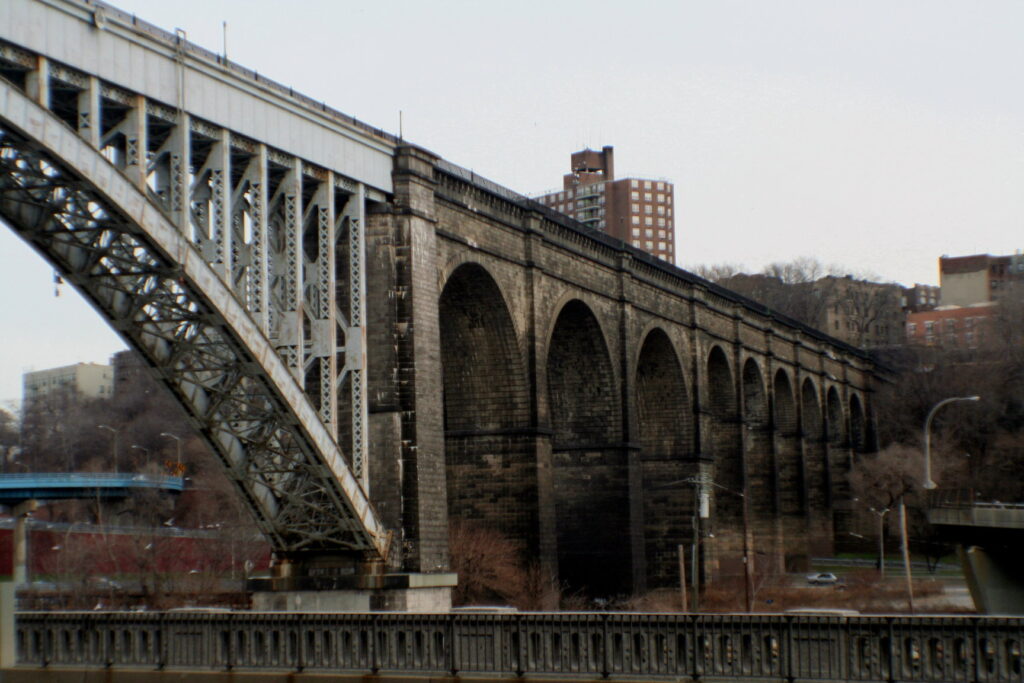
High Bridge is the oldest standing bridge in New York City. Built between 1837 and 1848, it originally carried the Croton Aqueduct across the Harlem River and brought fresh water to Manhattan. After a 45-year closure, it reopened in 2015 as a pedestrian and cycling bridge.
It connects Highbridge Park in upper Manhattan to the Highbridge neighborhood in the Bronx, making it the only bridge on this list that crosses into the Bronx.
What to know:
- No cars. The bridge is for walkers and cyclists only.
- It is shorter than the East River bridges, but the Harlem River views and the surrounding parkland make it worth the trip.
- The approach on both sides is through green park space, which gives this walk a completely different feel from the urban crossings farther south.
- Opening hours change with the seasons, so check the NYC Parks Highbridge Park page before you go.
- On the Manhattan side the bridge starts beside the stone High Bridge Water Tower. Nearest subway: 168 St (A/C/1).
The masonry structure of High Bridge is striking and unlike anything else on the list. It is one of the few places in the city where you can see clearly how the engineering of an earlier era was built to last.
Practical Tips for Bridge Walking in New York
Best time to go: Early morning gives you smaller crowds, cooler temperatures in summer, and better light on the skyline. Late afternoon light works well if you’re walking toward Manhattan. Midday in summer is the hardest time — hot, crowded, and bright overhead light is poor for photography.
Footwear: All the bridges have hard surfaces — concrete, asphalt, or wooden boards. Standard walking shoes or sneakers are fine. Expect a steady climb to the middle of the East River bridges, the Williamsburg Bridge most of all.
Wind: All these bridges are exposed. A light jacket or layer is useful year-round, particularly on the George Washington Bridge, which sits high above the Hudson with no shelter.
Cyclists: All three East River bridges now give cyclists their own lane or path, separate from walkers. Stay alert anyway and keep to the marked pedestrian side.
Photography: For Manhattan skyline shots, the Brooklyn Bridge and Manhattan Bridge give the clearest angles. For Hudson River views, the George Washington Bridge is the best option. High Bridge offers the most interesting architectural framing.
Want more New York guides like this one? Join thousands of readers who get our newsletter every week. Subscribe for free →
Getting to the Bridges
All five bridges are reachable by subway from Midtown Manhattan. The Brooklyn Bridge, Manhattan Bridge, and Williamsburg Bridge are all accessible within 30 minutes on the 4/5/6, A/C, J/M/Z, or D/N lines. The George Washington Bridge requires a trip to upper Manhattan via the A train (175th or 181st Street). High Bridge is on the 1 and A/C lines at 168th Street.
Bridge walks in New York are free, require no booking, and can fit into a morning or afternoon. Each of the five bridges on this list gives you something different — a different river, a different neighborhood at each end, and a different angle on the city. The Brooklyn Bridge is the obvious starting point, but it is far from the only one worth crossing on foot.
