
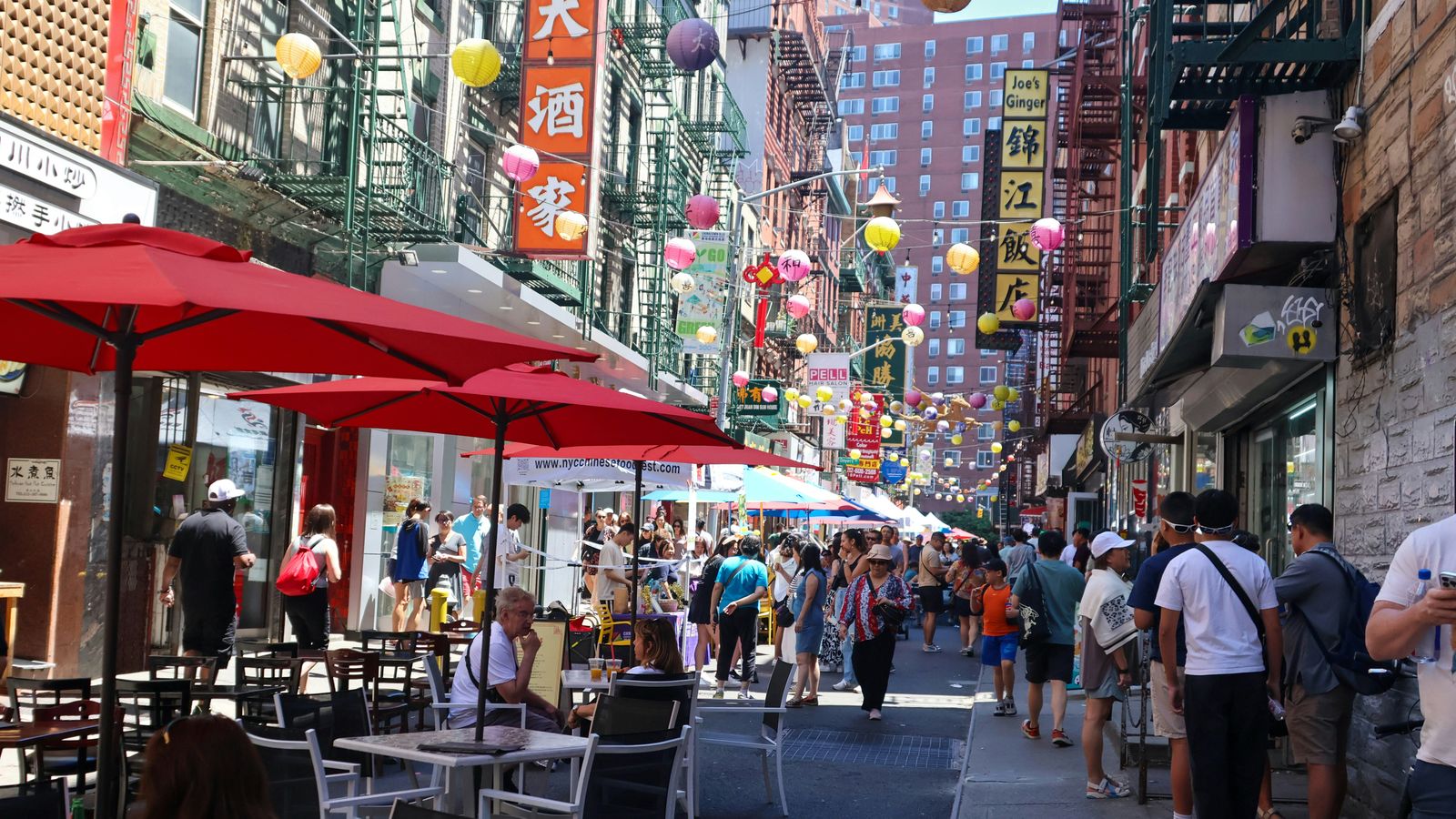
There is a block in Lower Manhattan where the signs have never been in English. Where grandmothers haggle over live crabs before the rest of the city has brewed its first coffee. Where the lunar calendar still decides the biggest celebration of the year.
Manhattan’s Chinatown is not a neighbourhood dressed up to look authentic. It is the real thing — and it has been for a century and a half.
How the Community Took Root
Chinese immigrants began arriving in Lower Manhattan in the mid-1800s. Many had come west for the Gold Rush, or to build the transcontinental railroad. When that work dried up — and hostility followed — many moved east.
By the 1880s, a cluster of blocks around Mott Street had become home to a growing Chinese community. Discriminatory laws made it nearly impossible to bring over wives and families. The community turned inward, building something self-contained and enduring.
What grew was not just a neighbourhood. It was a parallel city — with its own economy, its own institutions, and its own unspoken codes.
A World That Ran Itself
In the absence of outside support, Chinatown organised through a dense web of associations. Family associations connected people by surname. District associations tied those from the same regions of China together.
These groups found housing for new arrivals, settled disputes, and maintained a kind of internal order. They ran schools. They maintained temples. They kept the community together through decades when no one else was going to.
Some associations had complicated histories — rivalries and territorial disputes that made headlines. But they also did what no one else would: they took care of their own. For many families, the association was the safety net, the lawyer, and the community hall all in one.
The Festivals That Fill the Streets
Enjoying this? Join New York lovers getting stories like this every week. Subscribe free →
Every year, Lunar New Year transforms Chinatown completely. Firecrackers echo off the narrow buildings on Mott Street. Dragon dances weave through the crowd. Red envelopes change hands in apartments above the restaurants.
This is one of the largest Lunar New Year celebrations in the United States. It brings hundreds of thousands of people to a neighbourhood that barely notices them — because it is already fully alive with its own celebration.
The Autumn Moon Festival fills every bakery window with mooncakes. Ghost month observances take place in ways most outsiders never see. Chinatown marks its own calendar, on its own terms, with or without an audience.
The Food That Carries Memory
Chinatown’s food culture has spread across every borough. But the original is still the original.
Roast duck hangs lacquered and golden in Canal Street windows. Dim sum carts rattle through noisy dining rooms on weekend mornings. Hand-pulled noodles are stretched by someone who learned from someone who learned from someone else entirely.
This is food with decades of memory in it. It is still made the old way, still served to the same families who have eaten it for generations, still cheaper and more honest than anything that claims to imitate it elsewhere in the city.
How It Has Changed — and Why It Endures
Chinatown has outlasted a lot of things that were supposed to erase it.
Flushing, in Queens, has grown into one of the largest Chinese communities in North America. Little Italy — which once shared this corner of Lower Manhattan — has shrunk from twelve square miles to barely three. Gentrification has pushed at Chinatown’s edges for years.
And yet it persists. The density of its institutions helps. The depth of its roots helps. So does the simple fact that this neighbourhood has never tried to be anything other than what it is.
What Makes It Worth Your Time
Most visitors pass through on the way to somewhere else.
They grab a plate of dumplings on Mott Street, take a photo by the ceremonial arch, and keep moving. That is fine. But Chinatown rewards the people who slow down.
Walk the blocks between Canal Street and Worth Street. Follow the smell of roasting pork into a side street. Stand outside one of the tea parlours and just listen. Some of the best hidden gems in New York are not sights at all — they are atmospheres, and Chinatown is thick with them.
Millions of people arrived in America hoping to build something new. The journey that began at Ellis Island led communities to carve out their corner of this city against considerable odds. Chinatown is one of the oldest and most alive reminders of that story.
It is not a museum. It is not a theme park. It is a living neighbourhood that has been here longer than most of New York’s landmarks — and it is not going anywhere.
You Might Also Enjoy
- The New York Neighbourhood That Shrank From 40 Blocks to Three — and Still Refuses to Die
- The Island That Gave 12 Million People a Second Chance — and What It Actually Cost Them
- Hidden Gems in NYC: The New York Most Tourists Never See
Plan Your New York Trip
Ready to explore the neighbourhoods that make New York unlike anywhere else? Start with our Ultimate New York Travel Guide — covering everything from iconic landmarks to the streets most visitors never find.
Join New York Lovers
Every weekday morning, get New York’s hidden gems, neighbourhood stories, food origins, and city secrets — straight to your inbox.
Subscribe free — enter your email:
Love more? Join 65,000 Ireland lovers → · Join 43,000 Scotland lovers →
Free forever · Unsubscribe anytime
