
On the morning of November 19, 2013, artists arrived at 5Pointz in Long Island City, Queens, to find that their life’s work had been painted over. Every mural. Every signature. Every layer of color. Gone.
The building had stood for more than a decade as New York City’s most vibrant outdoor gallery — a five-story warehouse covered floor to roof in world-class aerosol art. Overnight, the owner had whitewashed it all.
What happened next became one of the most extraordinary stories in American art history.
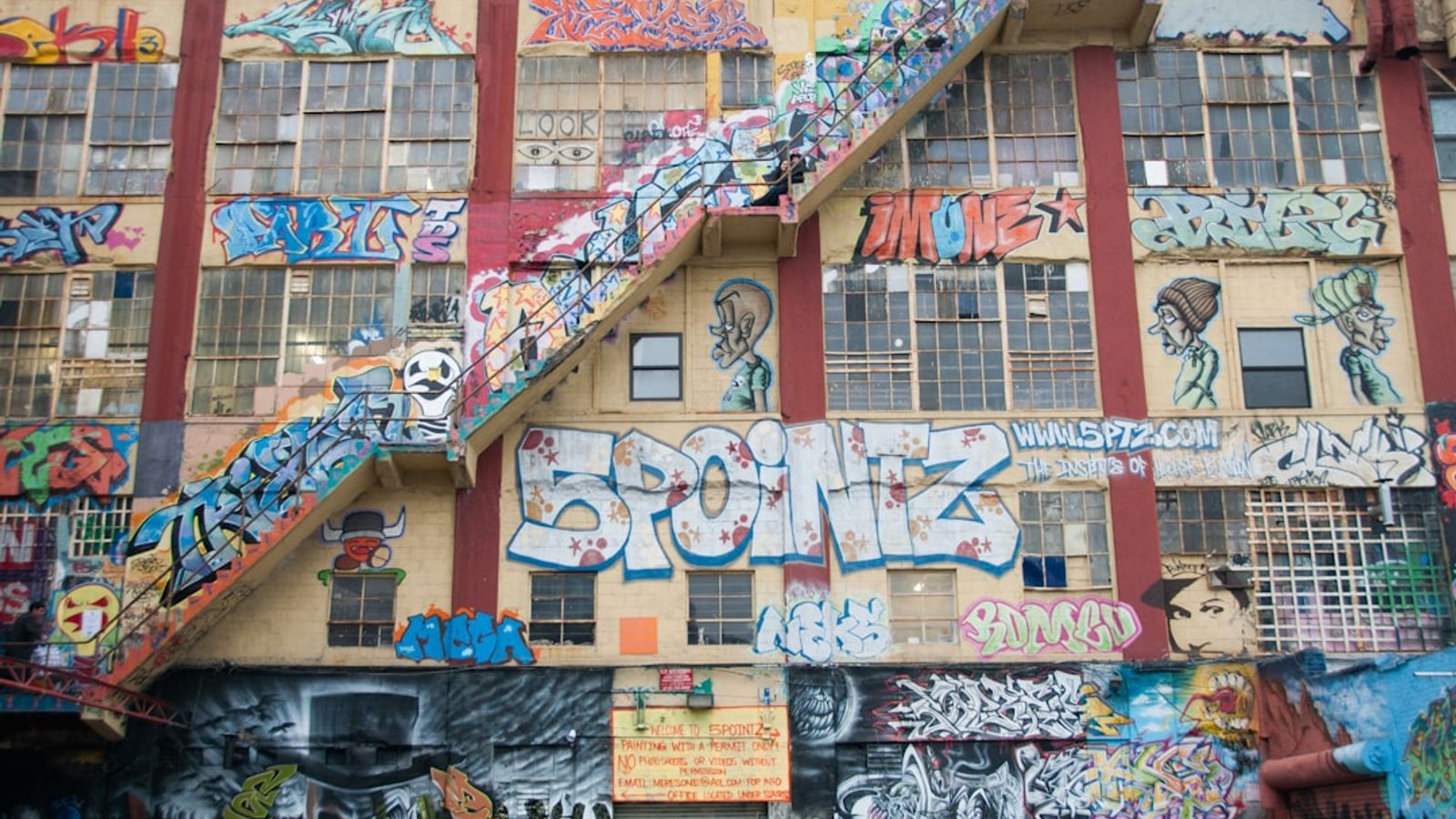
What Was 5Pointz?
Long Island City’s industrial blocks are not where most people expect to find a museum.
But starting in the 1990s, a warehouse at Jackson Avenue and Davis Street became something nobody planned. Artists began painting its walls. More came. Then more. The building’s owner, Jerry Wolkoff, allowed it. He even brought in a curator — Jonathan “Meres One” Cohen — to manage who painted what and where.
By the 2000s, 5Pointz — named for the five boroughs — was drawing thousands of visitors a year. Tour buses stopped outside. Artists flew in from Argentina, Japan, Australia, and across the United States to add their work to its walls.
It was the largest outdoor exhibition of graffiti and aerosol art on earth. And it was free to see.
A Living Canvas That Never Stopped Changing
Unlike a museum with static exhibits, 5Pointz breathed.
New work replaced old work. Walls that had been painted dozens of times carried invisible layers of history beneath each new piece. The building had a curator, but no permanent collection — only an ever-evolving conversation between artists across generations and continents.
The surrounding neighborhood transformed around it. Galleries opened nearby. Restaurants moved in. Children grew up knowing the building by name. Couples had engagement photos taken against its walls. It became part of the city’s DNA in a way no gallery could manufacture.
For a generation of New Yorkers, 5Pointz was simply there — as permanent as the bridges, as unmissable as the skyline. You could see it from the 7 train as it curved above Queens. Passengers pressed their faces to the windows every time.
The Night Everything Changed
Jerry Wolkoff had long wanted to develop the site into luxury apartments. In 2013, after years of legal battles, a judge declined to extend a temporary order protecting the murals.
Wolkoff moved fast.
In the early hours of November 19, before dawn, workers covered the building in white paint. By the time the sun came up, 49 works of art — some painted just days earlier — had been destroyed.
Artists and supporters gathered outside in silence. Some wept. Jonathan Cohen, the curator who had given two decades to the building, called it “a cheap shot.” The artists who had been preparing for a court hearing that very morning felt the loss like a physical blow.
Enjoying this? Join New York lovers getting stories like this every week. Subscribe free →
The Court Case That Changed Art Law
The artists sued under the Visual Artists Rights Act of 1990 — a federal law that had rarely been tested at this scale. It protects works of “recognized stature” from intentional destruction, granting creators moral rights over their art.
In 2018, Judge Frederic Block agreed that the whitewashing had been illegal. He awarded the artists $6.75 million in damages — $150,000 per destroyed work. It was the largest award ever granted under the act.
The verdict shook both the art world and the real estate industry. It established, in clear legal terms, that street art could hold the same protections as work hanging in a gallery. That the people who created it had rights that couldn’t be erased before sunrise.
For the artists who lost their work, money could never fully replace what was taken. But the decision meant something far beyond the dollar figure. It said: this art mattered. These artists mattered.
What Stands There Now — And What It Means
The luxury apartment towers went up. The building came down. Wolkoff’s development, The Jacx, opened in 2019.
But 5Pointz refuses to disappear entirely. It is taught in art law courses across the country. Its story is cited in debates about public space, creative rights, and what cities owe their artists. A documentary has been made. Books have been written.
And in Long Island City, something quieter has taken its place. Other walls carry murals. The neighborhood still has its hidden creative corners for those willing to look. The spirit that filled 5Pointz didn’t vanish with the paint.
New York has always had a way of destroying things — and then feeling their absence for decades. Penn Station. The original Polo Grounds. Now 5Pointz. Some losses leave marks that never fully fade.
If you ever ride the 7 train through Long Island City, look out the window as you pass Jackson Avenue. Where the murals once blazed, glass towers now rise. But if you know the story, you see it differently. You see what was there. And you feel, just for a moment, exactly what New York lost.
You Might Also Enjoy
- The Tiny Bowery Club Where New York Accidentally Invented Punk Rock — another chapter in the city’s underground creative story
- The Brooklyn Neighborhood That Went From Ghost Town to Global Symbol in 20 Years — how New York transforms
- Hidden Gems in NYC: The New York Most Tourists Never See
Plan Your New York Trip
Exploring New York’s creative neighborhoods doesn’t have to cost a fortune. Free things to do in NYC covers no-cost galleries, open-air art walks, and hidden cultural spots across all five boroughs.
Join New York Lovers
Every weekday morning, get New York’s hidden gems, neighbourhood stories, food origins, and city secrets — straight to your inbox.
Subscribe free — enter your email:
Love more? Join 65,000 Ireland lovers → · Join 43,000 Scotland lovers →
Free forever · Unsubscribe anytime
