
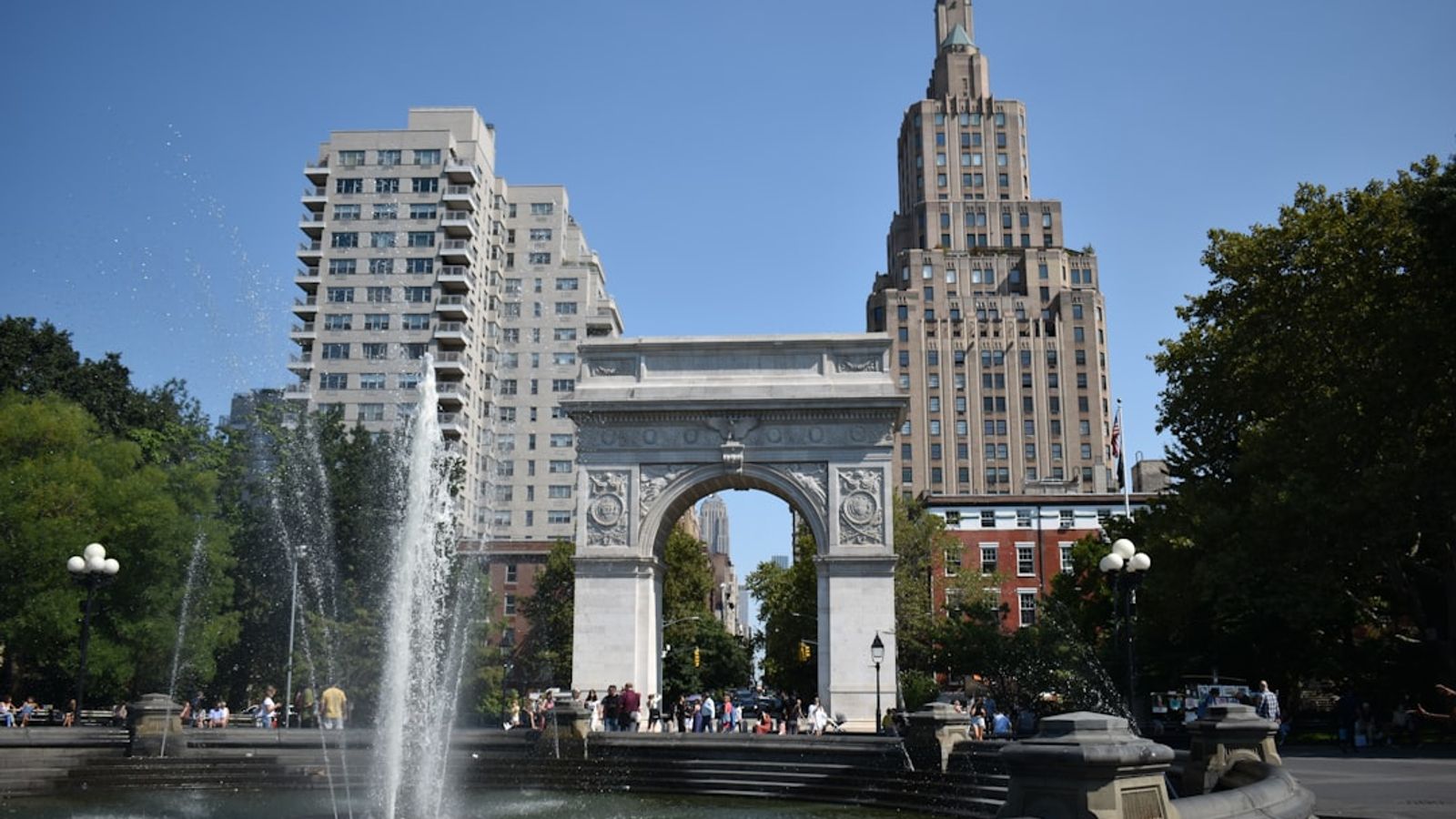
Beneath the fountain, the chess tables, and the jazz drifting through the arch, something else has been here a long time. Washington Square Park sits on top of one of New York’s oldest burial grounds — an estimated 20,000 people lie beneath the grass where New Yorkers picnic every afternoon.
A Burial Ground Before It Was a Park
The city acquired this land in 1797 as a potter’s field — a public burial ground for the poor, the sick, and the unclaimed. Yellow fever swept through New York in waves during the late 1700s, and this patch on the edge of Greenwich Village became the city’s answer to the overflow.
By the mid-1800s, the area had been converted into a military parade ground and eventually a public park. But nobody moved what was underneath.
Today, when you walk through Washington Square Park, you walk above the remains of more than 20,000 people. Renovations have repeatedly turned up bones. A sealed burial vault still sits beneath one of the park’s pathways. The city has never denied it — the park simply grew up around its history.
The Arch That Started as a Papier-Mâché Dream
In 1889, New York celebrated the centennial of George Washington’s presidential inauguration. To mark the occasion, the city built a wooden arch at the foot of Fifth Avenue — a temporary structure made from papier-mâché and plaster, never meant to last longer than the parade.
New Yorkers fell in love with it immediately. The arch was so popular that the city funded a permanent replacement. Architect Stanford White designed the marble version that still stands today, dedicated in 1895.
What most visitors never realise: there is a staircase inside the arch. It winds up through the structure to a rooftop terrace overlooking the park and lower Manhattan. The door is sealed now, but in the early 1900s, artists and free spirits used to climb up there for gatherings — and in 1917, a group of bohemians led by painter Marcel Duchamp climbed up, lit lanterns, and declared the “Free and Independent Republic of Washington Square.”
Where American Folk Music Found Its Voice
In the late 1950s, something started happening around the central fountain on Sunday afternoons. Folk musicians began gathering there — guitars, banjos, fiddles, voices blending in the open air. The fountain circle became a stage that belonged to anyone who showed up.
A young man named Robert Zimmerman arrived from Minnesota in 1961. He called himself Bob Dylan. He played in this fountain circle before anyone outside Greenwich Village had heard his name.
The acoustic tradition that took root here — informal, collective, wide open — helped shape what American popular music became. Street musicians still play at that fountain today. The circle is still there. The sound is still free.
Enjoying this? Join New York lovers getting stories like this every week. Subscribe free →
The Chess Corner That Never Closes
Head to the southwest corner of the park. You’ll find stone tables. You’ll find players. You’ll find a chess culture that has been alive here since at least the 1930s.
Washington Square Park’s chess corner has hosted some of the greatest players in American history. Bobby Fischer, who became world chess champion in 1972, played here as a teenager in the late 1950s. The tables draw grandmasters alongside beginners, hustlers looking for a game, and tourists who don’t know the rules but cannot stop watching.
There’s no reservation required. Anyone can sit down. That’s always been the point.
The Park That Holds the Neighbourhood Together
Washington Square Park covers just under ten acres. That doesn’t sound like much in a city this size. But few places punch above their weight the way this one does.
NYU’s campus rings the park on three sides. Henry James — who grew up nearby — set his novel Washington Square in its shadow. The buildings that look down over the fountain have housed artists, writers, and musicians for well over a century. If the park could talk, it would tell you about all of them.
On any given day, you’ll find drummers, saxophonists, people reading on benches, dog owners forming their own impromptu community, and visitors from across the world sitting beside people who have come here every single day for forty years. That mix doesn’t happen in many places. In Washington Square Park, it’s as reliable as the fountain.
Frequently Asked Questions About Washington Square Park
What is Washington Square Park known for?
Washington Square Park is famous for its iconic marble arch, the central fountain, live street music, and a chess culture that has drawn legendary players for nearly a century. It is also built on a historic potter’s field burial ground, with an estimated 20,000 people interred beneath it.
When is the best time to visit Washington Square Park?
Spring and early fall offer the most vibrant atmosphere — mild weather draws musicians, chess players, and locals all at once. Sunday afternoons are especially lively, when street performers fill the fountain circle with the same energy that made it famous during the 1960s folk revival.
Is Washington Square Park free to visit?
Yes — Washington Square Park is completely free and open to the public. There are no entry fees, no tickets, and no reserved sections. The chess tables, fountain area, and park benches are open to everyone every day of the year.
What is inside the Washington Square Arch?
The Washington Square Arch contains a sealed staircase that leads to a rooftop terrace. It is not accessible to the public today, but in the early twentieth century the top was used for bohemian gatherings. The marble arch was designed by Stanford White and completed in 1895, replacing a wooden centennial arch built in 1889.
Some places in New York reward patience. Washington Square Park rewards presence. Show up on a Saturday afternoon and the city hands you a complete picture of itself — layered, alive, and impossible to reduce to a single story.
You Might Also Enjoy
- Why Greenwich Village Has Been New York’s Most Rebellious Neighbourhood for 200 Years — The full story of the neighbourhood that surrounds Washington Square Park
- Free Things to Do in NYC: The Complete Guide for Visitors — Everything worth seeing and doing in New York without spending a dollar
Plan Your New York Trip
The Best Time to Visit New York City: A Season-by-Season Guide — Know exactly when to come and what to expect, from spring crowds to winter magic.
Join 1,100+ New York Lovers
Every weekday morning, get New York’s hidden gems, neighbourhood stories, food origins, and city secrets — straight to your inbox.
Subscribe free — enter your email:
📲 Know someone who’d love this? Share on WhatsApp →
Love more? Join 65,000 Ireland lovers → · Join 43,000 Scotland lovers →
Free forever · Unsubscribe anytime

Subscribe Free