
Most people think the story of New York City begins somewhere around Wall Street or Ellis Island. But the city’s oldest story plays out at the very top of Manhattan, in a park most visitors never find. Inwood Hill Park sits at the northern tip of the island — 196 acres of ancient forest, glacial caves, and Hudson River views that have been there, unchanged, for thousands of years.
The Deal That Supposedly Started It All
In 1626, Peter Minuit of the Dutch West India Company purchased the island of Manhattan from the Lenape people for a collection of trade goods worth 60 guilders — a figure that later generations translated into the famous “24 dollars” legend.
The transaction almost certainly took place at a shoreline in what is now Inwood Hill Park. A tulip tree stood there for centuries, known locally as the “purchase tree,” marking the spot where two worlds made contact. When that tree finally fell in 1938, the city planted a plaque in its place.
Whether the deal was understood the same way by both parties is a complicated historical question. What is not in question: this is where New York City, in some form, began.
Manhattan’s Last Old-Growth Forest
Inwood Hill Park contains the only remaining old-growth forest on the island of Manhattan. The trees here — mostly tulip trees and oaks — were never cleared for farmland or development. Some of the largest specimens are believed to be over 200 years old.
Walking into the forest from the main entrance on Isham Street, you pass through a boundary that feels genuinely abrupt. One moment you are on a city sidewalk. The next, you are on a winding dirt path through dense, silent woodland. The sound of traffic fades within a few steps.
The forest floor is carpeted with ferns and wildflowers in spring. In fall, the canopy turns amber and gold. Birders know the park well — it sits on the Atlantic Flyway, and during spring migration, the trees fill with warblers, thrushes, and tanagers.
The Caves Carved by Ice
On the western edge of the park, carved into the schist bedrock, is a series of shallow caves. They were formed by glaciers during the last Ice Age — roughly 10,000 years ago — as the ice sheet retreated north and dragged enormous boulders across the rock face.
The Lenape people used these caves for shelter and ceremony for centuries before European contact. During the Revolutionary War, British soldiers camped in them as the battle for control of upper Manhattan played out across the ridge above.
Today you can walk to the caves on an easy trail through the forest. They are shallow — more alcove than cavern — but the rock faces are worn smooth in ways that speak to thousands of years of human presence.
Enjoying this? Join New York lovers getting stories like this every week. Subscribe free
The Ridge Walk and the View Nobody Talks About
Above the caves, a trail climbs to the top of the ridge along the western side of the park. The reward is one of the best — and least-known — views in New York City.
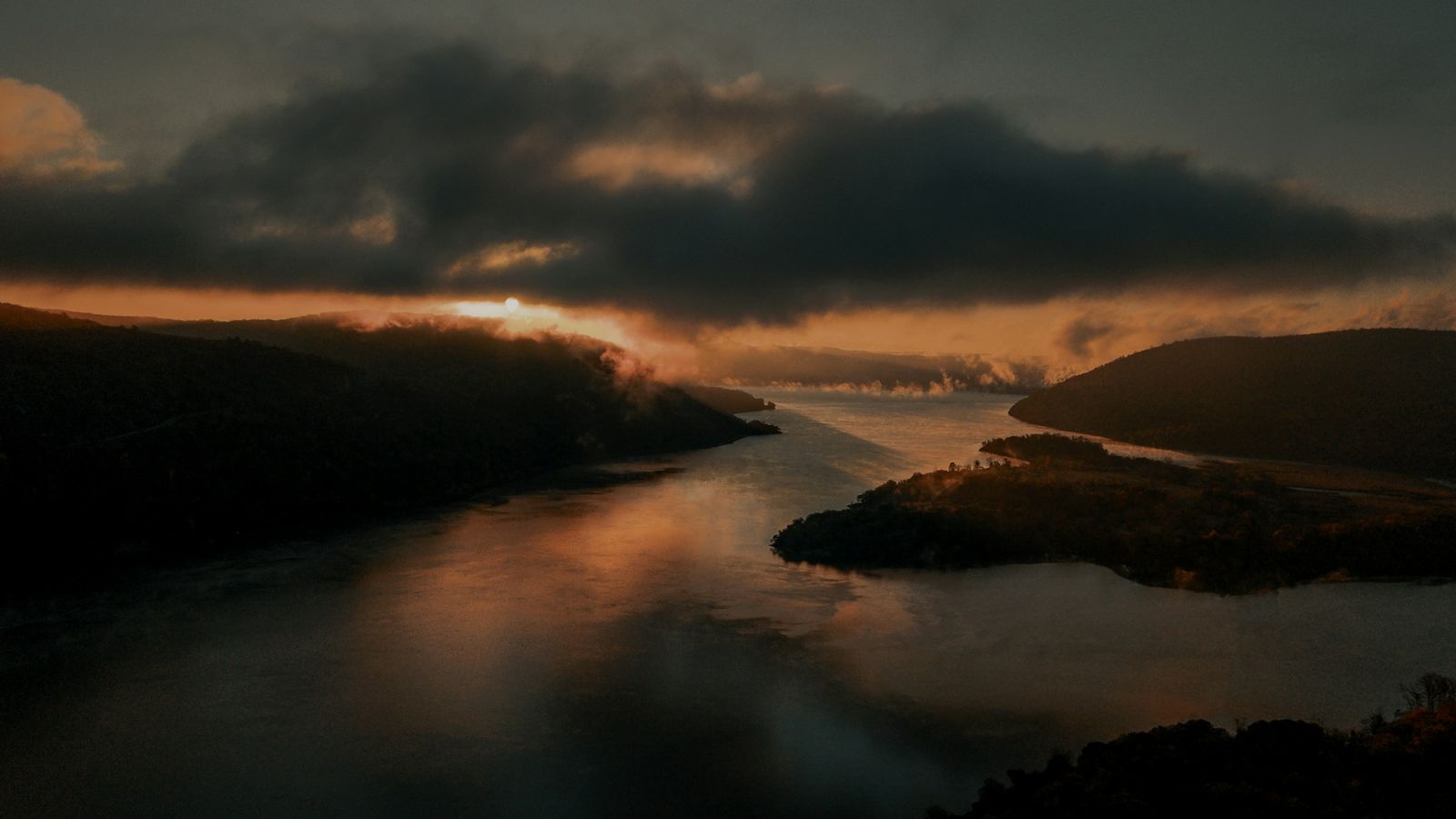
From the cliff top, you look straight across the Hudson River to the Palisades cliffs of New Jersey. On a clear morning, the river catches the light and the Palisades rise like a wall from the far bank. In all directions, there are trees.
Come on a summer evening and you might find a few residents sitting on the rocks watching the sun drop behind the cliffs. It is the kind of moment that does not feel like New York. Except that it is — entirely.
New York has no shortage of hidden gems that most tourists never find, but Inwood Hill Park stands apart. There is no gift shop, no Instagram queue, and no vendors at the entrance.
The Neighborhood That Time Left Alone
Inwood, the neighborhood surrounding the park, is one of Manhattan’s most overlooked communities. It runs at a different pace than the rest of the borough — quieter, more lived-in, less curated for outsiders.
The commercial strip along Dyckman Street — a 10-minute walk from the park entrance — is lined with Dominican restaurants, bakeries, and shops that have been there for decades. A meal here costs a fraction of what you would pay in Midtown.
Walk back into the park after lunch, back under the canopy, and the transition is startling. Inwood rewards those who ride the A train all the way to the end. Most visitors do not. That is exactly the point.
Frequently Asked Questions
Where is Inwood Hill Park located in Manhattan?
Inwood Hill Park is at the northern tip of Manhattan, between Dyckman Street and the Harlem Ship Canal. The main entrance is on Isham Street. Take the A train to 207th Street (Inwood-207 St station) and walk three blocks west.
What is the best time of year to visit Inwood Hill Park?
Spring (April and May) is exceptional for wildflowers and migrating birds. Fall (September and October) brings dramatic leaf color across the old-growth canopy. The park is open year-round from dawn to dusk and is quietest on weekday mornings.
What can you see at Inwood Hill Park?
The park contains Manhattan’s last old-growth forest, ancient glacial caves, a plaque marking the site of the 1626 land deal, and cliff-top views across the Hudson River to the Palisades of New Jersey. There are several miles of trails ranging from flat forest walks to rocky ridge scrambles.
How long should you plan to spend at Inwood Hill Park?
A comfortable visit covering the forest, the caves, and the ridge viewpoint takes about 90 minutes. If you plan to explore every trail and combine it with a stop on Dyckman Street, budget three hours. Wear sturdy shoes — some of the ridge paths are uneven and rocky.
The tulip trees are still growing where the purchase tree once stood. The caves are still open to the river wind. The ridge still catches the late light in a way that makes you stop walking. Inwood Hill Park has been here longer than the city itself — and it will still be here long after most of what passes for New York today has been torn down and rebuilt.
You Might Also Enjoy
- What’s Really Hiding Inside New York’s Most Beautiful Building
- The Forgotten Island in New York’s East River
- Hidden Gems in NYC: The New York Most Tourists Never See
Plan Your New York Trip
Inwood Hill Park is free and open daily from dawn to dusk. Take the A train to Inwood-207 St. Bring water — no vendors inside the park. Combine with lunch on Dyckman Street for one of Manhattan’s most affordable and authentic meal stops.
Join 1,100+ New York Lovers
Every weekday morning, get New York’s hidden gems, neighbourhood stories, food origins, and city secrets — straight to your inbox.
Subscribe free — enter your email:
Know someone who would love this? Share on WhatsApp
Love more? Join 65,000 Ireland lovers or Join 43,000 Scotland lovers
Free forever. . Unsubscribe anytime.

Subscribe Free