
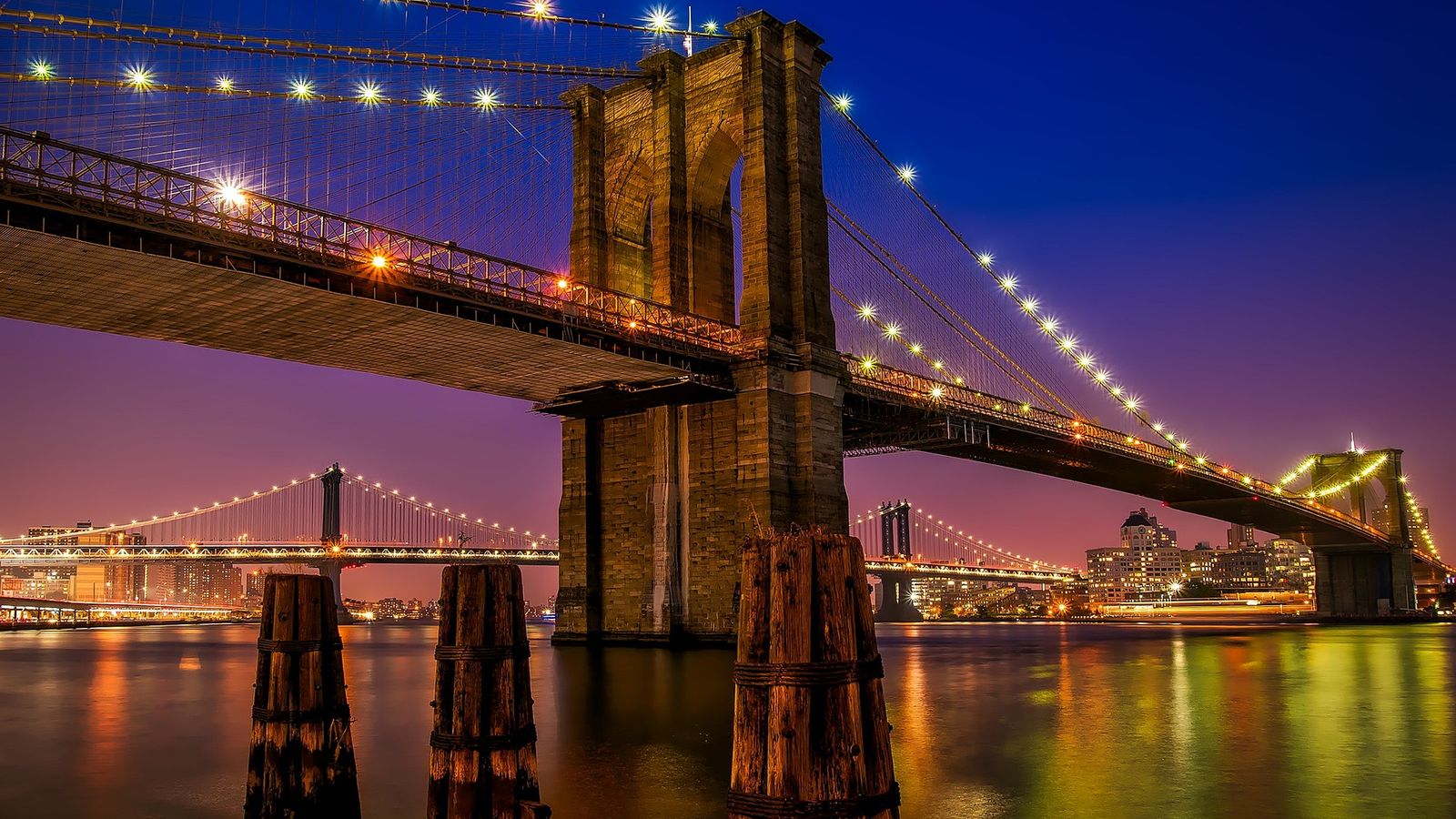
On May 24, 1883, a woman sat in an open carriage at the foot of the Brooklyn Bridge — a live rooster perched in her lap. She was about to become the first person to cross the most ambitious engineering project America had ever attempted. Almost nobody knew she had spent eleven years making sure it actually got built.
Two Deaths Before the First Stone Was Laid
The Brooklyn Bridge almost never happened. John Roebling, the engineer who designed it, was surveying the Brooklyn shoreline in 1869 when a ferry crushed his foot. He developed tetanus and died weeks later — before construction even began.
His son, Washington Roebling, took over. Washington was brilliant, meticulous, and deeply committed to finishing what his father started. He oversaw the excavation of the underwater foundations — enormous wooden chambers called caissons, sunk to the riverbed and filled with pressurised air so workers could dig.
It was brutal, dangerous work. Men who surfaced too quickly developed crippling joint pain, paralysis, and sometimes died. The condition didn’t have a name yet. Today we call it decompression sickness — the bends. In 1872, Washington Roebling went down into the caissons himself and never fully recovered. He was bedridden, nearly blind, and in near-constant pain. The bridge had no chief engineer.
The Education of Emily Warren Roebling
Emily Warren Roebling had married Washington in 1867, one year before construction began. She had a sharp, mathematical mind and a gift for organisation — but no engineering training. That was about to change.
With Washington confined to their home in Brooklyn Heights, Emily began carrying his instructions to the work site each morning. At first she was a messenger. Then she was interpreting his notes for the engineers. Then she was making decisions on his behalf.
Over the next several years, Emily taught herself the mathematics of cable construction, the properties of steel, the mechanics of load distribution, and the structural principles behind the bridge’s famous gothic towers. She became the daily point of contact for engineers, suppliers, politicians, and city officials — all while Washington watched the progress through a telescope from his upstairs window.
The Attack — and the Defence
By 1882, whispers had turned into an organised campaign. Several prominent engineers wanted Washington Roebling removed from the project. Their argument was straightforward: a man who couldn’t visit the bridge couldn’t be trusted to build it. What they didn’t say out loud was that they had no idea how to deal with the woman who had effectively replaced him.
Emily appeared before the American Society of Civil Engineers. She presented a vigorous defence of Washington’s work and her own role in it. The campaign to remove Washington failed. Construction continued.
It was one of the first times a woman had addressed that professional body. It would not be the last remarkable thing she did.
Enjoying this? Join New York lovers getting stories like this every week. Subscribe free →
A Rooster as a Symbol of Victory
On opening day, Washington Roebling watched from his window as his wife crossed the bridge first. She sat in an open carriage with a rooster in her lap — a traditional 19th-century symbol of triumph. President Chester Arthur crossed behind her. Thousands of New Yorkers followed.
Abram Hewitt, who gave the keynote address at the opening ceremony, acknowledged Emily Roebling’s contribution directly. He called her role “the most signal instance of womanly fidelity” in engineering history. It was a compliment dressed up in the language of its era — but it was an acknowledgment, all the same.
Washington Roebling attended no celebration. He watched from across the river as the city cheered for a bridge his wife had spent over a decade helping to finish. He lived to be 89. Emily died in 1903, at 59 — before the 20th century had properly begun to reckon with what she had done.
The Plaque That Took 100 Years
In 1983, exactly one hundred years after the bridge opened, a bronze plaque was installed at the Brooklyn entrance. It names all three Roeblings — John, Washington, and Emily. It acknowledges her role in the construction of the bridge and honours “her faith and courage.”
If you walk across the Brooklyn Bridge from the Brooklyn side, you can stand at the foot of the first tower and find that plaque. Most people walk straight past it. They’re looking up at the cables — the cables Emily Roebling helped design — and don’t notice the name beneath their feet.
That feels about right. The bridge is the legacy. The name is the footnote. But now you know.
You Might Also Enjoy
Love Brooklyn? Spend a full two days exploring its neighbourhoods, food, and history with our Brooklyn in 48 Hours: An Insider’s Guide.
New to the city? Our guide to New York’s hidden subway history has more stories you won’t find on a standard tour.
Plan Your New York Trip
Ready to walk across the Brooklyn Bridge yourself? Start with The Ultimate New York Travel Guide — everything you need for a first-time or return visit to the city.
Join New York Lovers
Every weekday morning, get New York’s hidden gems, neighbourhood stories, food origins, and city secrets — straight to your inbox.
Subscribe free — enter your email:
Love more? Join 65,000 Ireland lovers → · Join 43,000 Scotland lovers →
Free forever · Unsubscribe anytime
