
TriBeCa is one of New York City’s most striking neighbourhoods. Cobblestone streets wind between converted industrial warehouses. Art galleries sit beside Michelin-starred restaurants. And the Hudson River gleams just a short walk away. If you want to know all the best things to do in TriBeCa, you have come to the right place. This guide covers everything from the neighbourhood’s famous film festival to quiet waterfront walks, hidden courtyard gardens, and some of Manhattan’s finest eating and drinking.
What is TriBeCa?
TriBeCa stands for Triangle Below Canal Street. The name describes the neighbourhood’s geography: a wedge of lower Manhattan bounded by Canal Street to the north, Chambers Street to the south, Broadway to the east, and the Hudson River to the west.
Once a centre for textile trading and light industry, TriBeCa spent much of the twentieth century as a working district of loading docks and warehouses. Artists moved in during the 1970s and 1980s, drawn by large loft spaces and affordable rents. Today those same warehouses hold some of the most expensive residential real estate in New York City. Celebrities, financiers, and artists all call TriBeCa home.
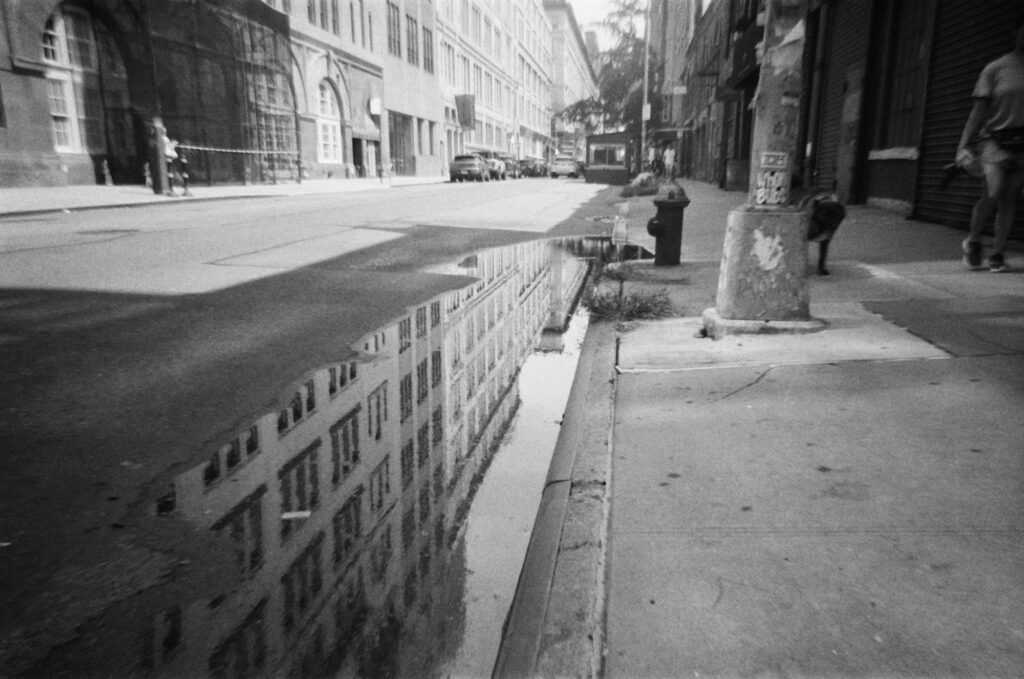
What makes TriBeCa special is its combination of grand-scale architecture and quiet, human-scaled streets. The cast-iron facades and Romanesque arches of the original commercial buildings give the neighbourhood a distinct personality. Walk here on a weekday morning and the streets feel almost European in their calm.
The Cobblestone Streets
TriBeCa’s cobblestone streets are among the most photographed in Manhattan. Harrison Street, Beach Street, and Staple Street all retain their original Belgian block paving. Walk slowly and look up. The warehouse buildings above are extraordinary examples of nineteenth-century commercial architecture, many of them converted into multimillion-dollar loft apartments.
Staple Street is particularly worth finding. A narrow alley connecting Jay Street and Harrison Street, it has a cast-iron skybridge connecting two buildings overhead. Film crews use it regularly. Most visitors walk straight past without noticing it. You will not miss it if you look for it.
Things to Do in TriBeCa
TriBeCa rewards slow exploration. The neighbourhood has no single headline attraction demanding a tick on a list. Instead, it offers a combination of gallery visits, waterfront walks, architectural wandering, and world-class food. Here is how to spend your time well.
Visit the Art Galleries
TriBeCa has a strong gallery culture, rooted in the artists who colonised the warehouses decades ago. Dozens of contemporary art galleries line the streets around Hudson Street and West Broadway. Many welcome visitors without an appointment. Check what is on before you arrive.
David Zwirner has a major space in TriBeCa, regularly hosting shows by internationally recognised artists. Postmasters Gallery and Galerie Lelong are also worth checking. Entry to most galleries is free. This is one of the best free things to do in TriBeCa for anyone with an interest in contemporary art.
Walk Along Hudson River Park
Hudson River Park runs along the western edge of TriBeCa and offers some of the best open space in lower Manhattan. Piers 25 and 26 provide grass lawns, mini golf, a beach volleyball court, and a marina. On a sunny afternoon, they fill with local residents, cyclists, and children.
From the waterfront, you get clear views across the Hudson to New Jersey. The light here at sunset is spectacular. Head north along the river path and you can walk all the way up to the High Line in the Meatpacking District, a walk of around two miles through some of Manhattan’s most interesting waterfront spaces.
Explore Harrison Street Row
Harrison Street Row is a remarkable survivor. Eight Federal-style rowhouses stand on Harrison Street, dating from the late eighteenth and early nineteenth centuries. They are among the oldest residential buildings remaining in Manhattan. The city relocated several of them here during the 1970s to save them from demolition.
Standing in front of them, you get a sense of what lower Manhattan looked like two centuries ago. The contrast with the surrounding warehouse buildings could not be more striking. This is a genuinely historic spot that most visitors overlook entirely.
Attend the Tribeca Film Festival
Robert De Niro and Jane Rosenthal founded the Tribeca Film Festival in 2002, partly to help revitalise lower Manhattan after the September 11 attacks. The festival takes place each spring, typically in April and May. It has grown into one of the most significant independent film events in the world.
Screenings, talks, and outdoor events take place across the neighbourhood. Many screenings are open to the public. Even if you visit outside festival season, TriBeCa has a distinctly cinematic atmosphere. Production companies, talent agencies, and creative studios fill many of the buildings.
Cross the Brooklyn Bridge on Foot
TriBeCa sits just minutes from the Brooklyn Bridge on foot. The bridge’s Manhattan entrance stands at the eastern edge of the neighbourhood, near City Hall Park. Walking the Brooklyn Bridge is one of the great New York experiences. The views of the Manhattan skyline from the bridge’s central span are extraordinary.
Allow at least an hour for the walk and back. Start early in the morning to avoid crowds. The return trip via DUMBO and Brooklyn Heights adds another excellent neighbourhood to your day.
🗽 Love New York? Get Our Free Weekly Newsletter
Join 1,000+ New York lovers. Lesser-known corners, local secrets, and insider neighborhood guides — delivered free every week.
Subscribe Free →Where to Eat in TriBeCa
TriBeCa has one of the best restaurant scenes in Manhattan. This is partly because many residents are wealthy and demand high-quality food, and partly because the neighbourhood has always attracted creative people with adventurous palates. You will find everything here from a perfect bowl of ramen to a serious tasting menu.
Upscale Dining
Tribeca Grill, co-owned by Robert De Niro, has anchored the neighbourhood’s dining scene since 1990. The menu focuses on contemporary American food in a relaxed, comfortable setting. Reservations are recommended.
Locanda Verde is another TriBeCa institution. Set inside the Greenwich Hotel, it serves rustic Italian cooking to a loyal local crowd. The breakfast menu alone is worth the visit. Nobu TriBeCa, the original location of Nobu Matsuhisa’s restaurant empire, remains one of the most famous restaurants in Manhattan. Book well in advance.
For a more complete guide to eating across the city, our New York City food guide covers the best of every borough.
Cafés and Casual Eating
Kaffe 1668 is a beloved TriBeCa coffee shop with excellent espresso and a calm, neighbourhood feel. Laughing Man Coffee, co-founded by Hugh Jackman, operates in the neighbourhood and donates a portion of its profits to smallholder coffee farmers. Both are excellent spots for a morning break between gallery visits.
Boqueria TriBeCa serves Spanish tapas at lunchtime and into the evenings. TriBeCa has a high density of good eating at every price point. Wander and look at menus. Most restaurants post their menus outside.
Shopping in TriBeCa
Shopping in TriBeCa tends towards independent boutiques and design-led stores rather than high-street chains. This is not the place to find a bargain, but it is an excellent place to find something genuinely different.
Boutiques and Design Stores
The Row on Hudson Street carries sophisticated, minimalist clothing that fits the TriBeCa aesthetic perfectly. For homewares and design objects, Matter is a gallery-style shop stocking furniture and accessories from international designers. Shinola TriBeCa carries American-made watches, leather goods, and accessories.
The area around Greenwich Street has a cluster of independently owned shops worth exploring on foot. For a more intensive shopping experience, neighbouring SoHo is a ten-minute walk north and offers one of the best concentrated retail districts in New York. Our guide to the best neighbourhoods in New York City covers SoHo, the Upper East Side, and beyond.
Exploring TriBeCa on Foot
TriBeCa is small enough to walk across in twenty minutes. This makes it ideal for a self-guided walking tour. Our guide to the best self-guided walking tours in New York City includes a lower Manhattan route that takes in TriBeCa alongside the Financial District and Brooklyn Bridge.
A Suggested Walking Route
Start at the Franklin Street subway station, which puts you in the heart of the neighbourhood. Walk south along Hudson Street, pausing to look into gallery windows. Turn left onto Harrison Street and walk west to see the cobblestones and the Harrison Street Row houses.
Continue west to the Hudson River Park and walk along the waterfront to Pier 26. If it is a nice day, sit on the lawn for a while. Then loop back east through the neighbourhood via Laight Street and Vestry Street, two quieter roads lined with original warehouse architecture. End your walk on West Broadway, where the restaurant and café options are concentrated.
Getting to TriBeCa
TriBeCa is well served by the New York City subway. The easiest approach from Midtown is via the 1 train to Franklin Street. The A and C trains stop at Chambers Street, the neighbourhood’s southern boundary. The 2 and 3 trains also serve Chambers Street.
From Lower Manhattan and the Financial District, TriBeCa is walkable in under ten minutes. From SoHo, it is a five-minute walk south across Canal Street. Taxis and rideshares serve the neighbourhood easily, and the area is well-suited to cycling, with protected lanes along the Hudson River greenway.
Where to Stay Near TriBeCa
The Greenwich Hotel is TriBeCa’s most celebrated address. Robert De Niro co-owns it, and the interior design mixes Japanese, Moroccan, and Italian influences to striking effect. Several more affordable hotels operate in the Financial District and Lower Manhattan, within easy walking distance of TriBeCa. For a full overview of the city’s accommodation options, our guide to where to stay in New York City covers every budget and neighbourhood.
Practical Tips for Visiting TriBeCa
TriBeCa is quiet compared to Midtown. Do not expect crowds, noise, or the hectic energy of Times Square. This is a residential neighbourhood where people live, work, and raise families.
Best Time to Visit TriBeCa
Spring and autumn are the best seasons for walking the cobblestone streets in comfort. April and May bring the Tribeca Film Festival, which adds particular energy to the neighbourhood. Summer is warm and lively, with the Hudson River Park at its best for outdoor activities. Winter is quieter but the restaurants and galleries remain open, and the neighbourhood has a particular charm under grey skies.
Budget and Costs
TriBeCa is one of Manhattan’s more expensive neighbourhoods for eating and drinking. A coffee costs what you would expect in a quality independent café. A dinner at one of the better restaurants will be significantly more expensive than the city average. That said, many of the best things to do in TriBeCa — walking the cobblestone streets, visiting galleries, and exploring the waterfront — cost nothing at all. You can spend a full and rewarding day in TriBeCa without spending much money beyond food.
Frequently Asked Questions About TriBeCa
What is TriBeCa known for in New York City?
TriBeCa is known for its cobblestone streets, cast-iron warehouse buildings, and excellent restaurants. The annual Tribeca Film Festival takes place here each spring. The neighbourhood is also famous for expensive real estate, a thriving contemporary art gallery scene, and its association with celebrities including Robert De Niro.
How far is TriBeCa from Times Square?
TriBeCa sits roughly three miles south of Times Square. The 1 train runs directly between the two, with a journey time of around fifteen minutes. By taxi or rideshare, the trip takes twenty to thirty minutes depending on traffic conditions.
Is TriBeCa worth visiting for tourists?
Yes, TriBeCa is absolutely worth visiting. It offers a quieter, more authentic side of Manhattan than the tourist-heavy Midtown area. The cobblestone streets, architecture, galleries, waterfront park, and excellent restaurants make it one of the most rewarding neighbourhoods to explore on foot in New York City.
When is the Tribeca Film Festival held?
The Tribeca Film Festival takes place each spring, typically across two weeks in April and May. Screenings and events happen in venues across lower Manhattan, with many screenings open to the public. Check the official Tribeca Film Festival website for current dates and programme information.
Join 1,000+ New York Lovers
Every week, get New York’s lesser-known corners, local secrets, and travel inspiration.
Subscribe free — enter your email:
Free forever · One email per week · Unsubscribe anytime
