
The city was built on Irish backs. Between 1845 and 1855, more than a million Irish people arrived in America. Most came through New York. They packed into the tenements of Five Points and the Lower East Side. They dug the foundations. They laid the rails. They built the churches.
But some of their children built something else entirely.
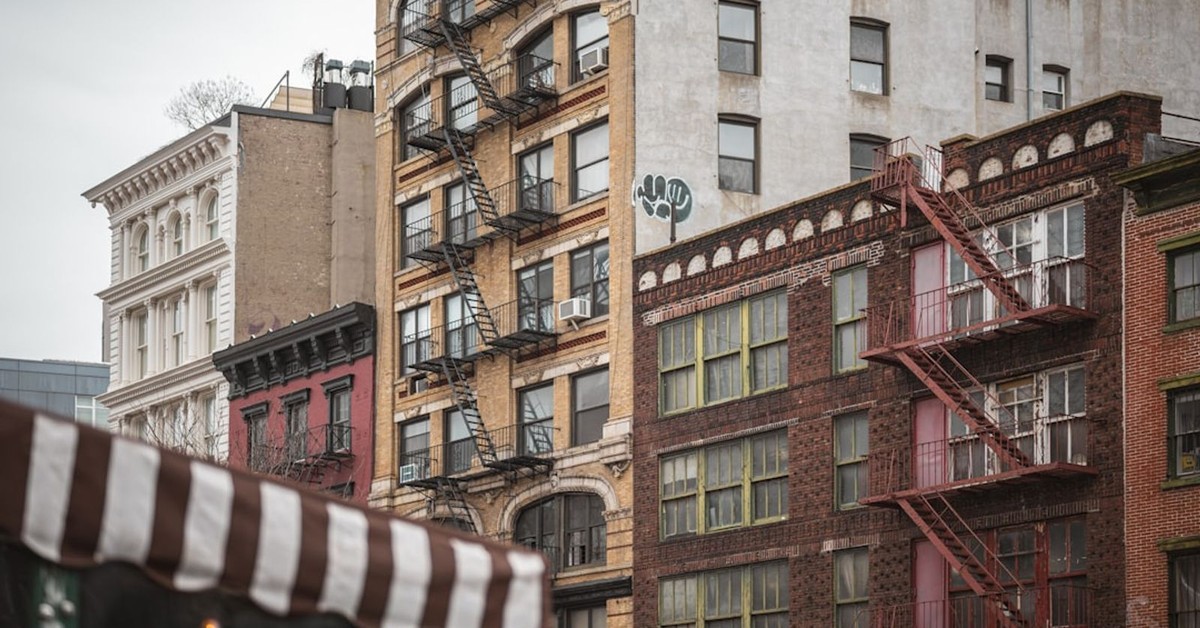
From those overcrowded tenements came governors, Nobel laureates, Oscar winners, and men who changed the skyline of New York forever. If you have Irish roots, chances are your family and theirs arrived on the same ships. Here are the New Yorkers who never forgot where they came from.
If you love New York’s hidden heritage stories, you’ll love our free weekly newsletter. Subscribe to Love New York →
Al Smith: The Tenement Kid Who Ran for President
Al Smith was born in 1873 near the old Fulton Fish Market in Lower Manhattan. His family was Irish-Italian. They lived at 174 South Street, one of the most overcrowded stretches of the city.
His father died when Al was twelve. He left school to sell newspapers. He worked at the fish market before dawn. He learned politics on the streets of the old neighbourhood. Tammany Hall spotted him early.
Smith rose through every level of New York politics. He served in the state assembly. He became Speaker. Then he became Governor of New York — four times. His speeches were unlike anything Albany had heard before. He was blunt, funny, and entirely without pretension. New Yorkers loved him for it.
In 1928, he became the first Catholic ever nominated for president by a major party. He lost to Herbert Hoover. Anti-Catholic prejudice played a part. But his candidacy changed America. He proved that a son of the tenements could reach the highest levels of power.
After politics, Smith oversaw the construction of the Empire State Building. When it opened in 1931, he rode to the top floor in the first elevator. For a man who had grown up without much, this was not a small thing.
Where to connect: Walk along South Street near the old fish market. Look at the tenements on Oliver Street, just a block away. Smith knew every inch of this ground.
Archbishop John Hughes: The Man Who Built St. Patrick’s Cathedral
Before Smith, there was Archbishop John Hughes. He is the reason New York has a St. Patrick’s Cathedral.
Hughes was born in County Tyrone in 1797. He came to America as a young man with very little. He trained for the priesthood. By 1850, he was the city’s first Archbishop.
New York in those years was openly hostile to Irish Catholics. Protestant gangs threatened Irish neighbourhoods. Churches were at risk. Hughes did not back down. He stationed armed men around every Catholic church in the city. He reportedly warned city officials plainly that any attack on a Catholic church would not go unanswered. No churches burned that night.
He built schools, hospitals, and orphanages across the city. He founded Fordham University. He lobbied Washington during the Civil War and helped persuade Britain not to support the Confederacy.
In 1858, he laid the cornerstone for the new St. Patrick’s Cathedral. He died in 1864 before it was completed. But it stands today on Fifth Avenue as his legacy. Every Irish Catholic family that walks through those doors walks through something he built.
Where to connect: St. Patrick’s Cathedral, 460 Fifth Avenue. Archbishop Hughes is buried in a crypt beneath the altar.
James Cagney: The Lower East Side Kid Who Conquered Hollywood
James Cagney was born in 1899 in Yorkville, on Manhattan’s Upper East Side. His father was Irish, born in County Leitrim. His mother was Norwegian-Irish. The family moved to the Lower East Side when Cagney was young.
He grew up surrounded by tenements, street gangs, and the noise of immigrant New York. He picked up languages from his neighbours — Italian, Yiddish, the clipped slang of the docks. He danced in vaudeville halls from his teens. He could move faster on his feet than almost anyone in the city.
Hollywood spotted him in 1930. Within two years, he was one of the biggest stars in America. He played gangsters and tough guys. He always said his characters came from the streets he grew up on. He had known men like them.
In 1942, he won the Academy Award for Best Actor for Yankee Doodle Dandy. He played George M. Cohan — an Irish-American who wrote some of America’s best-loved songs. Cagney, the son of a Leitrim man, was Hollywood’s most Irish star. He just never made a point of it.
Where to connect: Walk the streets of Hell’s Kitchen and the Lower East Side. This is where Cagney’s world took shape.
Want more stories like this? Our weekly newsletter goes deeper into New York’s heritage every week. It’s free. Subscribe here →
Eugene O’Neill: Born in a Hotel Room on Broadway
Eugene O’Neill was born in a hotel room at the corner of Broadway and 43rd Street — the heart of what is now Times Square. The year was 1888.
His father was James O’Neill, born in County Kilkenny, Ireland. James came to New York as a child and trained as an actor. By the time Eugene was born, his father was one of the most famous actors on Broadway. He played the lead in The Count of Monte Cristo for over thirty years. He was celebrated, wealthy, and, his son believed, trapped by his own success.
Eugene grew up restless. He was in and out of schools. He sailed the world on merchant ships. He drank heavily and wrote constantly. Then his plays began to be performed.
His work was unlike anything America had seen before. He wrote about Irish-American families — their silences, their drinking, their broken dreams, their fierce love. Long Day’s Journey into Night is about his own family. It is one of the greatest plays written in the English language.
In 1936, O’Neill won the Nobel Prize for Literature. He remains the only American playwright to have received it. His plays are still performed around the world every week.
Where to connect: The corner of Broadway and 43rd Street, where the hotel once stood. The Eugene O’Neill Theatre on West 49th Street carries his name today.
William R. Grace: The First Irish Catholic Mayor of New York
William Russell Grace was born in 1832 in Riverstown, County Cork. He left Ireland after the Famine and made his way first to South America, then to New York. He built a shipping company. Then he built a trading empire.
In 1880, he became the first Irish Catholic elected Mayor of New York City. He served two terms: from 1880 to 1882 and again from 1884 to 1886.
His legacy is quiet but permanent. He ran a modern, efficient city government at a time when corruption was expected. He supported immigrant communities. He invested in the city’s infrastructure.
Grace was mayor when France offered America the Statue of Liberty. He was on the platform at the dedication ceremony on 28 October 1886. A man from County Cork helped welcome the world’s most famous symbol of arrival.
Where to connect: Take the ferry to Liberty Island. Think of the Cork men, the Kilkenny men, and the Mayo men whose descendants stood in that harbour and looked up at the statue for the first time.
What They All Had in Common
None of these men grew up with much. Al Smith sold fish. Archbishop Hughes arrived with almost nothing. James Cagney danced for pennies in vaudeville halls. Eugene O’Neill’s family struggled between theatre seasons. William Grace left Ireland at nineteen.
New York gave them something: the energy of a city still being built. The ambition of people who had survived the worst. The resilience of the Irish immigrant experience pressed children of poverty towards achievement — and sometimes towards both achievement and destruction at once.
They built the Catholic Church in America. They built its politics. They built its theatre and its film industry. And they never quite forgot Oliver Street, or Yorkville, or the corner of Broadway and 43rd.
If your family came through New York in those years, the city these men shaped is the city your ancestors walked through. Parts of it still stand. You can walk them today.
Start with the Irish Lower Manhattan Heritage Walk to trace the streets where the Irish first arrived. Read about what life looked like for an Irish family in 1900. And if you want to trace your own New York roots, our complete guide to tracing New York City ancestry will show you exactly where to start.
Frequently Asked Questions
Who was the first Irish Catholic Mayor of New York City?
William R. Grace, born in Riverstown, County Cork in 1832, was the first Irish Catholic elected Mayor of New York City. He served two terms, from 1880 to 1882 and from 1884 to 1886.
Where was Al Smith born in New York?
Al Smith was born in 1873 near the Fulton Fish Market in Lower Manhattan. His family lived at 174 South Street, close to what is now the South Street Seaport area. He left school at twelve after his father died.
What is Archbishop Hughes’s connection to St. Patrick’s Cathedral?
Archbishop John Hughes laid the cornerstone of St. Patrick’s Cathedral on Fifth Avenue in 1858 and oversaw the early construction. He died in 1864 before its completion. He is buried in a crypt beneath the main altar.
Where was Eugene O’Neill born in New York?
Eugene O’Neill was born in 1888 in a hotel at the corner of Broadway and 43rd Street — now Times Square. His father James O’Neill, born in County Kilkenny, Ireland, was one of Broadway’s most celebrated actors of that era.
How did Irish immigrants shape New York City?
Irish immigrants arriving during and after the Great Famine (1845–1852) built much of New York’s physical and institutional infrastructure — its tunnels, roads, and churches. Their descendants went on to lead the city’s politics, art, and Catholic Church for generations.
Ready to explore the New York your ancestors knew? Subscribe to Love New York — free weekly stories, heritage guides, and hidden history. Join us →
