
Washington Heights sits at the northern tip of Manhattan. Most visitors cross it on the way to the George Washington Bridge. Few stop to look around.
That is a mistake.
Two waves of immigrants shaped this neighbourhood. German-Jewish refugees arrived first in the 1930s. Dominican families followed from the 1960s onwards. Both groups built extraordinary communities on these streets. Both left traces you can still find today.
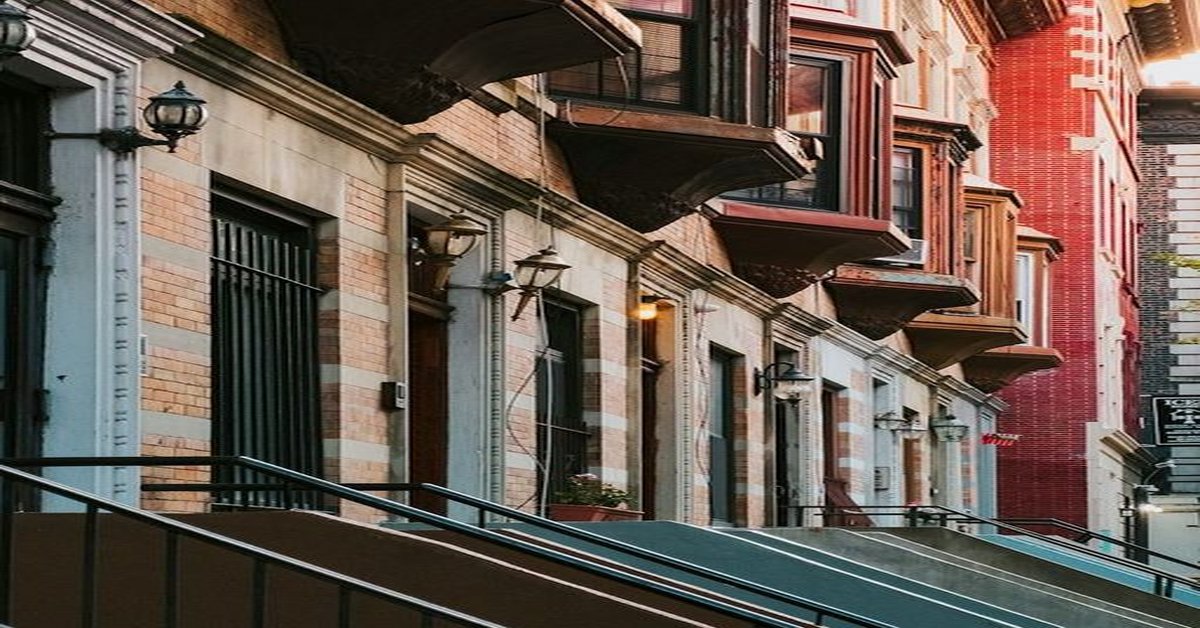
If you have roots in either community, Washington Heights holds your story. And if you love New York’s hidden histories, this neighbourhood rewards every hour you give it.
If you love New York’s hidden stories, you’ll love our free weekly newsletter. Subscribe to Love New York →
The First Wave: German Jews Who Called It “Frankfurt on the Hudson”
In the 1930s, tens of thousands of German Jews fled Nazi persecution. Many arrived in New York Harbour. A large number settled in Washington Heights.
These were not poor arrivals. Many were middle-class professionals. Doctors. Lawyers. Academics. Engineers. They brought their culture intact and found affordable housing in the Heights’ six-storey apartment blocks.
They opened delicatessens on Bennett Avenue. They served black bread, smoked fish, and Viennese pastry. German-language newspapers sat on front stoops. Cafés stayed open late, just as the ones back in Frankfurt had.
Neighbours called the area “Frankfurt on the Hudson.” Some, with dark humour, called it “the Fourth Reich.” The joke was fond. The community rebuilt what it had lost — not as the original, but as something new and resilient.
Henry Kissinger’s Block
Henry Kissinger arrived from Bavaria in 1938. He was fifteen years old. His father had taught school in Germany. The family settled on Bennett Avenue in Washington Heights.
Kissinger later described the neighbourhood as “a world apart.” He said German-Jewish culture survived intact on those streets long after it vanished in Europe. He credited Washington Heights with shaping his understanding of displacement and second chances.
The neighbourhood drew other intellectual refugees. Franz Boas, the father of American cultural anthropology, taught nearby at Columbia University. The area attracted scientists, writers, and thinkers who rebuilt their careers from scratch after fleeing fascism.
The Streets They Built
Bennett Avenue formed the heart of the community. Small shops sold imported German goods. Men in suits read newspapers in both German and English. Women pushed prams and called to each other in accented New York German.
The Hebrew Tabernacle stands at 551 Fort Washington Avenue. The congregation built it in 1905. By the 1940s, German-Jewish refugees packed its pews every Shabbat. The synagogue still holds services today. It remains one of the best physical reminders of this era.
The neighbourhood had its own German-speaking doctors and pharmacists. Community organisations ran social clubs and support networks. Families helped one another find jobs, navigate bureaucracy, and learn English. They turned survival into community.
This German-Jewish community produced an extraordinary cultural legacy. The Lower East Side gave America Irving Berlin and George Gershwin. Washington Heights gave America Henry Kissinger and a generation of scientists, lawyers, and business leaders who rebuilt their lives from nothing.
What Happened to the German-Jewish Community
By the 1960s, the German-Jewish community began to disperse. Younger generations moved to suburbs in New Jersey and Long Island. Elders stayed as long as they could. Gradually, the delicatessens changed hands and the coffee houses closed.
The physical traces are faint now. But some survive. The Hebrew Tabernacle still holds services. The Leo Baeck Institute in Greenwich Village holds the community’s archives — letters, photographs, and records from the families who once filled these streets.
The Lower East Side drew Jewish immigrants from Eastern Europe. Washington Heights drew a different wave — educated professionals fleeing political persecution. The two communities shared a faith but had different origins and experiences. Both groups transformed New York City.
The Second Wave: Dominican Immigrants Build a New Capital
In 1961, Dominican dictator Rafael Trujillo died by assassination. His death ended three decades of brutal rule. The change opened a door for many Dominicans who wanted to leave.
The first Dominican families arrived in Washington Heights in the early 1960s. They found affordable rents in the apartment buildings the German-Jewish community had vacated. Word spread back to the island. More families followed.
By the 1980s, Washington Heights had transformed. The neighbourhood became predominantly Dominican. Today it holds the largest concentration of Dominican people outside the Dominican Republic itself.
Locals call it “Quisqueya Heights.” The name comes from the indigenous Taíno word for the island of Hispaniola — the land the Dominican Republic shares with Haiti. The name signals pride: this is not just a New York neighbourhood. It is a second homeland.
Want more stories like this? Our weekly newsletter goes deeper into New York’s heritage every week. It’s free. Subscribe here →
Life on the Heights Today
Walk along 181st Street on a weekday afternoon. Bodegas sell plantains, yuca, and fresh coconut. Merengue drifts from open windows. Street vendors ladle sancocho — thick Dominican stew — from large pots on wheeled carts.
The community built strong institutions. Dominican businesses line St Nicholas Avenue. Community centres, churches, and cultural organisations serve more than 100,000 residents. The neighbourhood looks after its own.
Dyckman Street became famous for basketball. The outdoor courts at Dyckman Park produced players who reached professional leagues. On summer evenings, crowds pack the courts to watch local talent compete. The tradition runs deep — fathers who played here bring their children to watch.
Music fills Washington Heights on weekends. Merengue and bachata pulse from cars, restaurants, and open windows. The Dominican Day Parade fills the streets each August. The neighbourhood does not hold its culture quietly. It celebrates loudly.
Lin-Manuel Miranda and “In the Heights”
Lin-Manuel Miranda grew up in Washington Heights. He is the creator of *Hamilton* and *In the Heights*. His breakthrough musical drew directly from the streets and people of upper Manhattan.
“In the Heights” follows a group of friends in Washington Heights over one summer weekend. Miranda based the characters on real neighbours and family members. The musical ran on Broadway from 2008 to 2011. A film adaptation followed in 2021.
Miranda has said Washington Heights taught him that community sustains people through hard times. The neighbourhood shaped how he writes about identity, belonging, and the desire to leave home without ever really leaving it.
Where Two Stories Crossed: The Audubon Ballroom
One building captures Washington Heights’ layered history better than any other.
The Audubon Ballroom opened in 1912 at 3940 Broadway. In the 1940s, it hosted swing dances and big band nights. German-Jewish refugees danced here in borrowed suits, putting the war behind them.
In February 1965, Malcolm X stood at a podium inside the Audubon Ballroom. Armed men shot him dead before he could speak. The assassination shook the neighbourhood and the nation.
Columbia University later converted the building into the Audubon Business and Technology Center. A memorial to Malcolm X now stands outside. The same hall that hosted wartime dances for German-Jewish refugees now anchors a university biotech campus — with a plaque honouring one of the twentieth century’s most important voices.
Washington Heights does not erase its layers. It carries them forward.
Where to Visit in Washington Heights
The neighbourhood rewards slow, curious visitors. Start here.
The Hebrew Tabernacle
Address: 551 Fort Washington Avenue. This synagogue dates to 1905 and served the German-Jewish refugee community through its peak years in the 1930s and 1940s. The congregation still holds Shabbat services. Call ahead to confirm times before visiting.
The Audubon Ballroom and Malcolm X Memorial
Address: 3940 Broadway at 165th Street. A memorial plaque stands outside the building that once held the ballroom. The marker acknowledges both the building’s history and Malcolm X’s legacy. The memorial is outdoors and free to visit at any time.
Fort Tryon Park
Landscape designer Frederick Law Olmsted Jr completed this park in 1935. It rises 230 feet above the Hudson River. Views stretch out across to the New Jersey Palisades. Enter from Broadway at 192nd Street. The park is open daily with no admission charge.
The Cloisters
Address: 99 Margaret Corbin Drive, inside Fort Tryon Park. A branch of the Metropolitan Museum of Art, The Cloisters houses medieval European art and architecture. Workers reassembled actual monastery rooms brought from France and Spain to build the museum. It opened in 1938 — the same years German-Jewish refugees poured into Washington Heights. Many visitors felt a quiet kinship with those transplanted European stones. Admission is charged; see metmuseum.org for current prices.
Dyckman Farmhouse Museum
Address: 4881 Broadway at 204th Street. The oldest surviving farmhouse in Manhattan, built around 1784 by the Dyckman family. It predates all the immigrant waves by more than a century. Open Tuesday to Sunday. Check dyckmanfarmhouse.org for hours and admission.
181st Street
Walk between Broadway and St Nicholas Avenue along 181st Street. Street food, music, and neighbourhood energy fill this stretch on any afternoon. This is the commercial heart of Dominican Washington Heights — unhurried, authentic, and very much alive.
Tracing Your Washington Heights Roots
Many American families have connections to Washington Heights. Records from both immigrant communities survive and remain accessible.
For German-Jewish ancestors: the Leo Baeck Institute holds the world’s largest archive of German-Jewish community records. Find it at 15 West 16th Street in Manhattan, inside the Centre for Jewish History. The institute welcomes researchers by appointment.
For Dominican ancestors: the Dominican Studies Institute documents Dominican-American community history from the 1960s to the present. Find it at City College of New York, 160 Convent Avenue. The institute accepts research inquiries and can direct you to the right records.
Ellis Island passenger records are free to search at libertyellisfoundation.org. German-Jewish refugees arriving in the 1930s came through New York Harbour. Many arrival cards list Washington Heights as the intended address.
The New York City Municipal Archives holds birth, marriage, and death certificates from 1866 onwards. Researchers can search records online at records.nyc.gov or visit in person at 31 Chambers Street.
The same method works across New York’s immigrant neighbourhoods. Harlem’s Great Migration community a few kilometres south built parallel institutions during the same decades. Understanding one neighbourhood deepens your understanding of all the others.
Frequently Asked Questions
What is Washington Heights known for?
Washington Heights is known for two distinct immigrant communities that shaped the neighbourhood across different decades. German-Jewish refugees settled here in the 1930s and 1940s, fleeing Nazi persecution. Dominican families arrived from the 1960s onwards and today make up the majority of the population. The neighbourhood is also known for the George Washington Bridge, Fort Tryon Park, and The Cloisters museum.
Where is Washington Heights in New York City?
Washington Heights occupies the northern tip of Manhattan, from roughly 155th Street to Dyckman Street (around 200th Street). It sits directly north of Harlem. The George Washington Bridge connects Washington Heights to New Jersey via the Hudson River.
Did Lin-Manuel Miranda grow up in Washington Heights?
Yes. Lin-Manuel Miranda grew up in Washington Heights. The neighbourhood directly inspired his musical “In the Heights,” which celebrated the Dominican-American community of upper Manhattan. The show opened on Broadway in 2008 and became a film in 2021. Miranda has described the neighbourhood as the foundation of his creative voice.
How can visitors trace German-Jewish ancestors from Washington Heights?
The Leo Baeck Institute at 15 West 16th Street holds the world’s largest collection of German-Jewish community records. Many documents cover families who settled Washington Heights between 1933 and 1945. The institute accepts researchers by appointment. Ellis Island arrival records at libertyellisfoundation.org also show many 1930s refugees listing Washington Heights as their destination.
What is the best way to spend a day in Washington Heights?
Walk 181st Street from Broadway to St Nicholas Avenue for the full Dominican neighbourhood experience. Take the M4 bus north to Fort Tryon Park for Hudson River views and The Cloisters. End with a visit to the Hebrew Tabernacle on Fort Washington Avenue or the Malcolm X memorial at the Audubon Ballroom on Broadway.
Ready to explore the New York your ancestors knew? Subscribe to Love New York — free weekly stories, heritage guides, and hidden history. Join us →
