
Stand on the hill in Sunset Park on a clear afternoon and look east to west. Brooklyn’s rooftops fall away below you. Beyond them lie the cranes of the harbour, the Statue of Liberty and the towers of Manhattan. Millions of immigrants sailed past this exact view. A good many of them stayed. Their grandchildren still live here.
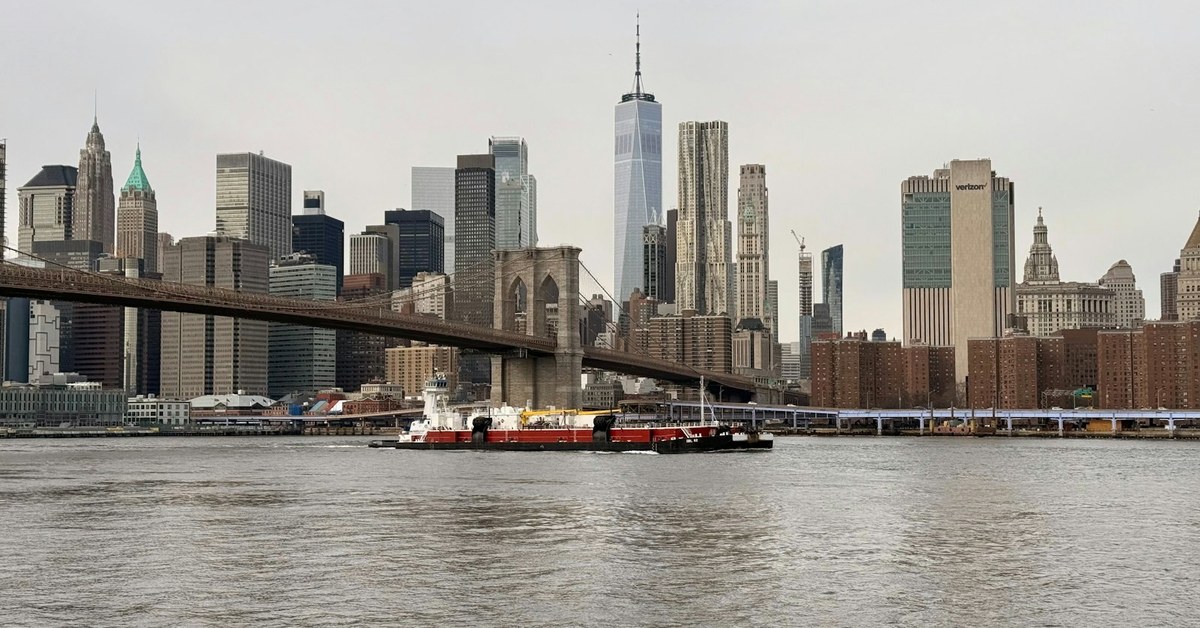
This is the story of a Brooklyn neighbourhood that changed its language three times. Norwegians and Finns made it theirs first. Chinese families built a second Chinatown here from the 1980s. Puerto Rican, Mexican and Dominican families have shaped Fifth Avenue. If your ancestors worked the docks of New York, one of their addresses may have been right here.
If you love New York’s hidden stories, you’ll love our free weekly newsletter. Subscribe to Love New York →
Why Sunset Park Became a Working Waterfront
Sunset Park sits on Brooklyn’s western shore. It faces Upper New York Bay. Green-Wood Cemetery borders it on the north-east. In the 1800s this was mostly farmland and shoreline. The waterfront changed everything.
Shipping companies needed piers and warehouses. They needed them close to the harbour. They also needed thousands of strong workers. Sunset Park gave them both.
Irving T. Bush opened Bush Terminal here in the late 1890s. It grew into one of the biggest port and industrial complexes in the country. Ships unloaded at the piers. Railcars carried goods through the yards. Factories rented floor space inside huge brick warehouses. Today those buildings house a mix of studios, shops and food halls under the name Industry City.
The city also created Sunset Park itself in the 1890s. Its hilltop gave the neighbourhood its name. Developers then built rows of narrow houses and tenements on the slopes. Dock workers could walk to work. Their children could walk to school.
The Brooklyn Army Terminal followed in 1919. Architect Cass Gilbert designed its vast warehouses. In wartime it shipped supplies and soldiers overseas. Millions of people passed through its gates over the decades. You can still walk through its enormous central hall today.
Norwegian New Yorkers: Little Norway on the Hill
Norwegians came to Brooklyn for the sea. Many were sailors, shipwrights and carpenters. They knew ships. The Brooklyn waterfront paid well for that skill.
Sunset Park and neighbouring Bay Ridge became the heart of Norwegian New York. Families opened bakeries, shops and Lutheran churches. They set up clubs and singing societies. Eighth Avenue in Bay Ridge earned a nickname that stuck for decades: Lapskaus Boulevard. Lapskaus is a Norwegian stew.
The community also built institutions to care for its own. A Norwegian Lutheran hospital opened in the 1880s. It grew into what is now Lutheran Medical Center. Many Brooklyn children of Norwegian parents were born in its wards.
Every year on 17 May, Norwegian Americans still march through Bay Ridge for Syttende Mai. They wear bunads, the traditional costume. They carry flags. It remains one of the great ethnic parades in the city.
If you have Norwegian roots, search for a family connection to Brooklyn. Ship crews often settled where their ship docked. A great-grandfather listed as a “seaman” may well have lived on a Sunset Park street.
Finntown: The Finnish Cooperative Dream
Finnish immigrants formed a smaller group. They made a deep mark all the same. Their neighbourhood centred on the streets around Eighth Avenue in the 40s. People called it Finntown.
Finns brought a strong belief in cooperation. In the 1910s they built cooperative apartment houses. Families pooled their savings. They owned their homes together rather than paying a landlord. Two of those buildings, called Alku and Alku Toinen, are among the best-known examples. The word alku means “beginning” in Finnish.
Finns also built halls for meetings, plays and sports. Many Finnish families ran saunas, bakeries and boarding houses. Some Finnish workers laboured on the docks. Others worked in construction and the building trades.
Finntown faded as families moved to the suburbs. A few of the old buildings still stand. If your grandparents spoke Finnish in Brooklyn, this is where they probably gathered.
How Brooklyn’s Chinatown Took Root
The biggest change came late. From the 1980s, Chinese families began to move to Sunset Park. Rents in Manhattan’s Chinatown were rising. Space was tight. Sunset Park offered cheaper homes, plentiful shops and a subway line.
Many of the new arrivals came from Fujian and Guangdong provinces. They opened restaurants, bakeries and grocery stores along Eighth Avenue. Over the following decades, the shops spread for blocks. Signs in Chinese now line the avenue. The neighbourhood has become one of the largest Chinese communities in New York.
Walk Eighth Avenue and you can taste the history. Steamed buns arrive in bamboo baskets. Fish lie on ice outside the markets. Herbalists weigh dried roots on brass scales. Dim sum parlours fill up by mid-morning on Sundays.
The story of Chinese New York begins much earlier, in lower Manhattan. For the roots of that community, read our guide to Chinatown’s immigrant heritage. Sunset Park shows where the next generation went.
Want more stories like this? Our weekly newsletter goes deeper into New York’s heritage every week. It’s free. Subscribe here →
Fifth Avenue: Latino New York
Fifth Avenue tells a different chapter. Puerto Rican families moved into Sunset Park in large numbers in the mid-1900s. Many worked in the waterfront factories. They opened bodegas, barbershops and churches.
Mexican families followed, then Dominican and Central American families. Today Fifth Avenue is full of taquerias, bakeries and Spanish-language signs. Street vendors sell tamales and fresh mangoes in summer.
The pattern is familiar across Brooklyn. Each wave of newcomers took over the housing the last wave left behind. You can see a similar story in Crown Heights and its Caribbean heritage. You can see another in Greenpoint, where Polish immigrants built Little Poland.
A Sunset Park Heritage Walk
You can cover the highlights in about three hours. Wear comfortable shoes. The hills are real.
- Green-Wood Cemetery. Start at the main gate on Fifth Avenue at 25th Street. The cemetery opened in 1838. It holds many New Yorkers born abroad. Its website offers a burial search, which helps if you are tracing an ancestor.
- Sunset Park. Walk up to the hilltop between Fifth and Seventh Avenues. Look out over the harbour. This is the view your ancestors knew.
- Fifth Avenue. Walk south for tacos, bakeries and Latino shops. Stop for lunch.
- Eighth Avenue. Head over to Chinatown’s main street. Buy a bun. Browse the markets.
- Finntown. Look at the old cooperative buildings on 43rd Street. They show how families once pooled their money to own a home.
- Brooklyn Army Terminal. Finish by the water. See the great warehouse hall that Cass Gilbert designed.
- Industry City. Stop here for coffee. Imagine the Bush Terminal workers on their lunch break.
The D, N and R trains serve the neighbourhood. Check the MTA’s service updates before you travel. Opening hours change, so check each site before you set out.
How to Trace a Sunset Park Ancestor
Start with what your family already knows. Look at census records, ship lists and naturalisation papers. Note every Brooklyn address. Then match each address to a neighbourhood. A street name near Eighth Avenue or Fourth Avenue often points to Sunset Park.
Church records help a great deal here. Norwegian and Finnish Lutheran congregations kept careful registers. Many Latino parishes kept theirs too. The Centre for Brooklyn History in Brooklyn Heights holds neighbourhood photographs and local records. It makes a good next stop.
Our step-by-step guide explains every stage. Read how to trace your New York City ancestry before you start. If your family arrived by sea, our Statue of Liberty and Ellis Island guide shows where they first landed. For another Brooklyn story, read about Brighton Beach and Little Odessa.
Frequently Asked Questions
Where is Sunset Park in Brooklyn?
Sunset Park lies on Brooklyn’s western waterfront, facing Upper New York Bay. It runs roughly from 15th Street south to 65th Street. The D, N and R trains serve it.
Who were the first immigrants in Sunset Park?
Irish, Scandinavian and Italian workers came first. Norwegians and Finns formed the most distinctive early communities. They came for waterfront jobs in the late 1800s and early 1900s.
Is Sunset Park home to a Chinatown?
Yes. Eighth Avenue holds one of the largest Chinese communities in New York. It grew from the 1980s onward.
What can visitors see today to trace these roots?
Visit Sunset Park’s hilltop, Green-Wood Cemetery and the Brooklyn Army Terminal. Walk Eighth Avenue and Fifth Avenue for food and shops. Look for the old Finnish cooperative buildings near 43rd Street.
Where can I research a family connection to Sunset Park?
Begin with census records and church registers. The Centre for Brooklyn History holds local collections. Our ancestry guide lists more archives.
Ready to explore the New York your ancestors knew? Subscribe to Love New York — free weekly stories, heritage guides, and hidden history. Join us →
