
Mulberry Street in Manhattan gets all the attention. The red-and-white tablecloths. The tourists with cannoli. But ask any Italian-American in New York where they actually shop — and they’ll point you north, to a stretch of the Bronx that most visitors never find.
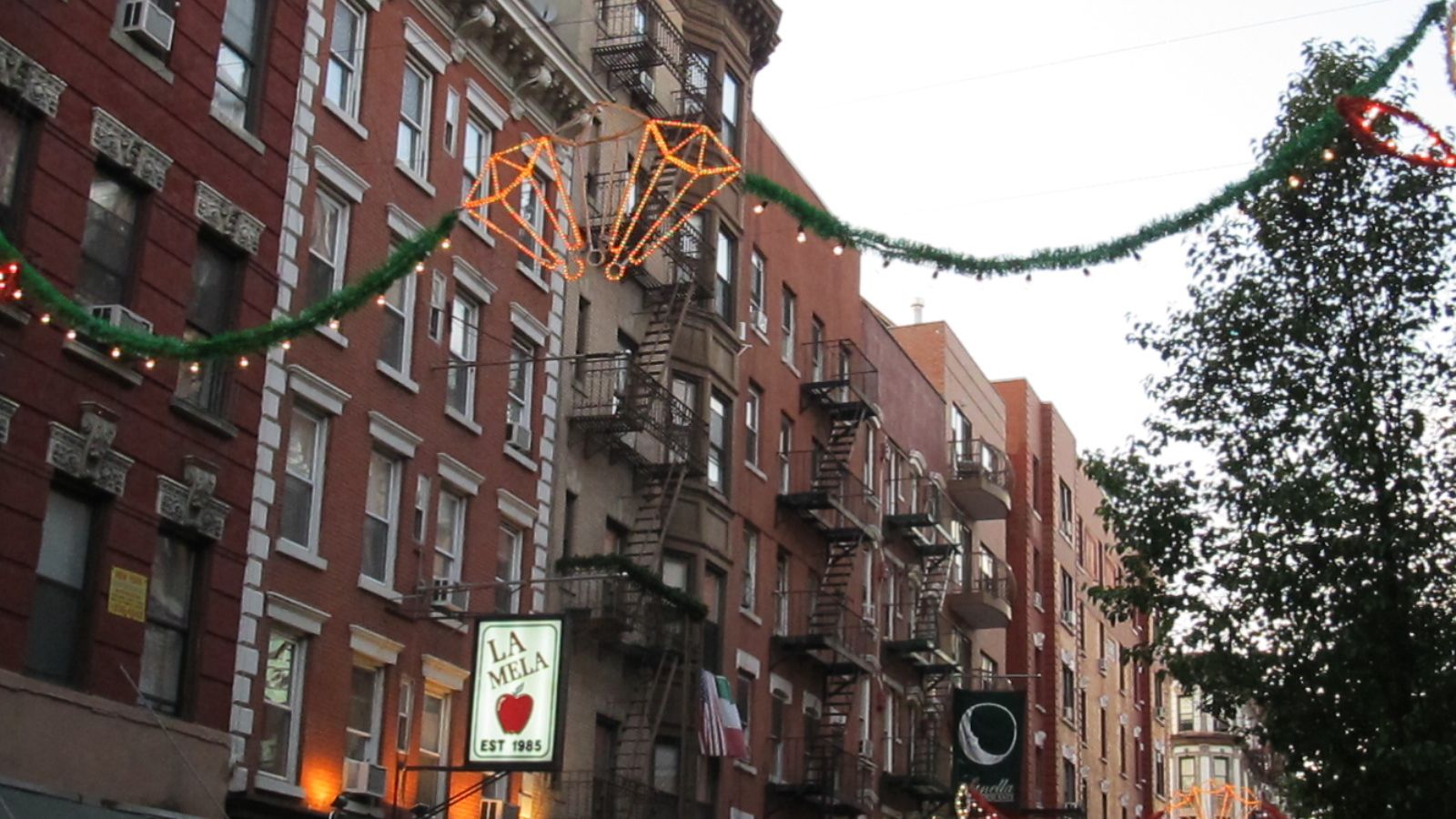
How Belmont Became the Bronx’s Little Italy
In the early 1900s, thousands of Italian immigrants came to the Bronx to work. The construction of the New York Botanical Garden and the Bronx Zoo required a massive labor force. Italian workers — mostly from Calabria, Naples, and Sicily — built the stone walls, pathways, and greenhouse foundations.
When the work was done, many never left. They settled in the Belmont neighborhood, clustered around Arthur Avenue, and built something that looked — and smelled — like home.
Streets filled with salumerias, pasticcerias, and cheese shops. Church festivals brought the whole neighborhood into the street. By mid-century, Belmont was one of the most densely Italian communities in America.
The Market That Time Forgot
At the center of it all stands the Arthur Avenue Retail Market — a covered indoor bazaar that opened in 1940 after Mayor Fiorello La Guardia moved street pushcarts off the sidewalks. The vendors went inside. They never really left.
Walk in on a Wednesday morning and you’ll find cheese shops aging pecorino romano in cool air. A tobacco shop that has been rolling cigars by hand for decades. Pasta makers pulling fresh fettuccine behind glass. Salumerias hung floor to ceiling with whole legs of prosciutto.
It isn’t dressed up for tourists. It never needed to be.
Why Mulberry Street Became a Memory
Manhattan’s Little Italy once stretched from Canal Street to Houston — home to tens of thousands of Italian families. But the neighborhood shrank for decades, pushed by rising rents and the expansion of neighboring Chinatown, until only a few blocks of restaurants remained.
Those restaurants serve excellent food. But the community that built them is largely gone. What’s left is a memory of a neighborhood, kept alive mostly for visitors who want the experience of what once was.
Mulberry Street is beautiful and worth a visit. But it’s a postcard. Arthur Avenue is still a living place.
Enjoying this? Join New York lovers getting stories like this every week. Subscribe free →
Arthur Avenue Never Needed to Reinvent Itself
Arthur Avenue did something the rest of New York rarely manages: it stayed put. The families who arrived in 1920 are still represented here — grandchildren and great-grandchildren who kept the shops, the language, and the recipes.
DeLillo’s Pastry Shop has been making sfogliatelle and torrone since 1904. Teitel Brothers has been importing Italian goods since 1915. These aren’t revival projects or artisan pop-ups. They’re businesses that never stopped.
On weekends, the street fills with Bronx locals doing their weekly shopping — the same thing their parents did, and their grandparents before them. They buy fresh bread, argue gently with the butcher about the cut, and drink espresso standing at the bar. Nobody is performing for an audience.
What You’ll Find When You Go
Arthur Avenue is easy to reach from Midtown — roughly 30 minutes by subway on the B or D train to Fordham Road, then a ten-minute walk. But it feels removed from the city’s frantic pace.
Bring cash. Come hungry. Walk the full length of the indoor market before you buy anything. The cigar roller near the entrance has been working that corner for years. He’ll probably nod.
If you’re exploring the Bronx’s remarkable cultural revival, Arthur Avenue is where the story begins. It’s where the borough’s identity was built, shop by shop, recipe by recipe. And if you want to eat your way through the city beyond the tourist trail, the New York food guide is a good place to start — but Arthur Avenue is where you taste history firsthand.
The smell of garlic and fresh bread drifting down a Bronx side street. A butcher who knew your grandfather’s order. A Saturday morning that feels like it belongs to another century.
This is what New York was built on — not the flash of Midtown or the gloss of the West Village, but the quiet, stubborn loyalty of neighborhoods that refused to forget who they were.
Arthur Avenue is still here. It’s waiting.
You Might Also Enjoy
- The Borough New Yorkers Called Hopeless — and the Comeback Nobody Saw Coming
- The New York Celebration That Draws Two Million People — and Most Tourists Miss It
- The Best Neighbourhoods in NYC for Tourists: Your Essential Planning Guide
Plan Your New York Trip
For neighborhoods, itineraries, and everything else you need for a perfect New York visit, start with our complete New York City neighborhood guide — your essential roadmap to the five boroughs.
Join New York Lovers
Every weekday morning, get New York’s hidden gems, neighbourhood stories, food origins, and city secrets — straight to your inbox.
Subscribe free — enter your email:
Love more? Join 65,000 Ireland lovers → · Join 43,000 Scotland lovers →
Free forever · Unsubscribe anytime
