
In 1977, an announcer at a World Series game looked out the press box window and told the nation: “Ladies and gentlemen, the Bronx is burning.” The footage — an apartment building on fire, just blocks from Yankee Stadium — became the defining image of a borough in collapse. For the next decade, the world took that image and decided it knew everything it needed to know about the Bronx.
It was wrong. It was always wrong.
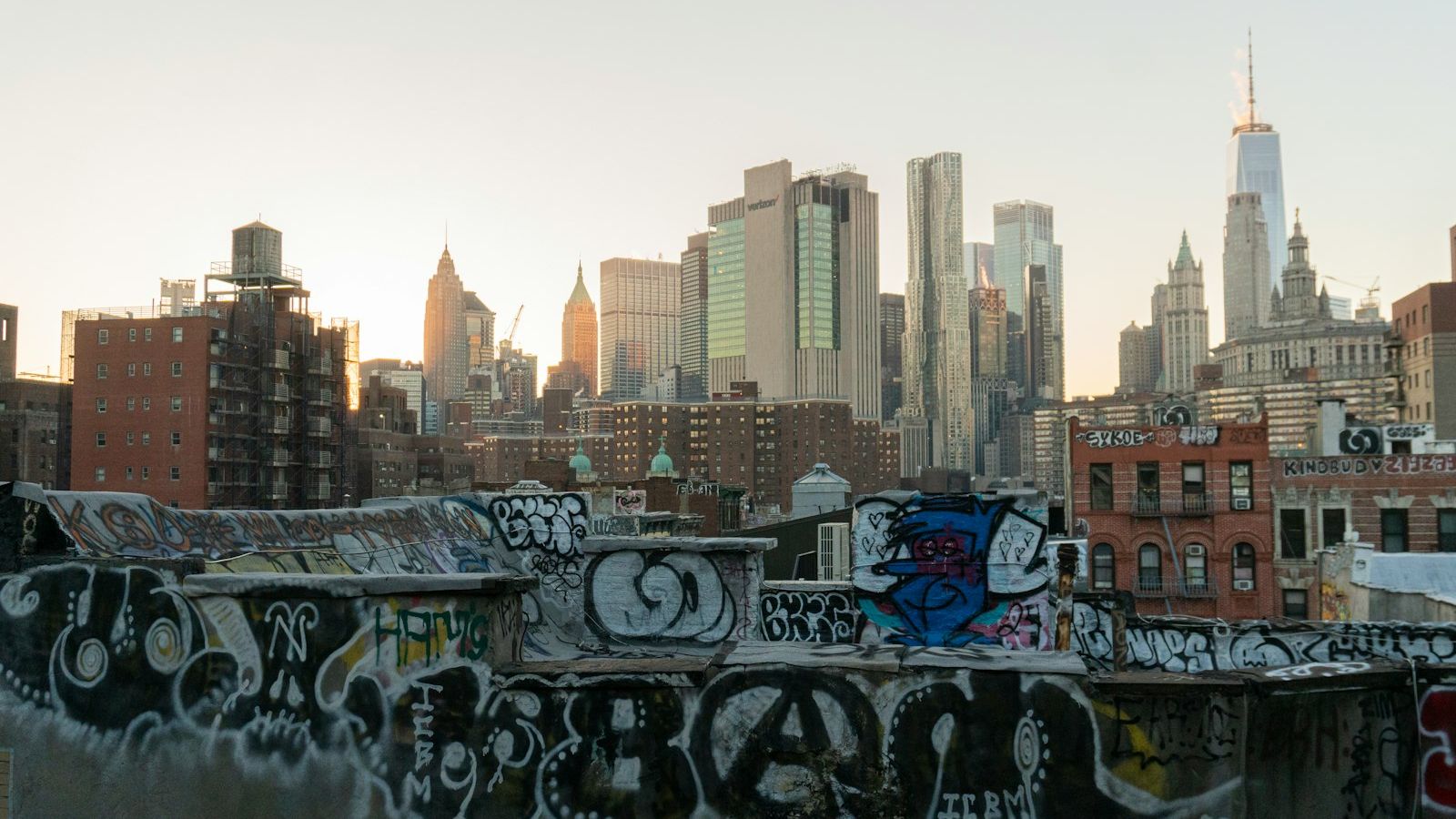
How a Borough Became a Cautionary Tale
The fires in the South Bronx during the 1970s were real. So was the poverty, the disinvestment, the population loss. Between 1970 and 1980, the Bronx lost nearly a quarter of its residents. Landlords torched buildings for insurance money. Entire city blocks became rubble fields.
Politicians visited and shook their heads. Journalists wrote obituaries. The world decided the Bronx was a cautionary tale — a place where cities go to die.
What the obituaries missed was what remained.
The Artists Who Stayed — and Changed Everything
While the cameras rolled on the ruins, something else was happening on the same streets.
In the summer of 1973, a teenager named DJ Kool Herc set up two turntables at a back-to-school party on Sedgwick Avenue. He extended the breakbeat — the percussion break in a funk record — by switching between two copies of the same record. Everyone in the room stopped dancing and just listened.
That was the night hip-hop was born. Not in a studio. Not in a boardroom. In a rec room in the South Bronx, by a kid who had to fight just to stay. If you want the full story, the block party that launched hip-hop is one of the most remarkable origin stories in music history.
The Bronx didn’t produce hip-hop in spite of its struggles. It produced hip-hop because of them. The same conditions that drove the fires drove the music, the graffiti, the breakdancing, the spoken word. The borough wasn’t broken. It was creating.
Arthur Avenue — The Real Little Italy
While Manhattan’s Little Italy has shrunk to a few tourist-facing blocks, the Bronx has been quietly holding onto something far more authentic.
Arthur Avenue in the Belmont neighborhood is what Little Italy used to be before the tour buses arrived. The butchers, the bread bakers, the cheese importers — they’re all still here. The Arthur Avenue Retail Market has been a covered indoor market since 1940. Cigar rollers. Fresh pasta makers. Guys arguing about soccer in the back of the café.
Nobody performs authenticity on Arthur Avenue. They just live it.
Enjoying this? Join New York lovers getting stories like this every week. Subscribe free →
The Institutions That Never Left
Here’s what the Bronx never stopped having, even at its lowest point: the New York Botanical Garden. The Bronx Zoo. Wave Hill. Pelham Bay Park — the largest park in all five boroughs, more than three times the size of Central Park.
The Bronx Zoo is home to over 6,000 animals across 265 acres. The New York Botanical Garden’s 250 acres include a 50-acre old-growth forest — one of the last surviving remnants of the woodland that once covered all of New York City.
These aren’t footnotes. They’re world-class institutions in a borough the world decided wasn’t worth visiting.
The Grand Concourse Nobody Talks About
There is a boulevard in the Bronx modeled on the Champs-Élysées. Most people in Manhattan have never walked it.
The Grand Concourse runs four miles through the heart of the borough, lined with Art Deco apartment buildings that architectural historians have been calling masterpieces for decades. The lobbies alone — their terrazzo floors, their stained glass, their geometric ironwork — are worth a dedicated afternoon.
It was built in 1909 as a grand promenade for the outer boroughs, a place where working families could live beautifully. That idea never entirely died. It just needed people to notice it again.
The Bronx Today
In the last decade, Mott Haven in the South Bronx has become one of the most closely watched neighborhoods in American urban planning. New apartment buildings are rising along the Harlem River waterfront. Galleries and restaurants are opening on streets that were rubble a generation ago.
The High Bridge — the oldest bridge in New York City — was restored and reopened in 2015 after being closed for 45 years. On a summer evening, you can walk across it and see both boroughs laid out beneath you.
That’s not a comeback story. It’s the continuation of a story that was always happening, just off-screen. The same thing happened in other New York neighborhoods written off too soon — the people who stayed always knew something the headlines didn’t.
What the Bronx Was Always Holding
Edgar Allan Poe wrote some of his best work in a small cottage in the north Bronx that still stands today. Herman Melville grew up near the Bronx River. The borough has more parkland than any other in New York, more shoreline than you’d expect, and a cultural history that runs centuries deeper than the 1970s crisis that defined its image.
The image of the burning Bronx was real. So were the people who stayed, who built, who refused to let the narrative be the final word.
The Bronx has been waiting for the rest of New York to catch up. It’s been patient about it. That’s very Bronx.
You Might Also Enjoy
- The Block Party That Launched Hip-Hop — and the Bronx Building That Started It All
- The New York Neighborhood That Almost Died — and Ended Up Changing the World
- The House Parties That Kept Harlem Alive — and Changed How New York Celebrates Forever
Plan Your New York Trip
The Ultimate New York Travel Guide — neighborhoods, hidden gems, food, and everything you need to plan an unforgettable visit to the city.
Join New York Lovers
Every weekday morning, get New York’s hidden gems, neighbourhood stories, food origins, and city secrets — straight to your inbox.
Subscribe free — enter your email:
Love more? Join 65,000 Ireland lovers → · Join 43,000 Scotland lovers →
Free forever · · Unsubscribe anytime
