
Carroll Gardens is a Brooklyn neighborhood of about 40 blocks. Irish and Norwegian families settled it first. Italian immigrants then made it their own, from the late 1800s through the 1950s. You can read that story in the deep front gardens, the shrines to the Virgin Mary, and the bocce games.
Get our free Hidden Gems of New York guide →
Irish and Norwegian Families Came First
Irish families fled the Potato Famine and settled this part of South Brooklyn in the 19th century. They planted the early Catholic roots of the neighborhood. St. Stephen’s Church opened in 1866. Norwegian immigrants arrived too. Work at the docks and around nearby Red Hook drew them. They founded two churches of their own. One of those buildings served as the Norwegian Seamen’s Church. It now holds apartments.
The waterfront side of this story has its own pages. Read our Red Hook immigrant history and our guide to Norwegian heritage in Bay Ridge. For another Irish neighborhood beside the water, see Vinegar Hill.
The 1846 Plan Behind the Famous Front Gardens
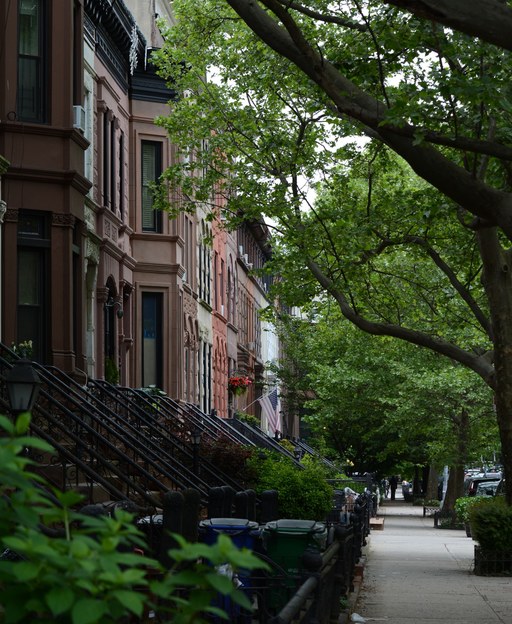
In 1846, surveyor Richard Butt planned the oldest part of the neighborhood. He set the brownstones back from the street. A law passed the same year set a rule for the blocks from Henry Street to Smith Street. Every building had to stand about 33 feet back from the street. Builders left that space open as courtyards. Families turned them into gardens. You can still see the largest ones on First to Fourth Place, between Henry and Smith Streets. President, Carroll and Second Streets show them too, between Smith and Hoyt Streets. (Source: Carroll Gardens history, Wikipedia)
Transport helped the area grow. In 1846, Henry Pierrepont and Jacob Leroy founded the Hamilton Avenue Ferry. Horse cars and later trolleys fed that ferry. Businessmen could commute to Manhattan. In the late 1860s, crews dredged Gowanus Creek into the Gowanus Canal. That sparked land speculation and a building boom. The Carroll Gardens Historic District took shape between the late 1860s and the early 1880s.
How Italian Immigrants Made Carroll Gardens Their Own
Italian immigrants began arriving in the late 19th century. Many worked on the docks. Others worked in the Brooklyn Navy Yard. The wave continued through the 1950s. Many Irish families moved out starting in the 1920s.
Dock and Navy Yard jobs shaped daily life. Living close to the waterfront kept the trip to work short. Church, family and job sat within a few blocks of each other. That closeness helped a new community form fast.
Families settled near relatives and neighbors from the same towns. Many joined fraternal and benevolent associations tied to specific towns in Italy. These groups helped newcomers find work and housing. They also kept dialects and saints’ days alive.
A street divide shaped childhood here. In the 1930s and 1940s, kids south of Hamilton Avenue, mostly Italian, called themselves “Hookies” after Red Hook. Kids to the north, mostly Irish, called themselves “Creekies” after Gowanus Creek. The rivalry shows how closely the two groups lived.
Get our free Hidden Gems of New York guide →
Compare this story with Manhattan’s Little Italy and Belmont in the Bronx. Each Italian neighborhood grew from different jobs and different home regions.
How the Neighborhood Got Its Name
For decades, people called this area South Brooklyn or part of Red Hook. Then Robert Moses built the Brooklyn-Queens Expressway and the Gowanus Expressway, starting in the late 1940s. Those roads cut the area off from Red Hook. A separate identity grew. Neighbors formed the Carroll Gardens Association in 1964 to press for improvements, and the name caught on.
The name honors Charles Carroll, the only Roman Catholic signer of the Declaration of Independence. Carroll Street and Carroll Park already carried his name. The city bought Carroll Park in 1853. It ranks as Brooklyn’s third-oldest park. The name also nods to the big front gardens.
What Italian Heritage Looks Like on the Street
Residents play bocce and speak several Italian dialects. They run Italian restaurants and shops. Many front gardens hold shrines to the Virgin Mary. We checked these details against the neighborhood’s published history in November 2026. (Wikipedia)
The numbers have shifted. Italians made up 52 percent of residents in 1980. By 2012 they made up 22 percent. French immigrants have also arrived since the early 2000s. So the heritage lives in specific places and habits more than in majorities. That makes a slow walk more rewarding than a quick one.
Seen from the sidewalk, the layout tells a story. The 1846 setback rule gave families a patch of ground that few Brooklyn row-house owners had. Italian families used that patch for flowers, shrines and a place to sit. The garden became a way to show pride in a home.
A Self-Guided Heritage Walk Through Carroll Gardens
Start at Carroll Park, between Court, Smith, Carroll and President Streets. Sit on a bench and watch the playground and walkways. Then walk to First Place and head toward Fourth Place. Look at how far each brownstone sits from the sidewalk. Notice the Mary shrines and the garden fences.
Next, walk to St. Stephen’s Church, where Irish families built the neighborhood’s Catholic roots in 1866. Look at the stonework and the neighboring houses. Then head toward Hamilton Avenue and imagine the old line between the Hookies and the Creekies. Allow about two hours with stops. Check the MTA trip planner for subway service before you leave.
How to Trace Your Carroll Gardens Family
Start with names and dates from relatives. Search the Ellis Island passenger records for the ship and the arrival year. Many Italian dock workers came through there. Earlier arrivals may appear in the Castle Garden story.
Then look for city records. The NYC Municipal Archives holds birth, marriage and death records. Our step-by-step guide to tracing New York City ancestry explains each step. Ask older relatives which parish, club or society your family joined. Church and benevolent society records can fill gaps that city files leave.
Frequently Asked Questions
Why is Carroll Gardens called Carroll Gardens?
The name honors Charles Carroll, the only Roman Catholic signer of the Declaration of Independence. It also points to the large front gardens. The Carroll Gardens Association, formed in 1964, helped the name stick.
When did Italian immigrants settle in Carroll Gardens?
Italian immigrants began arriving in the late 19th century. The wave continued through the 1950s. Many came to work on the docks or in the Brooklyn Navy Yard.
What is the difference between Carroll Gardens and Red Hook?
Locals once treated Carroll Gardens as part of Red Hook. The expressways Robert Moses built in the late 1940s split the two. Carroll Gardens then developed its own name and identity.
Where can I see Italian heritage in Carroll Gardens today?
Walk to Carroll Park and the front gardens on First to Fourth Place. Look for bocce games and shrines to the Virgin Mary. Italian restaurants and shops add to the picture.
