
Everyone thinks they know Central Park. They’ve walked through it, run around the reservoir, maybe eaten a pretzel on the Great Lawn. But the park has 843 acres of stories — and most visitors only ever see about a dozen of them.
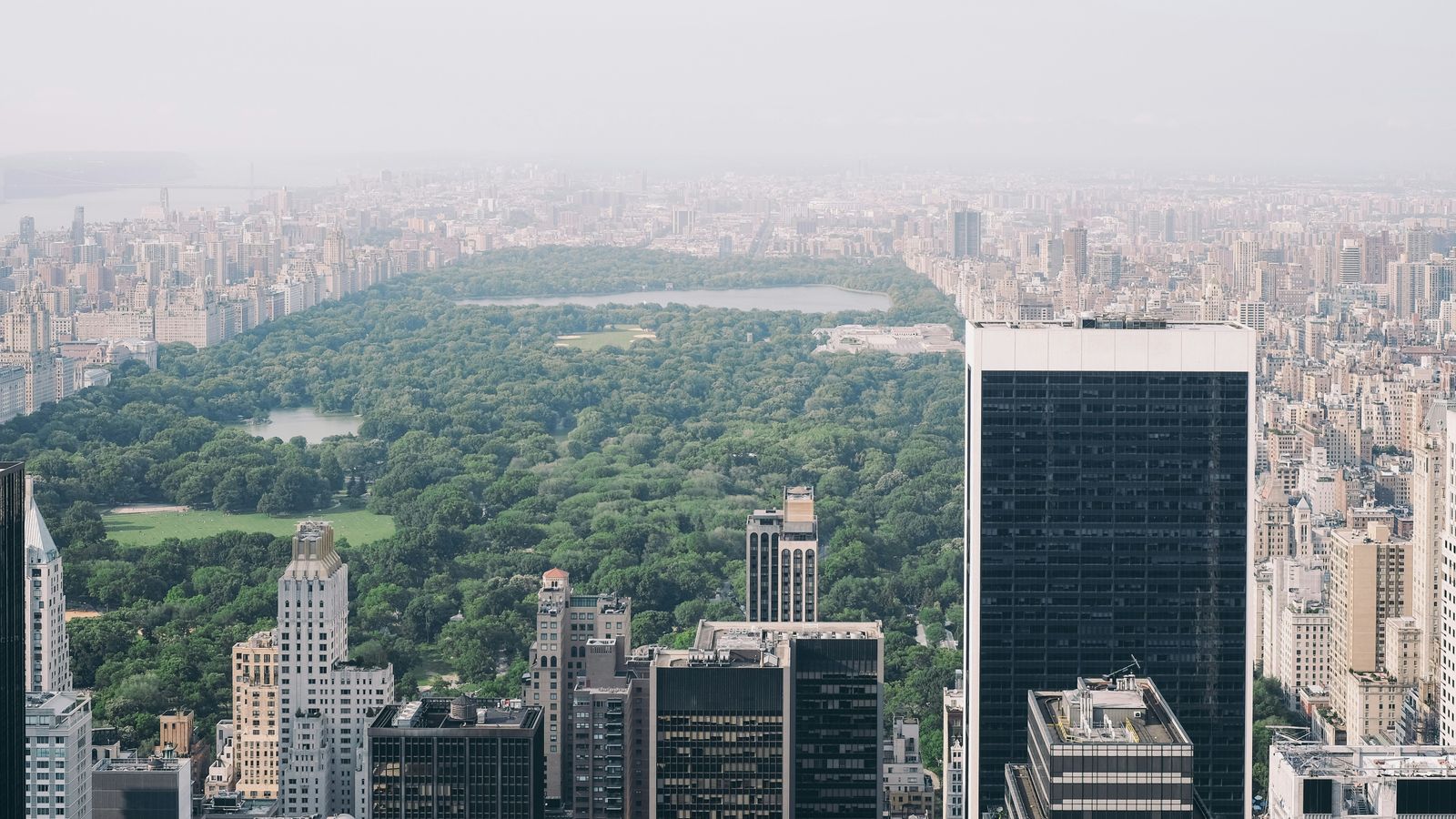
Beyond the famous spots — Bethesda Fountain, Strawberry Fields, the Wollman Rink — there’s a different Central Park waiting. One that has formal gardens, medieval follies, ancient woodland paths, and a garden that Shakespeare himself might have recognized.
Most people never find any of it. Here’s where to look.
The Ramble: New York’s Wild Heart
Walk past the Boathouse and into the dense woodland just beyond it, and you’ve found the Ramble. This 36-acre tangle of trails was designed by Frederick Law Olmsted to feel like anything but a city park. The intention was deliberate: give New Yorkers a place where they couldn’t see a building, couldn’t hear a taxi, could almost forget where they were.
It worked. Birders have been making pilgrimages here for over a century. During spring and fall migration, more than 200 species have been recorded passing through — warblers, thrushes, owls, and occasionally a red-tailed hawk that draws a crowd of 50 people with telephoto lenses, all of them whispering.
The paths twist in every direction with no obvious logic. That’s on purpose too. Olmsted wanted visitors to feel pleasantly lost. On a busy Saturday, you can walk into the Ramble and find yourself genuinely alone within two minutes.
The Shakespeare Garden That Most Visitors Walk Right Past
Near West 79th Street, there’s a four-acre garden that most people in Central Park never enter. The Shakespeare Garden has no grand entrance sign. No ticket booth. No crowd. Just winding stone paths and more than 80 plant species — every single one mentioned somewhere in Shakespeare’s plays and poems.
Roses, rosemary, thyme, violets, pansies, rue. They’re all here, labeled with the line in which they appear. A bronze bust of Shakespeare sits at the center. The whole thing is quietly extraordinary.
It was created in 1916 to mark the 300th anniversary of Shakespeare’s death, and it’s been maintained by volunteers ever since — people who know their Hamlet from their King Lear and their lavender from their lemon balm. In May, the garden blooms into something that could genuinely be from another century.
Belvedere Castle: The Free Lookout Nobody Mentions
People spend real money hunting for rooftop bars with views of Central Park. They stand in lines. They pay for overpriced cocktails. What many of them don’t realize is that one of the best vantage points in the entire park is completely free.
Belvedere Castle sits at the park’s highest natural point, built in 1869 from the same Manhattan schist that underpins the city’s skyscrapers. Technically it’s a folly — a decorative building with no structural purpose, designed purely for the drama of having a castle in the middle of a park.
Today it serves as a weather station and visitor center, but the view from the top terrace is the point. In autumn, when the Great Lawn below turns gold and the skyline rises through the trees on every side, it’s one of those Manhattan moments that doesn’t feel real.
Enjoying this? Join New York lovers getting stories like this every week. Subscribe free →
The Dairy: Victorian New York, Perfectly Preserved
Just south of the carousel, there’s a small Gothic Revival building called the Dairy. In the 1870s, it was exactly what it sounds like: a place where mothers could buy pure, uncontaminated milk for their families. This was not a luxury concern. City milk in the 19th century was a genuine public health crisis.
Today it’s a visitor center, but the building itself is worth the walk. Olmsted and Calvert Vaux, the park’s designers, built it to look like a medieval English cottage dropped into Manhattan. It has a hand-carved wooden veranda, pointed Gothic arches, and a sense of absolute incongruity that makes it oddly charming.
Most visitors walk straight past without a second glance. That’s their loss.
The Conservatory Garden: Six Secret Acres on Fifth Avenue
There’s a wrought-iron gate on Fifth Avenue at 105th Street — the Vanderbilt Gate, salvaged from a demolished mansion — that most tourists walk straight past. Behind it are six acres of formal gardens, the only formal gardens in all of Central Park, divided into French, English, and Italian styles.
The Conservatory Garden is the park at its most structured and serene. In May, it hosts the best free wisteria display in New York. In fall, chrysanthemums fill every bed. In winter, the bare geometry of the paths, the central fountain, and the surrounding hedges have their own stark beauty.
This corner of the park — just a few blocks from the edge of one of New York’s most fascinating neighborhoods — gets a fraction of the visitors that Bethesda Fountain receives on any given afternoon, even though it’s arguably more beautiful. The quiet alone is worth the walk north.
Frequently Asked Questions About Central Park’s Hidden Spots
What are the best hidden spots in Central Park?
The Ramble, Shakespeare Garden, Belvedere Castle, the Dairy, and the Conservatory Garden are the park’s most rewarding lesser-known areas. Each offers something the busier paths don’t: genuine quiet, unexpected beauty, and the feeling of discovery.
When is the best time to visit Central Park’s hidden gardens?
Spring (April through June) is peak season — the Shakespeare Garden blooms, the Conservatory Garden is spectacular in May, and migrating birds fill the Ramble. Fall (October to early November) is the second best time, especially for the views from Belvedere Castle and autumn color throughout the Ramble.
Is the Shakespeare Garden in Central Park free to visit?
Yes, completely free. The Shakespeare Garden, the Conservatory Garden, the Ramble, and Belvedere Castle all have no admission fee — just like the rest of Central Park. No tickets or reservations required for any of them.
Where exactly is the Conservatory Garden in Central Park?
The Conservatory Garden is at the northeastern edge of Central Park, entered through the Vanderbilt Gate on Fifth Avenue at 105th Street. It’s one of the least-visited major features in the park, despite being one of the most beautiful.
Central Park never runs out of surprises. People have walked its paths for 150 years and still find corners they hadn’t noticed. That’s what Olmsted intended — not a park you could see in a day, but one that rewarded every season, every direction you happened to turn.
The tourists at Bethesda Fountain are having a perfectly good time. But somewhere a few hundred yards away, someone is standing in the Shakespeare Garden in the morning quiet, entirely alone, thinking they might be the only person in New York who knows this place exists.
That feeling is worth more than any skyline view.
You Might Also Enjoy
- Walk Three Blocks in Harlem and You’re Suddenly in West Africa — the neighborhood just north of the park has its own extraordinary layers
- The 32,000 Bars New York Built in Secret — the underground drinking culture that outlasted Prohibition
- The New York Drink With No Egg and No Cream — one of the city’s most delicious mysteries
Plan Your New York Trip
Ready to explore beyond the tourist trail? Our New York City food and travel guide covers where to eat, what to see, and how to get the most out of every neighborhood — written for people who want the real New York, not just the postcard version.
Join 1,100+ New York Lovers
Every weekday morning, get New York’s hidden gems, neighbourhood stories, food origins, and city secrets — straight to your inbox.
Subscribe free — enter your email:
📲 Know someone who’d love this? Share on WhatsApp →
Love more? Join 65,000 Ireland lovers → · Join 43,000 Scotland lovers →
Free forever · Unsubscribe anytime

Subscribe Free