
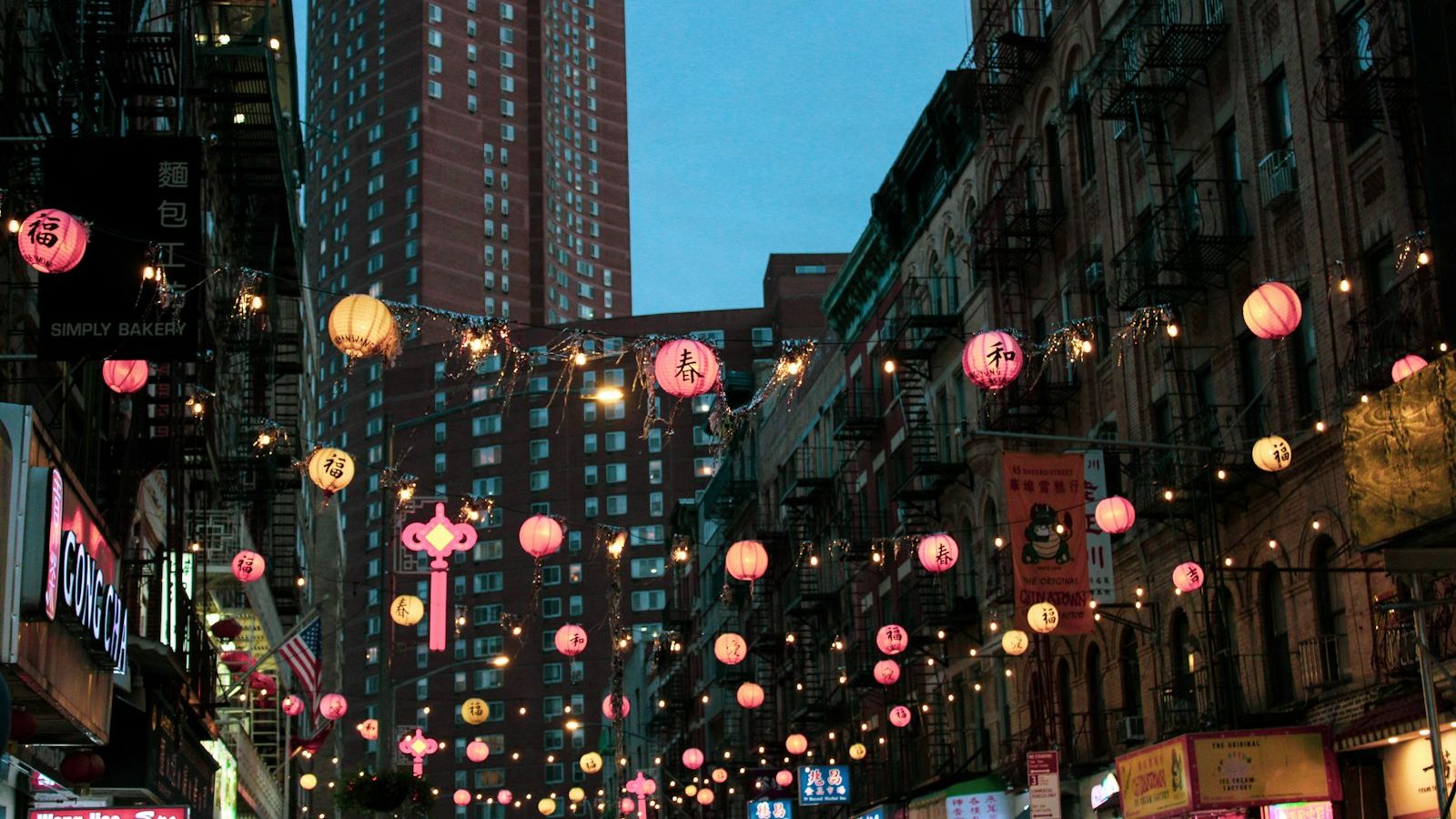
Every few years, a New York neighbourhood gets remade. Storefronts flip, rents triple, and the people who built the place are pushed out. It’s the oldest story in the city. But walk into Chinatown on a Saturday morning — past a crate of ginger, under a string of red lanterns, following the smell of char siu pork from a fogged window — and you might wonder how this block managed to hold on.
Manhattan’s Chinatown is not a relic. It is a living, working neighbourhood that has spent 150 years refusing to disappear, and it has earned that survival many times over.
One Man, One Street, One Block at a Time
The neighbourhood’s origin traces back to the 1850s. A merchant named Ah Ken arrived in New York and opened a cigar shop near Park Row, close to City Hall. Other Chinese migrants — mostly men who had come to build railroads or work in laundries — followed. By the 1870s, a cluster of residents had gathered around Mott Street. By the 1880s, Chinatown had a recognizable identity and a growing sense of permanence.
What’s striking is where they landed. These streets had been the Five Points — one of the most densely populated and notorious neighborhoods in America, where Irish immigrants had survived just decades before. The Chinese community built on the bones of what others had left behind, the same pattern of arrival repeated on the same few blocks.
The Decades That Were Meant to End It
The Chinese Exclusion Act of 1882 was designed to stop Chinese immigration entirely. It largely worked. For the next 80 years, Chinatown existed in a strange suspended state — unable to grow through normal means, cut off from family reunification, shut out of mainstream economic life.
The men who stayed organized. They formed tongs — mutual aid societies — to take care of members who were sick, broke, or simply alone in a city that had no particular interest in helping them. They built language schools, temples, and newspapers. They kept the neighbourhood alive through collective stubbornness.
When the Immigration and Nationality Act of 1965 finally ended the exclusion, Chinatown changed almost overnight. Families reunited. New arrivals from Hong Kong, Fujian province, and mainland China poured in. A neighbourhood that had clung on through decades of exclusion suddenly had room to breathe again.
What You Find When You Actually Walk It
Enjoying this? Join New York lovers getting stories like this every week. Subscribe free →
Mott Street is the main artery, but the real neighbourhood lives in the blocks around it. Canal Street runs along the northern edge — loud, commercial, piled with fresh whole fish on ice alongside stalls selling dried mushrooms and ginseng root. Doyers Street, a narrow crooked alley a block east, bends at a sharp angle that earned it the grim nickname “the Bloody Angle” during an early 1900s period of tong rivalry. Today it’s lined with barbers and some of the best Vietnamese sandwiches in the city.
Nom Wah Tea Parlor
Nom Wah has been serving dim sum since 1920 — the oldest dim sum restaurant in New York, and possibly the country. They still make egg rolls by hand. On weekends, the line starts before the door opens.
Columbus Park
This stretch of green at the edge of the neighbourhood has been a community gathering spot for over a century. On any given morning you’ll find groups doing tai chi, older residents playing cards, and a few people singing opera pieces to each other from a portable speaker. It’s not designed for tourists. It just happens to be in public.
Mahayana Buddhist Temple
On Canal Street, the Mahayana Temple houses a 16-foot golden Buddha and draws worshippers every day, not just for festivals. Incense smoke drifts through the entrance at almost any hour.
Museum of Chinese in America (MOCA)
A few blocks from Columbus Park, MOCA tells the full story of the Chinese American experience — from the railroad workers of the 1860s to the exclusion years to today. It’s one of the most overlooked museums in Manhattan.
Chinatown Ice Cream Factory
On Bayard Street, this tiny shop has been making ice cream in flavors like lychee, taro, red bean, and durian since 1978. The line snakes out the door on warm afternoons. The lychee is worth every minute of it.
The Pressure That Never Fully Goes Away
Chinatown has not been untouched by change. The neighbourhood’s borders have shifted. The gentrification that transformed SoHo and Nolita has pressed against the edges. Property values have risen. Younger generations sometimes move to Flushing in Queens or Sunset Park in Brooklyn, where other large Chinese communities have taken root.
But the core holds. The Lower East Side to the east has changed beyond recognition; Chinatown, pressed against it, somehow hasn’t. The wholesale fish markets are still there. The bubble tea shops sit alongside noodle joints that haven’t changed their menus in 40 years. The Lunar New Year parade brings the whole city here every February, firecrackers echoing off walls that have heard firecrackers for 100 years.
Some neighborhoods survive by becoming something else entirely. Chinatown survived by staying exactly what it was.
Frequently Asked Questions
What is the best time to visit Chinatown in New York?
Lunar New Year in late January or February brings dragon dances, firecrackers, and the most electric atmosphere in the neighborhood. For a quieter visit with well-stocked markets and manageable crowds, weekday mornings are ideal.
Where exactly is Manhattan’s Chinatown?
Chinatown sits in Lower Manhattan, roughly bounded by Canal Street to the north, Worth Street to the south, and the Manhattan Bridge to the east. The easiest subway access is via the J/Z/N/Q/R/W/6 trains at the Canal Street station.
What should I eat in Chinatown New York?
Start with dim sum at Nom Wah Tea Parlor. Beyond that: hand-pulled noodles, Peking duck, soup dumplings, and the unusual ice cream flavors at the Chinatown Ice Cream Factory on Bayard Street.
Is Chinatown safe to visit in New York City?
Yes. Chinatown is a busy, well-trafficked neighbourhood with families, shoppers, and restaurant-goers at all hours. It’s a vibrant community that welcomes visitors — the same as any other Manhattan neighborhood.
You Might Also Enjoy
- The Italian Immigrant Story That Built Little Italy Right Next Door
- The Five Points: The Irish Quarter That Shaped Lower Manhattan
- The Lower East Side Jewish Heritage That New York Built on Ambition
Plan Your New York Trip
Chinatown pairs naturally with a walking tour of Lower Manhattan — just a few blocks from the best time to plan your visit to New York City. Combine it with Little Italy and the Lower East Side for a full half-day exploring the immigrant history that made this corner of Manhattan.
Join 1,100+ New York Lovers
Every weekday morning, get New York’s hidden gems, neighbourhood stories, food origins, and city secrets — straight to your inbox.
Subscribe free — enter your email:
📲 Know someone who’d love this? Share on WhatsApp →
Love more? Join 65,000 Ireland lovers → · Join 43,000 Scotland lovers →
Free forever · · Unsubscribe anytime

Subscribe Free