
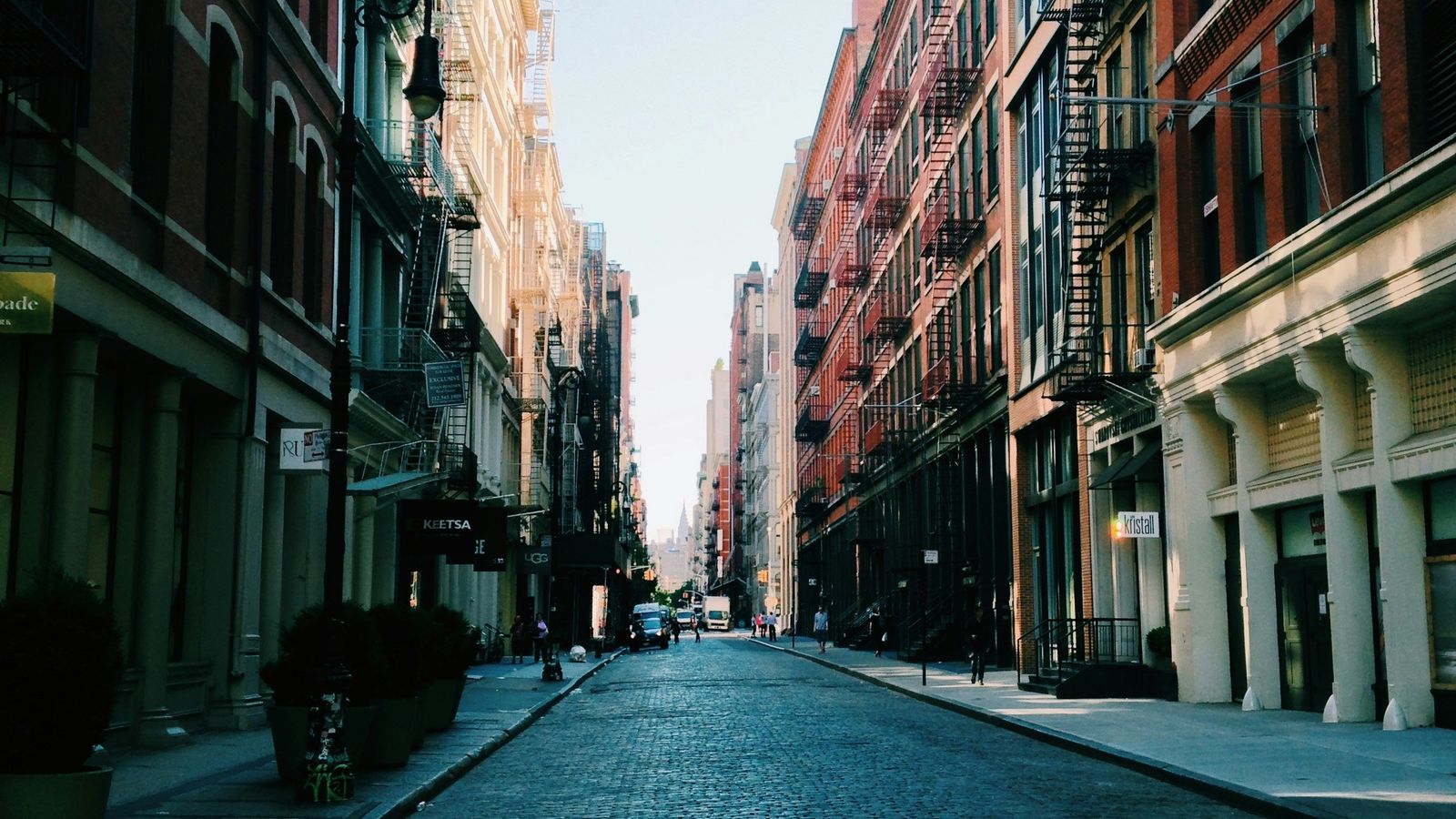
Sometime in the early morning hours, when the last delivery trucks are long gone and the cobblestones glisten under the streetlights, the Meatpacking District shows you its oldest face. The blood is long gone. But the stones remain.
A District Built on Blood
The neighborhood didn’t get its name by accident. From the mid-1800s through most of the twentieth century, the roughly nine-block stretch running along the far western edge of lower Manhattan was exactly what it sounds like: a place where animals were slaughtered and meat was processed on an almost industrial scale.
At its peak in the early 1900s, the district housed more than 250 meatpacking plants and slaughterhouses. Workers arrived before dawn. The smell settled over the neighborhood like weather. The streets were perpetually damp. And the iron hooks that held beef carcasses were a permanent feature of every warehouse interior.
This was one of the most essential — and most unpleasant — corners of New York City. The people who worked here fed millions. Nobody romanticized it.
The Cobblestones That Outlasted Everything
Those distinctive Belgian block cobblestones weren’t laid for charm. They were chosen for utility. Meatpacking trucks are heavy. The concrete used in most of Manhattan would have cracked under the constant weight. So workers laid stone over stone, building a surface that could absorb punishment and last for generations.
Nobody expected the trucks to one day stop coming. But they did.
By the 1980s, refrigerated shipping had changed the industry. Plants consolidated. Facilities moved to cheaper land in the outer boroughs and beyond. The warehouse buildings emptied out. The cobblestones, too expensive to pull up and replace, simply stayed where they had always been.
And the neighborhood waited to find out what it would become.
When the Night Moved In
Here’s what happened in the gap: the clubs came.
Through the late 1980s and into the 1990s, as buildings sat vacant and rents crashed, the Meatpacking District became home to a nightlife scene that the rest of Manhattan barely acknowledged. Underground clubs occupied old loading docks. The neighborhood drew artists, musicians, and a significant community from New York’s LGBT scene, who found in the empty district a space that the rest of the city hadn’t claimed yet.
It was gritty, transient, and entirely New York. The kind of neighborhood that only exists during the window between abandonment and reinvention.
Enjoying this? Join New York lovers getting stories like this every week. Subscribe free →
The Week Fashion Discovered the Cobblestones
The shift from underground nightlife to fashion destination has a fairly specific origin. In 2002, designer Stella McCartney opened a boutique on West 14th Street. It was, at the time, a strange choice — a luxury label setting up shop among old loading docks and late-night clubs on the outer edge of the West Village.
But the cobblestones turned out to be an asset, not an obstacle. Photographers loved them. Magazine shoots started appearing on those distinctive streets. Other designers noticed. Within a few years, a growing list of fashion names had all arrived, drawn partly by the rents and partly by the unmistakable atmosphere.
The neighborhood that had once been avoided was suddenly the most interesting address in lower Manhattan.
What the Hooks Still Remember
Something quietly remarkable happened as the boutiques moved in: the architecture stayed. The old warehouse buildings, with their thick walls and wide-open interiors, turned out to be ideal for restaurants and galleries. Developers who might have torn them down found they were worth more intact.
If you look carefully in some of the restaurants and bars along Gansevoort Street, you can still find the original iron hooks. They’re decorative now. But they’re real. The building didn’t forget what it used to be.
When the Whitney Museum of American Art relocated its entire collection from the Upper East Side to the Meatpacking District in 2015, it felt like a final confirmation. And above the streets, the High Line — the elevated park built on a decommissioned freight rail line — gave the district a new kind of walking presence, looking down on the cobblestones from above.
A Neighborhood That Remembers Every Version of Itself
Every New York neighborhood has transformed. The Meatpacking District did it twice — and kept the evidence of each phase sitting right there on the street.
The cobblestones connect you to the industrial era. The warehouse bones connect you to the decades of reinvention that followed. Walk through at dusk and you’ll feel both at once. The boutiques are very expensive, the restaurants are very good, and the streets are beautiful in a way that no urban planner designed from scratch.
If you’re exploring Manhattan’s most distinctive neighborhoods, this is one of the few places where you can stand on stones laid for slaughterhouses, look up at a converted rail line, and walk into a world-class art museum — all within a single block.
That’s a strange kind of beauty. New York has never been short of it.
You Might Also Enjoy
- The Abandoned Railway New Yorkers Refused to Tear Down — the full story of the High Line that transformed the district from above
- Why New York Tried to Rename Hell’s Kitchen — and Nobody Listened — another west-side neighborhood that refused to be anything other than itself
- The Best Neighbourhoods in NYC for Tourists — where to spend your time across the five boroughs
Plan Your New York Trip
Ready to walk the cobblestones yourself? Our complete New York City neighborhood guide covers every corner of the city — from where to eat to how to get between boroughs without losing your mind.
Join New York Lovers
Every weekday morning, get New York’s hidden gems, neighbourhood stories, food origins, and city secrets — straight to your inbox.
Subscribe free — enter your email:
Love more? Join 65,000 Ireland lovers → · Join 43,000 Scotland lovers →
Free forever · Unsubscribe anytime

Subscribe Free