
The High Line New York City is one of the most extraordinary public spaces in the world. Built on an abandoned elevated freight railway above Manhattan’s west side, it turns a mile and a half of disused infrastructure into a living park — wild grasses, perennial gardens, site-specific art, and some of the finest views in the city. And entry is free.
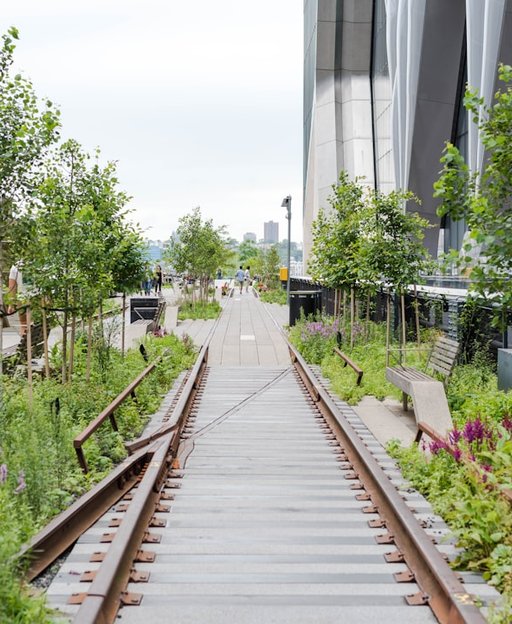
You walk above 10th Avenue while taxis crawl below. You stop to look at a sculpture beside a stand of switchgrass swaying in the wind. You catch the Hudson River glimmering between the rooftops of the Meatpacking District. The High Line manages the rare trick of being both a popular tourist destination and a genuine neighbourhood park — and it does it all for free.
This guide covers everything you need to know before you visit: the best entry points, the finest views, the art installations to look out for, and the streets worth exploring when you descend.
What Is the High Line?
The High Line is a 1.45-mile (2.3 km) public park built on a former elevated freight railway. The railway served the factories and warehouses of Manhattan’s west side from the 1930s until 1980, when the last train ran. After years of debate about demolition, a community-led campaign saved the structure. The park opened in three sections between 2009 and 2014.
It runs from Gansevoort Street in the Meatpacking District north to 34th Street near Hudson Yards, passing through Chelsea along the way. The Friends of the High Line, a non-profit organisation, manages the park and commissions the art installations you will find throughout.
Today the High Line draws millions of visitors annually. Yet it keeps the feeling of a neighbourhood park — a place where local residents walk their dogs at dawn while tourists linger over the views at noon.
How to Get to the High Line
Getting to the High Line is straightforward from most parts of Manhattan. The A, C, and E subway lines stop at 14th Street. The 1 train stops at 18th and 23rd Streets. The 7 train runs to 34th Street–Hudson Yards at the northern end.
There are access points roughly every two to three blocks along the route: at Gansevoort Street, 14th Street, 16th Street, 17th Street, 18th Street, 20th Street, 23rd Street, 26th Street, 28th Street, 30th Street, and 34th Street. Several have lifts as well as stairs.
The simplest approach is to start at the southern entrance on Gansevoort Street and walk north to 34th Street. That gives you the full experience from start to finish, and leaves you near Hudson Yards, worth a look even if you do not go inside the Vessel.
The Three Sections of the High Line
Section One: Gansevoort Street to 17th Street
This is the most atmospheric stretch. You enter at Gansevoort Street and feel the history almost immediately — original railway tracks preserved underfoot, surrounded by wild plantings of grasses and perennials that shift colour with the seasons.
Look for the Washington Grasslands — a long meadow of billowing grasses that feels like a prairie floating above the cobbled streets of the Meatpacking District below. The Sundeck, a section of timber sun loungers facing a wide glass panel, offers one of the best views in New York: a straight line down 10th Avenue, flanked by the city’s grid, stretching south towards the distant skyline.
Section Two: 17th Street to 30th Street
This is the heart of Chelsea from above. The plantings grow denser here — flowers and climbing plants draw bees and butterflies in summer. Art installations appear frequently along this section, tucked between the native planting beds and the original steel structure.
Exit at 23rd Street if you want to explore Chelsea’s gallery district. Dozens of world-class galleries line the streets between 20th and 28th Streets on 10th and 11th Avenues. Many are free to enter, and you can return to the park via any of the nearby access points.
Section Three: The Spur at Hudson Yards
The final section runs from 30th Street to 34th Street, ending in the Spur — a widened platform above Hudson Yards that opened in 2019. This section feels different: more open, more architectural, surrounded by the gleaming towers of a neighbourhood still finding its identity.
The Spur is home to The Shed, a major cultural centre that rolls out from its base on rails to create an enormous performance space. Even if you are not attending an event, the building itself is worth seeing.
Art on the High Line
One of the things that sets the High Line apart from other parks is its commitment to public art. The Friends of the High Line commission new large-scale installations every season, alongside a permanent collection of site-specific works. The art does not feel decorative. It feels integral — as though the park itself is a gallery that happens to grow flowers between its sculptures.
Pick up a free map at any access point, or download the official High Line app before your visit. Both show you what is currently on display and where to find it. Commissions change frequently, so what you find during your visit may differ from what you have seen in photographs.
The Best Views on the High Line
The views from the High Line are some of the most distinctive in Manhattan. You are just high enough to see over street level, but low enough to feel connected to the city below.
- The 10th Avenue Square — a glass-fronted viewing platform looking straight down 10th Avenue. On clear days, the geometry of the street grid stretches for miles south.
- The Hudson River views — visible from the western edge between 18th and 22nd Streets on clear days.
- The sunset views — the western-facing sections catch extraordinary light in the late afternoon. Summer evenings turn the views towards New Jersey a deep gold.
The High Line is also one of the finest places in the city for street photography. The elevated perspective gives you a viewpoint most photographers never find. For the city’s other great photography locations, our guide to the best photo spots in New York City has a full list by neighbourhood and time of day.
When to Visit the High Line
The High Line is open every day of the year. In summer it gets crowded by mid-morning, particularly at weekends. Arrive before 9am on a weekday to experience the park at its quietest — the light is best at that hour and the city is still waking up.
Autumn is the finest season. The plantings shift to rust and gold, the air is crisp, and the views are clear. Spring brings the first flowers back, and the contrast of bloom against the industrial steel structure is striking.
Winter has a quieter appeal. On cold weekdays the park is nearly empty. The bare grasses take on an architectural quality, and the city below feels more exposed — a different and rewarding way to experience the same route.
What to Eat and Drink Near the High Line
Food vendors and coffee carts operate at several points along the park, particularly near the popular access points. Prices are higher than elsewhere in the city — this is prime tourist territory — but a coffee at the Sundeck while looking down 10th Avenue is worth the indulgence.
The better eating is in the surrounding streets. Exit at Gansevoort Street and you enter the Meatpacking District, which has some of the finest restaurants and most stylish bars in Manhattan. The streets of Chelsea between 14th and 23rd Streets offer a wider range, from neighbourhood cafés to destination restaurants.
For a proper meal with plenty of options, the stretch of 9th and 10th Avenues in Chelsea suits every budget. Our Chelsea neighbourhood guide covers the best of the area in detail.
Practical Tips for Your Visit
A few things worth knowing before you go:
- Entry is always free. There is no admission charge at any access point. The park relies on donations and events for its funding.
- Dogs are welcome throughout the park. Expect to see many of them, especially in the morning.
- The park is entirely outdoors. Dress for the weather. Shade is limited in summer.
- Photography has no restrictions for personal use. Tripods are welcome.
- The park is mostly stroller-friendly, though some areas require stairs. Check lift locations on the Friends of the High Line website before your visit if you need them.
- Opening hours vary by season. Summer hours extend into the evening. Winter hours are shorter. Check the website before you go.
The Neighbourhoods Around the High Line
Walking the High Line is also a reason to explore two of the finest neighbourhoods in New York City.
The Meatpacking District lies directly below the southern entrance at Gansevoort Street. Once the wholesale meat market of Manhattan’s west side — and later one of the city’s most notorious nightlife districts — it is now home to boutique hotels, flagship stores, and some of the best cocktail bars in the city. It is worth spending an hour there before or after your walk on the High Line.
Chelsea spreads below much of the park’s central stretch. The neighbourhood’s gallery district runs along 10th and 11th Avenues between 20th and 28th Streets. Dozens of galleries — from small specialist spaces to major international names — are free to enter. If you descend from the park anywhere between 20th and 28th Streets, you can spend an afternoon exploring exhibitions before returning.
If you are building a broader itinerary around this part of the city, our guide to the hidden gems of New York City includes several spots in this area that most visitors never find.
Frequently Asked Questions
Is the High Line New York City free to visit?
Yes, entry to the High Line is completely free. There is no admission charge at any of the access points along the route. The park is funded by donations, events, and the Friends of the High Line non-profit organisation.
How long does it take to walk the High Line?
A straightforward walk from Gansevoort Street to 34th Street takes 30 to 45 minutes at a relaxed pace. Allow 90 minutes to two hours if you want time for photography, art viewing, and pausing to take in the views properly.
What is the best time to visit the High Line NYC?
Early weekday mornings offer the quietest experience year-round. Autumn (September to November) is the most beautiful season for the golden plantings and clear views. Summer evenings are lively, and the sunsets over the Hudson River from the western edge of the park are spectacular.
Where do I enter the High Line?
The main southern entrance is at Gansevoort Street in the Meatpacking District. There are also access points every two to three blocks all the way to 34th Street at Hudson Yards, so you can join or leave the park at multiple points along the route.
Join 1,000+ New York Lovers
Every week, get New York’s hidden gems, local secrets, and travel inspiration — the kind you won’t find in any guidebook.
Subscribe free — enter your email:
Love more? Join 64,000 Ireland lovers → · Join 43,000 Scotland lovers → · Join 30,000 Italy lovers →
Free forever · One email per week · Unsubscribe anytime
