
Take the A train to 190th Street, walk through a tunnel carved into solid rock, and emerge beside a medieval castle overlooking the Hudson River. You are still in Manhattan. This is The Cloisters — and if you have never been, you are missing one of the most extraordinary places in New York City.
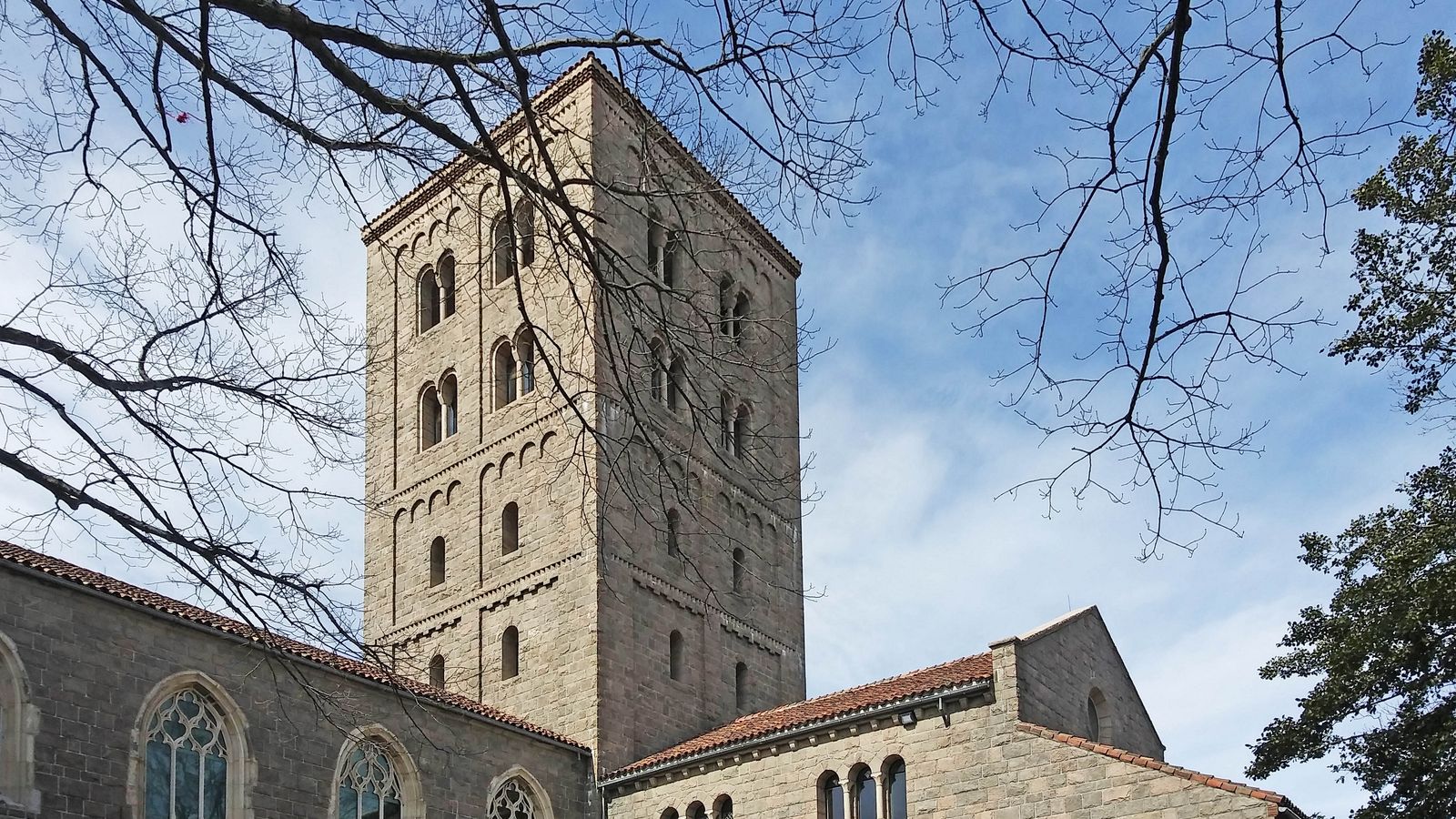
A Castle at the Edge of the City
The Cloisters sits in Fort Tryon Park, tucked into the northern tip of Manhattan in a neighborhood most visitors never reach. The building looks as though it was lifted from the French countryside — thick stone walls, arched arcades, a crenellated tower rising above the Hudson River below.
On a grey morning, with fog hanging over the Palisades across the water, you could be standing somewhere in Burgundy in 1300. That feeling is not entirely an illusion. Large sections of The Cloisters actually came from medieval France.
The building is a branch of The Metropolitan Museum of Art, devoted entirely to medieval European art and architecture. It opened in 1938. Most New Yorkers have never been inside.
The Pieces That Crossed an Ocean
In the early twentieth century, American sculptor George Grey Barnard spent years traveling through the French countryside buying architectural fragments from medieval monasteries. Carved columns, stone arches, ancient floor tiles — local farmers had been repurposing these as building materials for centuries, with no idea of their age or origin.
Barnard shipped these pieces to New York and reassembled them into a private museum in 1914. The collection incorporated elements from five actual medieval French cloisters — covered walkways built around monastery courtyards, most dating from the twelfth and thirteenth centuries.
When John D. Rockefeller Jr. heard about Barnard’s collection, he bought it. Then he bought the land in Fort Tryon Park for the museum. Then he purchased the Palisades cliffs across the Hudson in New Jersey — just to make sure nothing would ever block the view from the windows. That view still belongs to the river today.
The Unicorn Tapestries
The Cloisters holds one of the greatest medieval art collections in the world. But nothing prepares you for the Unicorn Tapestries.
Woven in the southern Netherlands around 1495 to 1505, these seven large tapestries depict the hunt for a mythical unicorn in exquisite detail. Botanists have identified more than 100 plant species woven into the borders. The figures wear jewelry you can examine thread by thread. The unicorn bleeds realistically onto the woven ground.
Nobody knows exactly who commissioned them or why. They survived the French Revolution hidden under straw in a barn. They ended up in upper Manhattan, where you can walk right up to them in a room built around their scale.
Enjoying this? Join New York lovers getting stories like this every week. Subscribe free →
A Garden That Feels Like It Shouldn’t Exist
Between the buildings lie three medieval-style courtyard gardens. The Trie Cloister Garden is planted with flowers that appear in the Unicorn Tapestries — the same violets, wild strawberries, and periwinkle you can see woven into the fabric just inside the walls.
In spring, herbs and lavender bloom against stone. In summer, the thick walls stay cool while the city below swelters. In winter, bare branches against grey rock look like illustrations from an illuminated manuscript. The gardens change with every season, and every version is worth the trip.
The hidden layers of Manhattan history run deep across the whole island, but few places make you feel them as physically as standing in one of these cloisters, surrounded by stone that was old when Columbus sailed.
200 Blocks From Times Square
The Cloisters draws around 300,000 visitors a year. The Met on Fifth Avenue gets over two million. That gap tells you everything about how quietly overlooked this place remains.
Getting here requires commitment. Take the A train to 190th Street — a forty-minute ride from Midtown — then walk through a pedestrian tunnel blasted through Manhattan schist, then uphill through Fort Tryon Park. The journey is the filter. It keeps the crowds manageable and the experience intact.
Admission is included with any Metropolitan Museum of Art ticket. The Cloisters also operates its own pay-what-you-wish admission; the suggested amount is $30, but you decide. If you want to discover more of what New York quietly offers for little or nothing, the full guide to free experiences across the five boroughs is worth bookmarking.
Washington Heights residents sometimes go years without visiting. Tourists rarely make it this far north. The Cloisters sits above the city unchanged, patient, waiting for the people who actually look for it.
There are places in New York that feel like secrets even when they have stood for almost a century. The Cloisters is one of them. Take the A train north. Walk through the tunnel in the rock. Stand in the cloister garden with the Hudson far below and medieval stone all around you. New York will surprise you — but rarely quite like this.
You Might Also Enjoy
- The Village Buried Under Central Park That New York City Tried to Forget — another hidden chapter of Manhattan history that most visitors walk right over.
- Free Things to Do in NYC: The Best No-Cost Experiences in New York City — including pay-what-you-wish museums and overlooked spots across all five boroughs.
Plan Your New York Trip
Ready to explore beyond the standard Midtown circuit? The Ultimate New York Travel Guide covers neighborhoods, transport, and the experiences most first-timers never find.
Join New York Lovers
Every weekday morning, get New York’s hidden gems, neighbourhood stories, food origins, and city secrets — straight to your inbox.
Subscribe free — enter your email:
Love more? Join 65,000 Ireland lovers → · Join 43,000 Scotland lovers →
Free forever · Unsubscribe anytime
