
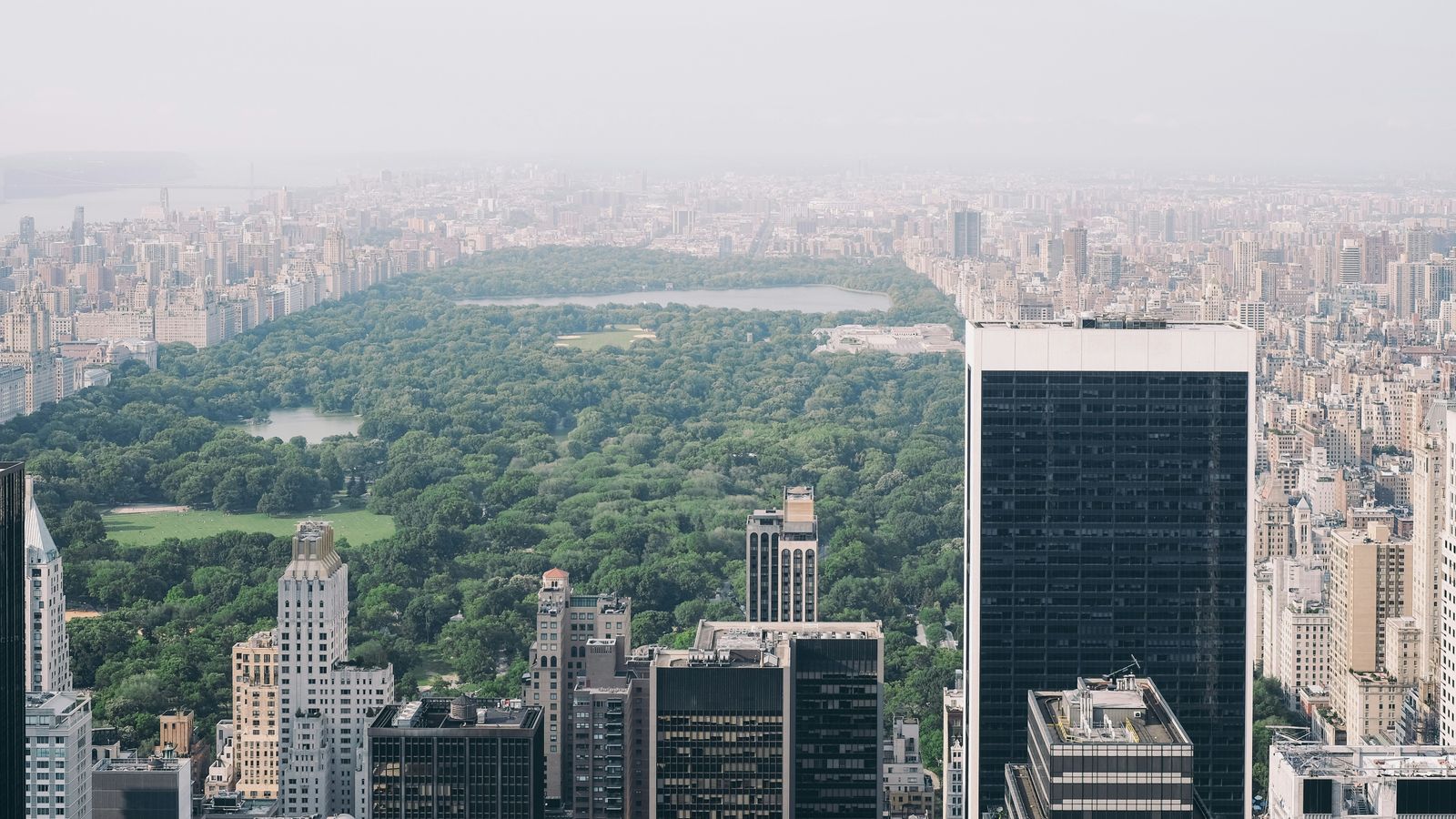
Most people enter Central Park with a destination already in mind — the Bethesda Fountain, the Sheep Meadow, the zoo. They move through it with purpose, earbuds in, path memorized. That’s exactly how you miss everything that makes this park extraordinary.
Hidden inside 843 acres of Manhattan green space is a 3,500-year-old Egyptian obelisk, a garden planted from Shakespeare’s lines, a deliberate woodland where you’re meant to get lost, a castle built with no purpose, a peace memorial maintained by craftsmen from Naples, and a war fort from 1814 that almost no one ever finds.
The Egyptian Obelisk That Predates the Roman Empire
Walk to the east side of the park, just behind the Metropolitan Museum of Art, and you’ll find a 69-foot granite obelisk covered in hieroglyphics.
It’s called Cleopatra’s Needle — though the name is misleading. It has nothing to do with Cleopatra. Pharaoh Thutmose III commissioned it around 1450 BCE, roughly a thousand years before Cleopatra was born. The Romans moved it to Alexandria. Egypt gifted it to New York City in 1881 as a gesture of friendship.
Moving the obelisk to Manhattan required a purpose-built ship, a specially designed rail system, and nine months of labor. It weighs 220 tons. Once it was in place, most New Yorkers promptly forgot it was there. Tourists walk within 200 feet of it every day without glancing across the path.
A Garden Grown From Shakespeare’s Lines
The Shakespeare Garden sits quietly on the upper west slope of the park, near 79th Street. It’s been here since 1916. Most visitors have no idea it exists.
Every plant growing in this garden — rue, rosemary, eglantine, thyme, cowslip, violets — was chosen because Shakespeare mentioned it in one of his plays or sonnets. Walk through it and you’re walking through the flora of Elizabethan England, transplanted to the middle of Manhattan.
On a weekday morning, you might have the whole place to yourself. That kind of quiet is almost impossible to find anywhere else on this island. If you’re looking for hidden gems in NYC that feel genuinely removed from the city, this is one of the best.
The 36-Acre Forest Where You’re Meant to Get Lost
Frederick Law Olmsted, the park’s designer, built the Ramble deliberately to feel wild and disorienting. The paths loop back on themselves. Openings close into thicket. The canopy thickens until the skyline disappears entirely.
He wanted people to feel genuinely lost in nature — in the middle of a city of millions. That feeling still works, especially at dawn.
But the Ramble is famous among birdwatchers for a different reason. During spring migration — roughly late April through May — more than 200 species of birds pass through this small patch of woodland. It’s one of the most important bird migration stopover points on the East Coast. Serious birders come from across the country for it.
Enjoying this? Join New York lovers getting stories like this every week. Subscribe free →
The Castle Built With No Purpose Whatsoever
Belvedere Castle was completed in 1869. Olmsted and his design partner Calvert Vaux built it as a folly — an architectural ornament with no intended function.
It was never meant to house anything. It was meant to look like a castle, because a castle looked right on the rocky outcropping where it sits. That’s the entire explanation.
Today it contains a weather station that records Manhattan’s official temperature and a small nature center. The turret offers one of the best unobstructed views of the park in either direction. Entry is free. Most visitors assume it’s for staff only and walk right past it.
The Peace Memorial Maintained by a City 4,000 Miles Away
Strawberry Fields was dedicated in 1985, five years after John Lennon was shot outside his apartment building on Central Park West. The “Imagine” mosaic at the center of the memorial was made in Naples, Italy — a personal gift from the city to New York.
Neapolitan craftsmen have returned to restore and maintain the mosaic ever since. The Dakota, where Lennon lived with Yoko Ono and where he was killed on December 8, 1980, is visible from the memorial if you look west through the trees.
The area is designated a quiet zone — no amplified music allowed, by park rule. Fresh flowers appear on the mosaic every morning, placed by volunteers who have been doing it for decades. It’s one of the most quietly moving places in New York City.
The War Fort From 1814 That No One Finds
The Blockhouse is the oldest surviving structure in Central Park. It was built in 1814 as a defensive fortification during the War of 1812 — when there was genuine fear that the British might attack Manhattan from the north.
The attack never came. The fort was abandoned. Decades later, when the park was designed, it was simply built around the old stone structure and left where it was.
It sits in the woods near the northwest corner of the park, close to 109th Street. The path to it is unmarked on most maps. It looks exactly like what it is — rough fieldstone, crumbling slightly, genuinely old. Almost no tourists find it. Most New Yorkers don’t know it exists.
That’s the thing about Central Park. It’s been hiding in plain sight for 160 years, and it still has secrets left to give.
Where is Cleopatra’s Needle in Central Park?
Cleopatra’s Needle stands on the east side of Central Park, directly behind the Metropolitan Museum of Art near 81st Street. It’s easy to find if you walk along the east path past the museum — just look for the tall granite obelisk covered in hieroglyphics. There are no crowds. There are rarely any signs pointing to it.
What is Strawberry Fields in Central Park and why is it there?
Strawberry Fields is a memorial to John Lennon, located on the west side of Central Park near 72nd Street, opposite The Dakota where Lennon lived. It was dedicated in 1985, five years after his death. The central “Imagine” mosaic was created in Naples, Italy, and gifted to New York City by the Italian government.
What is the best time to visit Central Park to see migrating birds?
The Ramble in Central Park is best for bird migration in late April and May, when spring migrants pass through. Early morning is ideal — arrive before 8am for the best chance of seeing warblers, thrushes, and raptors moving through the 36-acre woodland. Fall migration (September–October) is a quieter second window.
Is Belvedere Castle free to visit in Central Park?
Yes — Belvedere Castle is completely free to enter. It’s open most days during park hours and contains a small nature exhibit and weather station. The terrace and turret offer some of the best views over the park’s landscape, with the Great Lawn and Delacorte Theater spread below.
How do you find the hidden Blockhouse in Central Park?
The Blockhouse sits in the northwestern section of the park, near 109th Street between West Drive and the park’s western edge. It’s not prominently marked on most tourist maps. The best approach is to enter the park at Central Park West around 110th Street and walk east — look for the rough stone structure in the trees. It takes about 15 minutes of searching the first time.
You Might Also Enjoy
- Hidden Gems in NYC: The New York Most Tourists Never See
- New York’s Subway Hides One of the World’s Great Art Collections — and It’s Free
- Free Things to Do in NYC: The Complete Guide for Visitors
Plan Your New York Trip
Before you visit, check out our New York City travel tips — everything from getting around to the best neighborhoods to base yourself in.
Join 1,100+ New York Lovers
Every weekday morning, get New York’s hidden gems, neighbourhood stories, food origins, and city secrets — straight to your inbox.
Subscribe free — enter your email:
Love more? Join 65,000 Ireland lovers → · Join 43,000 Scotland lovers →
Free forever · Unsubscribe anytime

Subscribe Free