
Twice a year, something strange and beautiful happens in New York City. The sun drops toward the horizon at precisely the right angle, and Manhattan’s streets — every gridded east-west block from 14th Street to 155th — transform into long, blazing corridors of golden light. For a few minutes, the city looks like it was designed for this exact moment.
It wasn’t. But the math worked out anyway.
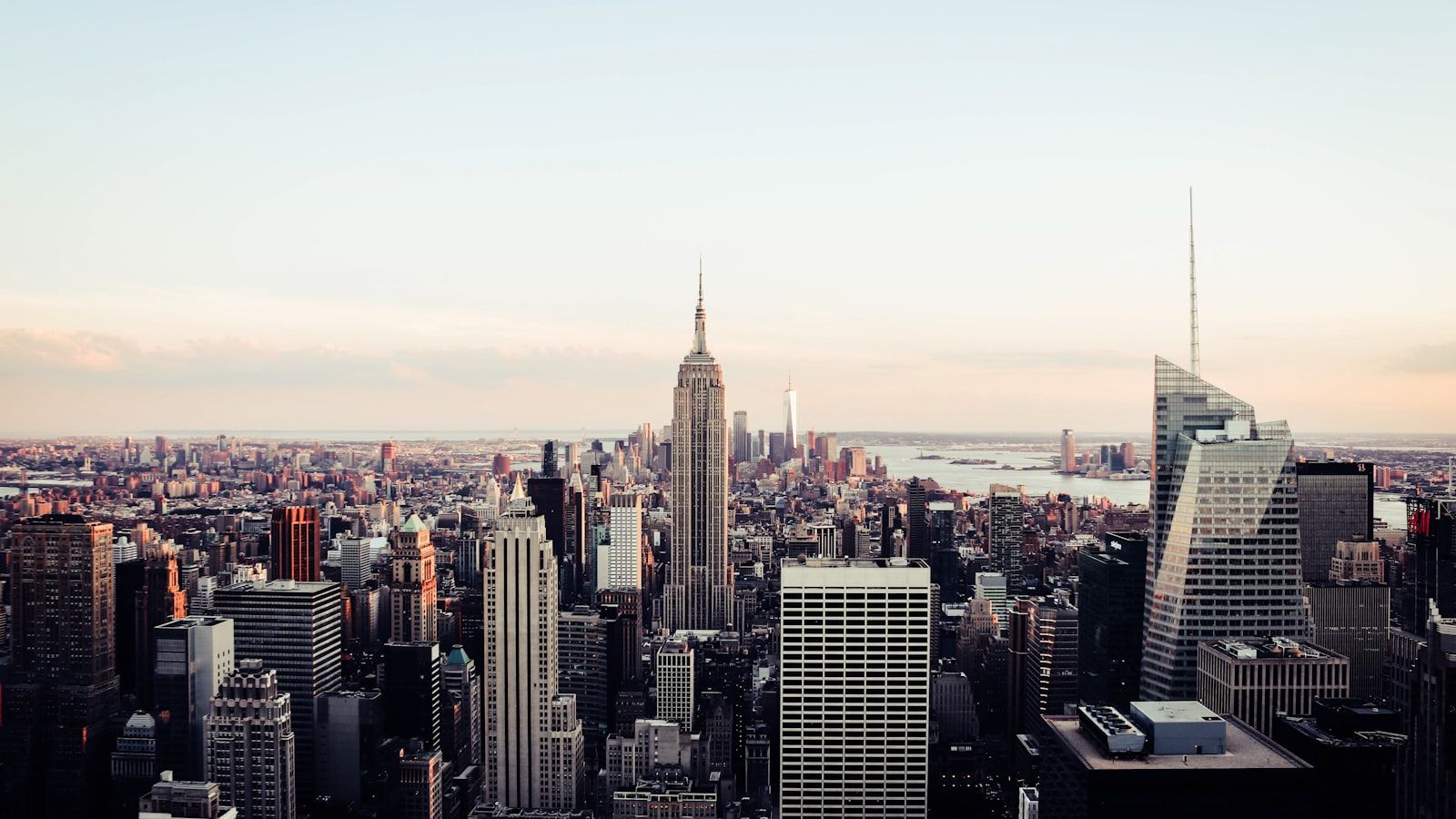
A Grid That Was Never Meant to Do This
In 1811, city planners laid out what became known as the Commissioners’ Plan — a bold, orderly grid that would define Manhattan forever. The design tilted approximately 29 degrees from true geographic north, following the shape of the island rather than the compass.
Nobody was thinking about sunsets.
But geometry doesn’t care about intentions. Because of that tilt, the sun aligns perfectly with Manhattan’s east-west streets twice every year — once in late May, once in mid-July. On those evenings, anyone standing on a cross street and looking west sees the sun sitting perfectly centered at the end of the block, as if the city were a giant corridor pointed straight at the horizon.
The effect works because Manhattan’s east-west streets are long, straight, and unobstructed for miles. When the sun hits the right angle, it doesn’t just light the street — it floods the entire length with color. The story of how Manhattan’s numbered grid came to be is part of one of the greatest accidental gifts any city has ever given itself.
The Scientist Who Gave It a Name
The phenomenon existed long before anyone talked about it. Then, in the late 1990s, astrophysicist Neil deGrasse Tyson — then affiliated with the American Museum of Natural History — noticed the alignment and wrote about it. He called it Manhattanhenge, a playful nod to Stonehenge, the ancient site in England where the sun aligns with the stones at midsummer.
The name caught on immediately. It gave language to something New Yorkers had sensed for years without words for it: the way the city, on certain evenings, seems to hold its breath.
Today, the American Museum of Natural History publishes the exact dates and times each year. The moment is calculated to the minute. Tens of thousands of people show up.
What It Actually Feels Like
Stand at the corner of 34th Street and Fifth Avenue just before the moment arrives. Watch what happens.
Traffic slows. People pull out phones. Strangers point west. The light changes — not just the color of the sky, but the quality of light on faces, on building facades, on the long canyon walls stretching toward the Hudson.
Then the sun hits the slot. The entire street becomes a tunnel of orange and gold. It lasts maybe three minutes. Sometimes fewer.
And then it’s gone.
It’s the kind of moment that reminds you why people fall in love with New York in the first place. Not the monuments or the restaurants. The accidental, unrepeatable moments that belong to no one.
Enjoying this? Join New York lovers getting stories like this every week. Subscribe free →
Where to Stand When It Happens
Any east-west cross street with a clear view to the west will work. The longer the street, the more dramatic the effect.
Some of the most popular spots are 14th Street, 23rd Street, 34th Street near the Empire State Building, 42nd Street, and 57th Street. Each offers a slightly different angle on the same phenomenon. The shorter the surrounding buildings, the further the golden light reaches.
Get there early. Half of New York will have the same idea on the same evening.
There’s also a lesser-known version: the reverse Manhattanhenge. In early January and early December, the sunrise aligns with the grid on the east side of the island. It requires an early alarm and considerably smaller crowds. It’s arguably even more beautiful.
More Than a Photo Opportunity
The crowds that gather for Manhattanhenge aren’t only there for the shot, though many of them are. Something else happens on those evenings — a collective pause in a city that famously never pauses.
New Yorkers stand next to tourists. Everyone looks in the same direction. The usual friction of the sidewalk disappears for a few minutes, replaced by something that feels almost ceremonial.
It’s not designed. It’s not curated. It’s just the sun and the streets and a plan drawn up more than two hundred years ago by people who had absolutely no idea what they were starting.
Planning Your Visit
Manhattanhenge happens twice a year, on two consecutive evenings each time — once in late May and once in mid-July. The exact dates shift slightly each year based on the solar calendar. The American Museum of Natural History publishes confirmed times in the weeks before each event.
For anyone planning a trip to New York City and hoping to catch it, the late May dates tend to draw slightly fewer crowds than the July dates, which fall in peak summer. Either way, arrive at least 30 minutes early and pick a spot near the center of a long crosstown block.
New York holds plenty of surprises for those willing to look for them. The hidden courtyards tucked inside the city’s busiest blocks offer another side of New York that most visitors walk straight past.
New York has a way of rewarding people who slow down.
New York has no shortage of things to see. But Manhattanhenge is different — it’s not something the city built or marketed or put on a map. It’s something that happens to the city, quietly, twice a year, whether anyone’s watching or not.
On those evenings, the streets that carry eight million people through their ordinary days become something extraordinary. Show up. Look west. The city will do the rest.
You Might Also Enjoy
- The Strange Reason New York’s Rooftop Water Towers Are Still Made of Wood
- Why Manhattan Has Numbers Instead of Names — and Who Made That Decision
- The Secret Courtyards Hiding Right in the Middle of New York City’s Busiest Blocks
Plan Your New York Trip
Ready to explore the city? Our essential neighbourhood guide for tourists covers where to stay, where to explore, and what to see across all five boroughs.
Join New York Lovers
Every weekday morning, get New York’s hidden gems, neighbourhood stories, food origins, and city secrets — straight to your inbox.
Subscribe free — enter your email:
Love more? Join 65,000 Ireland lovers → · Join 43,000 Scotland lovers →
Free forever · Unsubscribe anytime
