
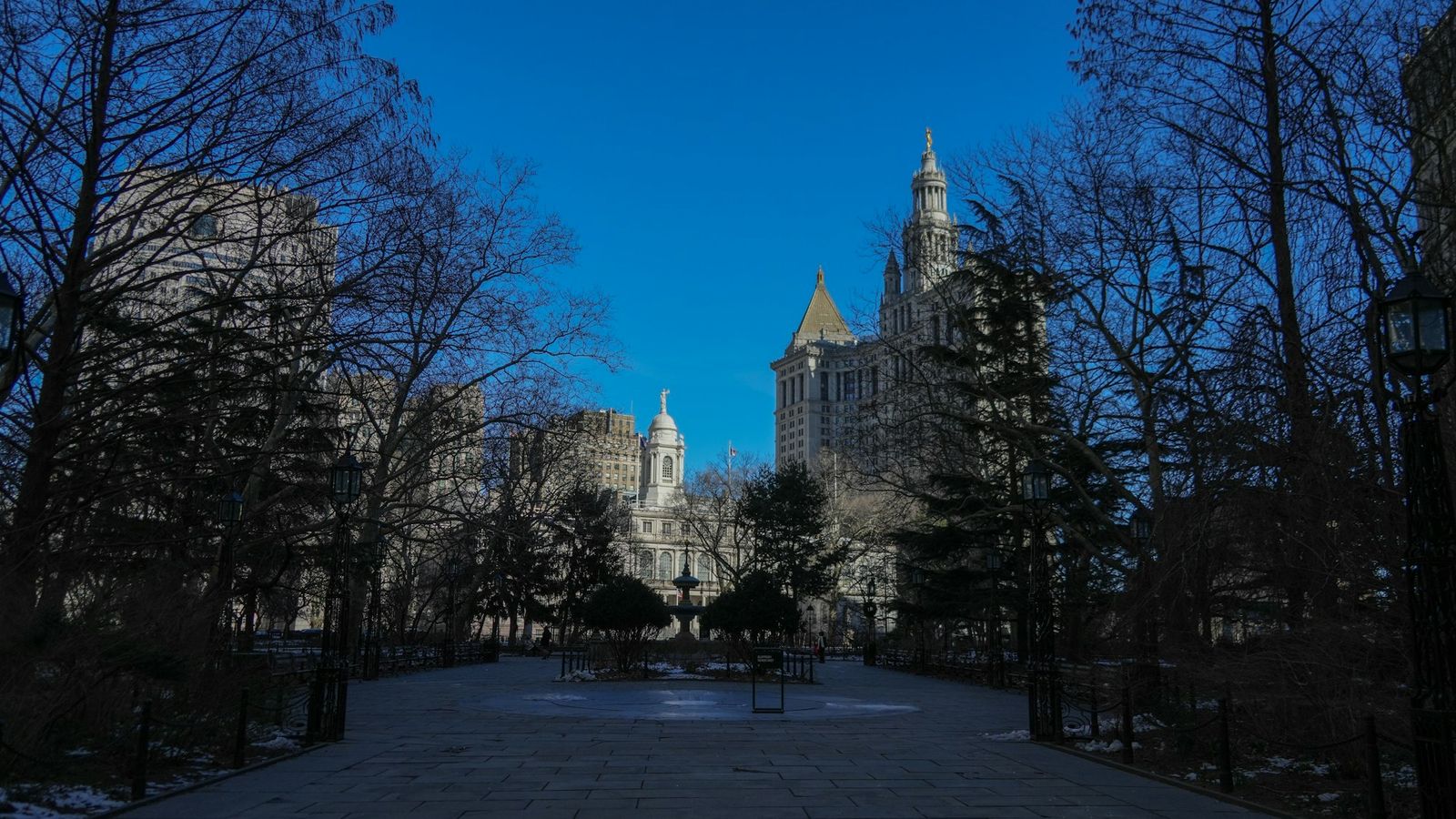
Somewhere beneath City Hall Park, sealed from the public since 1945, sits one of the most beautiful rooms in New York City. It has vaulted tile ceilings, brass chandeliers, and arched skylights that filter soft light underground. And twice a minute, a subway train loops silently through it without ever stopping.
The First Stop on New York’s First Subway
On October 27, 1904, New York City opened its first subway line. The brand-new IRT — Interborough Rapid Transit — carried 150,000 passengers on opening day. And the crown jewel of the entire system wasn’t Times Square or Grand Central.
It was a small, curved station beneath City Hall.
Architects Heins & LaFarge designed the station, working with master craftsman Rafael Guastavino. Together they built something that felt less like a transit hub and more like a cathedral beneath the street. Guastavino’s interlocking terracotta tile arches — the same technique found in the rooms of Grand Central Terminal — formed the vaulted ceiling above the platform.
What Made It So Extraordinary
The City Hall station was never large. It had just two tracks and a short platform. But what it lacked in size, it made up for in beauty.
Brass chandeliers hung from the arched ceiling. Skylights embedded in the vaulted tiles allowed soft, filtered light to reach the platform from City Hall Park above. Even the ticket booth featured ornamental ironwork.
For passengers in 1904, stepping onto the City Hall platform was unlike anything else in New York. It was the city announcing — in brick, tile, and light — that it had arrived.
Why New York Closed It
By the 1940s, the station had a serious problem: the subway cars had grown too long.
New York’s expanding network demanded longer trains with more capacity. But the City Hall station sat on a tight curve, designed for the shorter rolling stock of 1904. Modern cars created dangerous gaps between the train doors and the platform edge.
On December 31, 1945, the station was quietly closed. There was no ceremony, no last-ride announcement, no farewell. The gates locked, and the trains passed without stopping.
Sealed — But Not Demolished
Here’s the strange part: the station was never torn down. It was simply sealed.
The tracks still run through it. Every time a downtown 6 train reaches the Brooklyn Bridge stop and loops back uptown, it curves silently through the ghost station. The arches, tiles, and chandeliers are still in place — untouched in the dark.
For decades, only transit workers and maintenance crews ever saw it. The city, it seemed, had simply forgotten it was there.
Enjoying this? Join New York lovers getting stories like this every week. Subscribe free →
How You Can Still See It
Today there are two ways to glimpse the station.
The New York Transit Museum hosts occasional guided tours inside the sealed platform. These slots sell out within minutes of being announced — but they’re the only way to legally walk the platform and see the tiles up close.
The second option is completely free. Board the 6 train heading downtown to Brooklyn Bridge station. When the train reaches the last stop, don’t get off. Stay on as the train completes its loop. Position yourself in the last car and look through the rear window as the train turns. The vaulted arches of City Hall station will slide past in the darkness.
It’s one of New York’s best-kept urban secrets — hiding in plain sight on the city’s oldest subway line.
The Guastavino Legacy Beneath Your Feet
Rafael Guastavino emigrated from Spain in 1881 and brought with him a building technique that transformed New York’s most important interiors. His interlocking terracotta tiles — laid in self-supporting catenary arches — could span wide spaces without internal steel structures.
His work appears in Grand Central’s Oyster Bar, the Municipal Building, and the Alexander Hamilton U.S. Custom House. But City Hall station remains one of his most complete, least-disturbed works.
Sealed from weather, foot traffic, and renovation crews for over 80 years, it has survived in near-perfect condition. The tiles have never been painted over. The ironwork was never replaced. It looks, in many ways, exactly as it did on opening day in 1904.
New York is full of rooms that most people never find. Some are behind locked doors in old hotels. Others are tucked at the ends of forgotten blocks. And one — perhaps the most beautiful of all — sits 20 feet underground, perfectly preserved, waiting in the dark beneath the park where the city began.
Frequently Asked Questions
What is the City Hall subway station in New York City?
The City Hall station was the original southern terminus of New York’s first subway line, opened on October 27, 1904. It features Guastavino tile vaulted ceilings, brass chandeliers, and curved skylights. It was permanently closed in 1945 when its platform proved too short and too sharply curved for modern subway cars.
Can visitors see the abandoned City Hall subway station today?
Yes — the New York Transit Museum offers periodic guided tours of the sealed station, which typically sell out within minutes. You can also see it for free by staying on the 6 train past Brooklyn Bridge station, watching through the rear window as the train loops through the ghost platform on its way back uptown.
Where exactly is the City Hall subway station located?
The station sits beneath City Hall Park in Lower Manhattan, directly below the intersection of Broadway and Park Row. It is directly accessible (on transit tours) from the 4, 5, or 6 train at Brooklyn Bridge — City Hall station.
When was the City Hall subway station closed?
The City Hall station closed permanently on December 31, 1945, after 41 years of operation. The curved platform created dangerous gaps with the longer modern subway cars that had replaced the original 1904 rolling stock.
You Might Also Enjoy
- The Secrets Hidden Inside Grand Central Terminal
- Hidden Gems in NYC: The New York Most Tourists Never See
- Rockefeller Centre: The History and Secrets Behind an Icon
Plan Your New York Trip
Ready to explore New York City? Our 3-day New York City itinerary covers the best the city has to offer — from iconic landmarks to hidden corners most visitors miss.
Join 1,100+ New York Lovers
Every weekday morning, get New York’s hidden gems, neighbourhood stories, food origins, and city secrets — straight to your inbox.
Subscribe free — enter your email:
📲 Know someone who’d love this? Share on WhatsApp →
Love more? Join 65,000 Ireland lovers → · Join 43,000 Scotland lovers →
Free forever · Unsubscribe anytime

Subscribe Free