
In the winter of 1902, something strange was happening on the corner of 23rd Street and Fifth Avenue. Men in top hats were lingering on sidewalks for no apparent reason. Women clutched their skirts. And New York City police had taken to shouting a peculiar phrase to move the loiterers along.
The cause was a brand-new building — one unlike anything the city had ever seen.
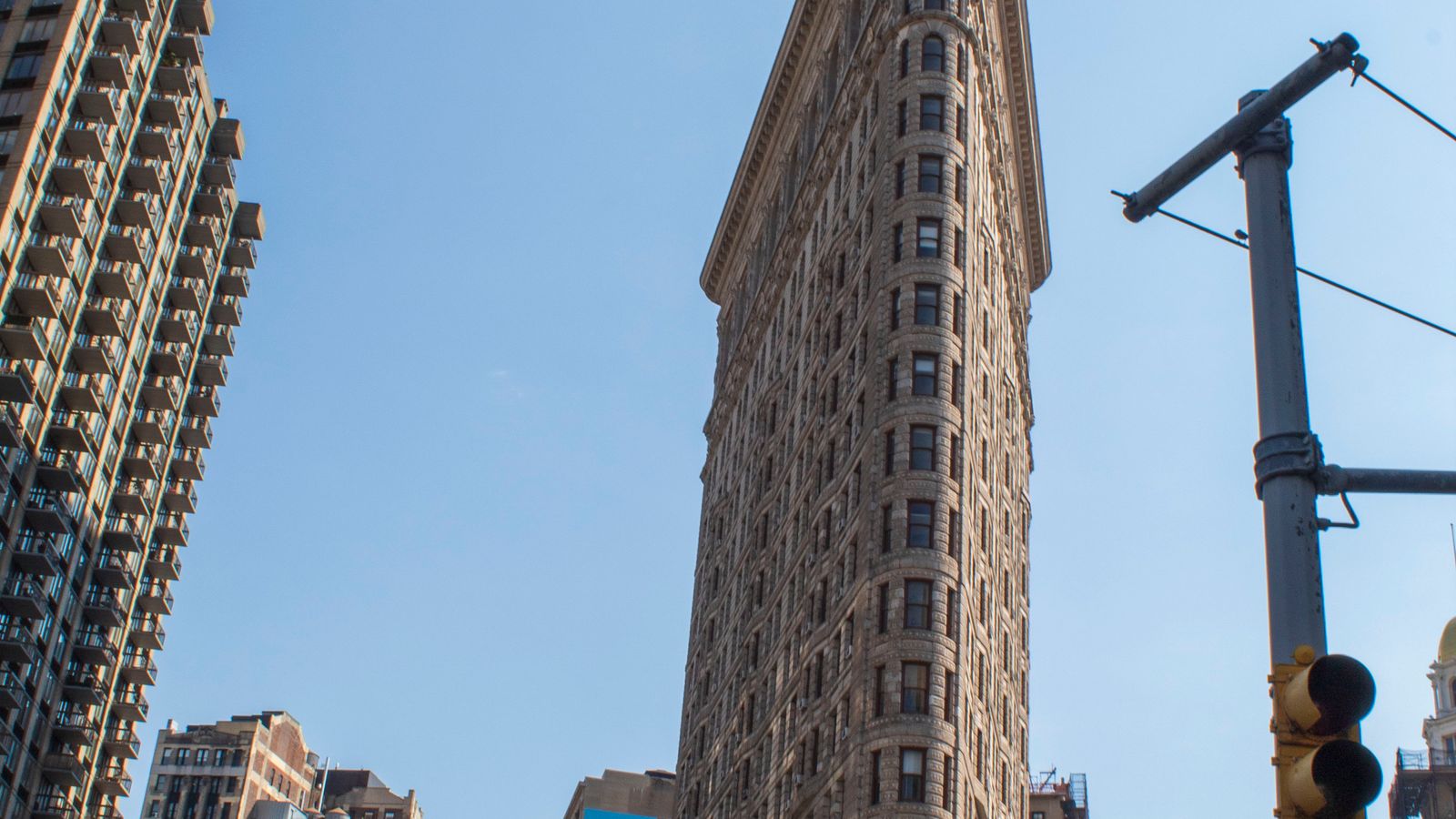
A Triangle in a City of Rectangles
New York is a grid city. Streets run east-west. Avenues run north-south. Blocks are rectangles.
And then there’s the Flatiron Building — a 22-story wedge of steel and limestone that juts into the intersection of Fifth Avenue and Broadway like the prow of a ship.
When architect Daniel Burnham completed it in 1902, it filled a triangular block between 22nd and 23rd Streets. The narrow end, facing downtown, measures just six-and-a-half feet wide. Stand at that corner and the building appears to taper to almost nothing — a knife blade against the sky.
Nobody had built anything like it before. And nobody was sure it would survive.
Burnham’s Folly
The press was not kind. Newspapers nicknamed it “Burnham’s Folly,” convinced that the first strong wind would send the whole thing toppling onto Fifth Avenue. Critics called it a monstrosity. Residents petitioned against it.
When construction began in 1901, crowds gathered not to admire it but to watch it fall. The building rose anyway, floor by floor, until it stood 307 feet tall — among the tallest buildings in the world at the time.
The predicted collapse never came. The steel skeleton held. But the critics turned out to be half-right about the wind.
The Wind Nobody Expected
The Flatiron’s triangular shape did something its engineers may not have anticipated. As gusts funneled down Broadway and Fifth Avenue, the building’s narrow point redirected them, creating a powerful downdraft at street level.
On 23rd Street, the effect was dramatic. The wind would sweep around the corner, strong enough to lift umbrellas inside-out — and skirts up.
In 1902, a hemline above the ankle was scandalous. So was the audience that gathered to watch. Men began loitering at the intersection in notable numbers, hoping to catch a glimpse of what the wind might reveal. The police were not amused.
Enjoying this? Join New York lovers getting stories like this every week. Subscribe free →
“Twenty-Three Skidoo”
That’s where the phrase comes in.
New York’s finest would arrive at the Flatiron corner and shout down the assembled crowd: Move along. Twenty-three, skidoo.
Twenty-three for 23rd Street. Skidoo — slang for “get lost” or “clear off.” The exact roots of “skidoo” are debated, but its application at this corner is well-documented in early twentieth-century accounts. The combination stuck.
The phrase jumped from the streets into vaudeville acts, silent films, and everyday conversation. By 1910, “23 skidoo” was one of the most recognizable slang expressions in America — the early 1900s equivalent of going viral.
It all traced back to a wind tunnel on a Manhattan street corner, caused by a building that everyone predicted would blow down first.
The Photographer Who Changed Everything
While crowds gathered on 23rd Street for all the wrong reasons, one man was there for the right one.
Edward Steichen photographed the Flatiron Building on a twilight evening in 1904. His soft-focus image captured the building dissolving into mist, its triangle emerging from the haze like something from a dream. The photograph appeared in Camera Work — and changed how the world saw this strange, polarizing structure.
Steichen’s image turned Burnham’s Folly into a symbol of New York’s ambition. Within a few years, artists, painters, and photographers were making pilgrimages to 23rd Street — not to leer, but to look.
The Building That Survived Everything Else
The Flatiron Building was designated a New York City Landmark in 1966 — protection that came not a moment too soon. By then, midtown towers had long surpassed it in height, and many buildings from its era had already been demolished.
It survived proposals, neglect, and changing tastes. It survived the economic shifts that gutted Manhattan’s light-manufacturing district. The neighborhood around it transformed — galleries, restaurants, tech offices — while the building itself held its corner.
Today, the entire neighborhood takes its name from this one building. The Flatiron District exists because one architect in 1902 decided a triangle made more sense than a rectangle, and somehow convinced everyone else to agree.
Stand at the southern tip on a gusty day. You’ll still feel that corner draft. You might even understand why they kept coming back.
You Might Also Enjoy
- Hidden Gems in NYC: The New York Most Tourists Never See
- New York’s Most Beautiful Subway Station Has Been Closed Since 1945 — And You Can Still See It
- The Wooden Towers on New York’s Rooftops That Have Kept the City Running for 150 Years
Plan Your New York Trip
Heading to Manhattan? Our New York in 3 days itinerary takes you through Midtown landmarks, hidden side streets, and the neighborhoods most visitors never discover.
Join New York Lovers
Every weekday morning, get New York’s hidden gems, neighbourhood stories, food origins, and city secrets — straight to your inbox.
Subscribe free — enter your email:
Love more? Join 65,000 Ireland lovers → · Join 43,000 Scotland lovers →
Free forever · · Unsubscribe anytime
