
On the evening of August 11, 1973, a girl named Cindy threw a back-to-school party in the recreation room of her apartment building at 1520 Sedgwick Avenue in the Bronx. She charged 25 cents for girls and 50 cents for boys to help fund new school clothes. What her brother Clive did behind the turntables that night became the most important musical moment of the 20th century.
The Building That Changed the World
1520 Sedgwick Avenue sits in the High Bridge neighborhood of the Bronx — a solid, ordinary apartment building that looks much like any other on the block. But inside its basement recreation room, a teenage DJ named Clive Campbell, who performed under the name DJ Kool Herc, made a discovery that rewired popular music forever.
Herc had grown up in Jamaica, absorbing the energy of Kingston’s sound system culture before his family moved to New York. He brought that spirit with him. Standing behind twin turntables with two copies of the same funk record, he began to experiment.
He noticed that the crowd went wildest during the instrumental break sections of songs — the brief moments when the beat stripped down to pure rhythm. So he started extending those breaks, switching back and forth between two identical records to keep the section going indefinitely. Dancers could move without interruption. The energy in the room became something entirely new.
He called it the Merry-Go-Round technique. The rest of the world would eventually call it the foundation of hip-hop.
Why It Happened in the Bronx
The Bronx of the early 1970s was a borough alive with creative energy. Caribbean immigrant families, Puerto Rican communities, and African American neighborhoods had built rich cultural traditions side by side — sharing music, food, and a fierce pride of place that ran through every block.
Young people were hungry for something of their own. Cindy Campbell’s $25 profit from that first party helped fund more events. Word spread fast. Within months, outdoor block parties were lighting up parks and community spaces across the borough — hundreds of people coming together to dance, compete, and belong.
Herc’s turntable innovation gave those parties a sound. And that sound gave the Bronx a voice that would travel to every corner of the globe.
The Four Elements Take Shape
Hip-hop didn’t arrive as a music genre. It emerged as an entire culture — with four distinct art forms that together defined a generation and a city.
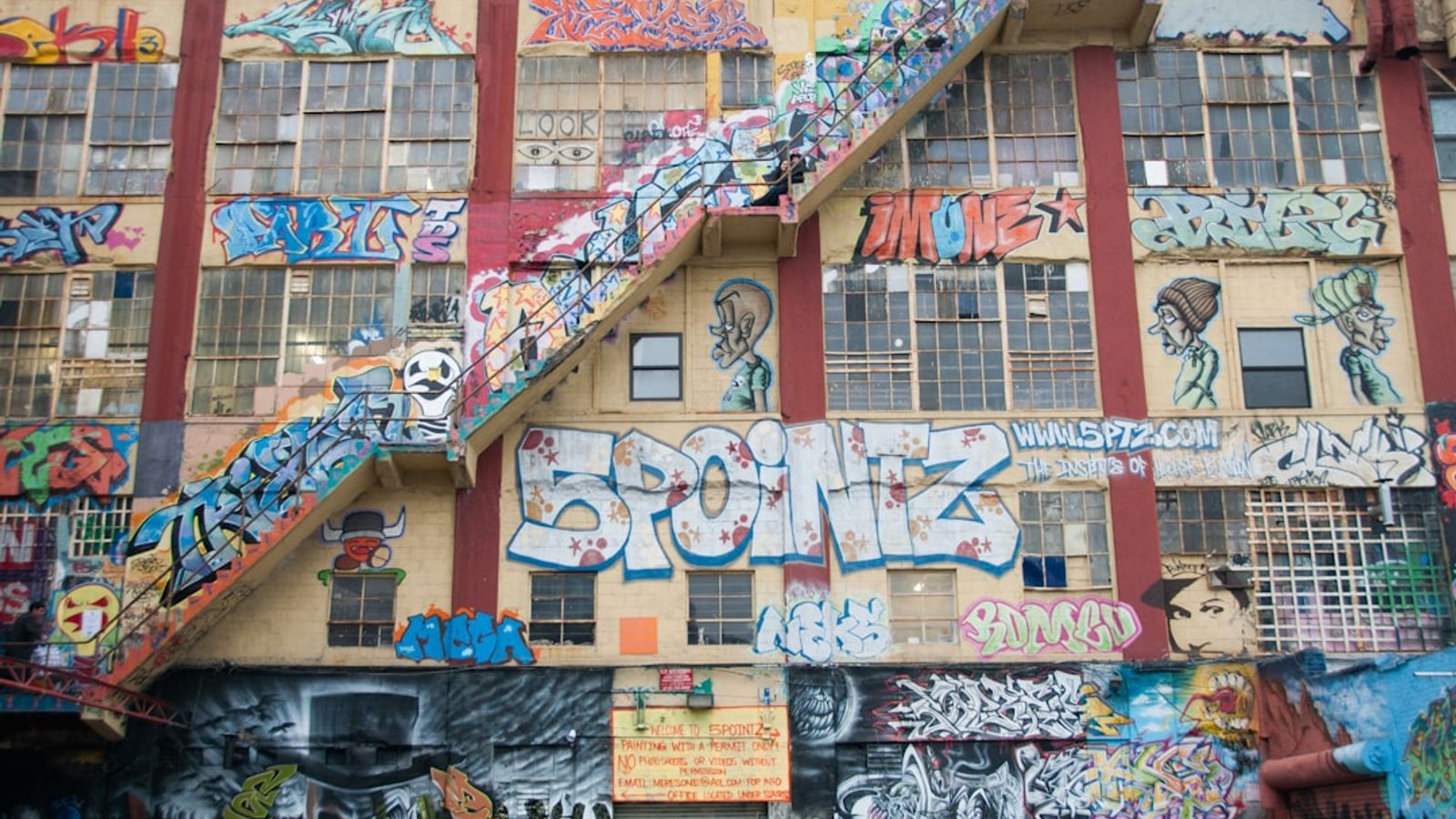
DJs like Herc drove the sound. MCs stepped in to hype the crowd, improvising rhymes and call-and-response chants over the loops. B-boys and b-girls — breakdancers — transformed the floor into a performance space, pulling off moves that seemed to defy gravity. And on walls, train cars, and surfaces across the city, graffiti writers painted their names in letters so bold and layered that the city itself became a canvas.
Each element was its own discipline with its own masters. Together, they were something the world had never seen before — and it had all started in a rec room with a $25 door charge and a borrowed sound system.
Enjoying this? Join New York lovers getting stories like this every week. Subscribe free →
Three DJs Who Changed Everything
DJ Kool Herc wasn’t alone for long. Afrika Bambaataa, another Bronx DJ, saw something larger forming on those block party stages. He founded the Universal Zulu Nation in 1973 — a cultural movement that channeled the energy of hip-hop into community, creativity, and shared identity. Bambaataa turned a sound into a philosophy.
Grandmaster Flash brought technical precision to DJing, developing new cutting and mixing techniques that pushed the music further than anyone thought possible. Together, Herc, Bambaataa, and Flash formed what historians now call the Holy Trinity of hip-hop — three Bronx DJs who built the foundation that the rest of the world would stand on.
The Bronx wasn’t just the birthplace of hip-hop. It was its laboratory, its university, and its beating heart. New York had already given the world the rent party tradition that kept Harlem alive — now the Bronx was doing something similar, turning community celebration into a cultural revolution. Later, downtown Manhattan would add its own chapter when a tiny Bowery club accidentally invented punk rock in the same decade — proving that New York had an uncanny gift for creating the music the rest of the world would eventually need.
From the Bronx to the World
By the late 1970s, hip-hop had crossed the East River into downtown Manhattan clubs. By 1979, the Sugarhill Gang’s “Rapper’s Delight” introduced the sound to a national audience who hadn’t yet realized they’d been waiting for it. By the mid-1980s, it had gone global.
Today, hip-hop is the most-streamed genre of music on earth. It has shaped fashion, language, film, advertising, and the way cities understand themselves. Artists in the Bronx tradition have won Pulitzer Prizes and performed at Super Bowl halftime shows. The music Clive Campbell invented with two turntables and a borrowed basement now reaches billions of people every single day.
It started with a $25 fundraiser and a teenager who knew how to read a room.
You Can Still Visit the Building
1520 Sedgwick Avenue was designated a New York City cultural landmark in 2007. Today, musicians, historians, and curious visitors make their way to the High Bridge neighborhood to see it. There’s no tour, no museum inside — it remains a working residential building — but you can walk up to the front, stand on the street, and feel the weight of what happened here.
The neighborhood around it has its own stories. High Bridge, the oldest standing bridge in New York City, is just a short walk away. And all across the Bronx, the culture that started in that rec room in 1973 is still very much alive — in the artists, the murals, the music, and the pride that defines the borough to this day.
Fifty years on, the block party hasn’t stopped.
You Might Also Enjoy
- The House Parties That Kept Harlem Alive — and Changed How New York Celebrates Forever
- The Tiny Bowery Club Where New York Accidentally Invented Punk Rock
- Why Every Jazz Musician Who Has Ever Mattered Has Played This New York Basement
Plan Your New York Trip
Ready to explore the city that keeps reinventing music, culture, and itself? Start with New York in 3 Days: The Perfect First-Timer’s Itinerary — a guide that takes you through the neighborhoods, stories, and must-see moments that make New York unlike anywhere else on earth.
Join New York Lovers
Every weekday morning, get New York’s hidden gems, neighbourhood stories, food origins, and city secrets — straight to your inbox.
Subscribe free — enter your email:
Love more? Join 65,000 Ireland lovers → · Join 43,000 Scotland lovers →
Free forever · Unsubscribe anytime
