
On a single July afternoon in 1903, more than a million people packed themselves onto a strip of Brooklyn sand. Not for a protest. Not for a parade. For the most extraordinary collection of amusements the world had ever seen.
They had come to Coney Island.
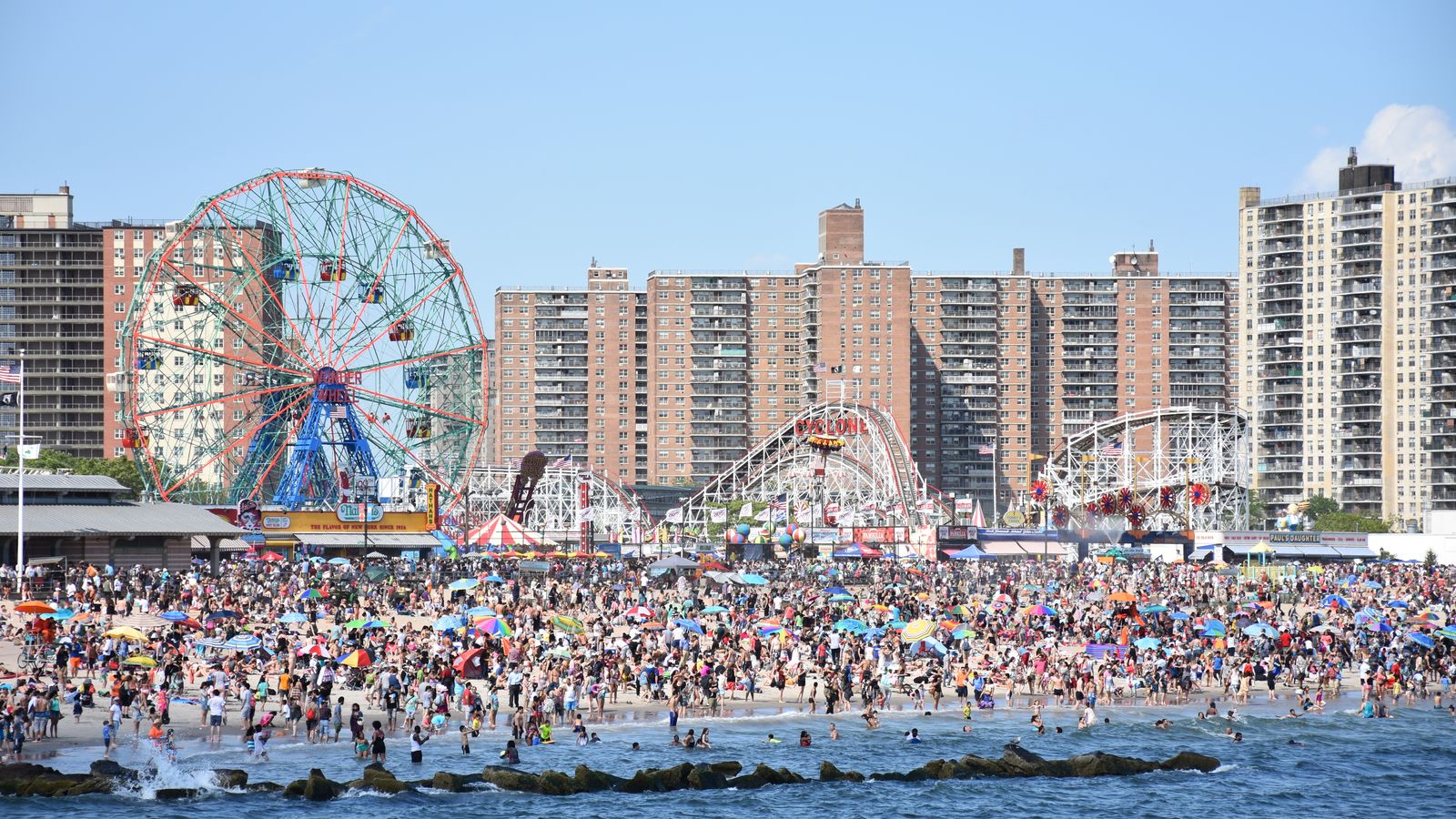
Three Parks, One Beachfront, Total War
At the western tip of Brooklyn, where the subway lines ran out and the Atlantic began, three rival empires competed for the same paying customers.
Steeplechase Park came first, in 1897. Its founder, George Tilyou, had attended the Chicago World’s Fair and spent the rest of his life trying to recreate that feeling of wonder in a permanent home. He nearly pulled it off.
Luna Park arrived in 1903, built by an acrobat turned showman named Frederic Thompson and his business partner Elmer Dundy. They installed one million electric lights. Nobody had ever seen one million electric lights. On opening night, crowds stood with their mouths open.
Dreamland followed in 1904 — grander, whiter, more determined to be magnificent. Its owner, a state senator named William Reynolds, wanted to prove Coney Island could be tasteful. He was wrong about almost everything. He still built something unforgettable.
The Night a Million Lights Came On
Before Luna Park, most American cities went dark after sundown. The electric light was still a novelty. Thompson and Dundy transformed their park into something otherworldly.
Walking into Luna Park at night felt like stepping onto another planet. Towers, minarets, and lagoons — all outlined in cold white fire. Reporters ran out of adjectives. One wrote that it looked “like what heaven would be, if heaven had better taste in architecture.”
Thompson and Dundy drew over 45 million visits in their park’s first decade. New York had never seen anything like it. Neither had anywhere else.
Fire, a Lion, and the End of Dreamland
In May 1911, a worker at Dreamland was applying tar near an attraction called Hell Gate. A bucket of hot pitch tipped over. The fire that followed was beyond anything the park’s brigade could handle.
Within two hours, Dreamland was ash.
But before it burned, one of the lions from the park’s menagerie escaped. A trainer ran after it through the blazing midway. People fleeing turned and ran back when they realized what was happening. Even in catastrophe, Coney Island could still draw a crowd.
Enjoying this? Join New York lovers getting stories like this every week. Subscribe free →
The Poor Man’s Riviera
What set Coney Island apart from every resort in America was who could afford to go. The answer was: almost everyone.
A five-cent subway fare from Manhattan. Cheap hot dogs — Nathan Handwerker opened his stand on Surf Avenue in 1916, charging half the price of his competition. The beach itself was free. The salt air was free.
For the immigrants who had arrived through Ellis Island and settled into Brooklyn’s tenements, Coney Island was the closest thing to a vacation most of them would ever see. You could rent a bathing suit for a nickel, eat a hot dog for a nickel, and ride the Cyclone for a quarter. A whole summer afternoon on a working wage.
If you’re planning a visit, our Brooklyn in 48 Hours guide covers the best ways to spend time in the borough — including the modern boardwalk experience at Coney Island.
The Cyclone and the Long Goodbye
The Cyclone roller coaster opened in 1927 and immediately became the most famous ride in the world. Charles Lindbergh rode it not long after landing in Paris. He called it more thrilling than his transatlantic flight. Lindbergh may have been the kind of man who said things like that.
Steeplechase Park outlasted its rivals — burning in 1939, rebuilding, and finally closing in 1964. Luna Park caught fire repeatedly through the 1940s and eventually stopped reopening. Dreamland never recovered from 1911.
Through all of it, the beach remained. The boardwalk remained. Nathan’s remained. The Cyclone — that original wooden structure from 1927 — is still running today.
What Coney Island Carries Today
A new Luna Park opened in 2010 on the same ground where the original stood. The Wonder Wheel still turns. On summer weekends, the boardwalk fills the way it always has: loud, salt-smelling, indifferent to anyone’s sense of dignity.
Hot dogs and cotton candy. People from everywhere speaking everything. It’s less fashionable than the Hamptons, noisier than any resort town upstate, and more alive than either.
New York has always had places like this — places that ask nothing of you except your willingness to show up. Coney Island has been that place for over a hundred years.
It is still the best deal in the city.
You Might Also Enjoy
- Brooklyn in 48 Hours: An Insider’s Guide — the borough’s best food, art, and hidden spots
- New York in 3 Days: The Perfect First-Timer’s Itinerary — how to make the most of a short visit
- Hidden Gems in NYC: The New York Most Tourists Never See — beyond the famous landmarks
Plan Your New York Trip
Ready to explore everything New York has to offer? The Ultimate New York Travel Guide covers neighborhoods, transport, must-see sights, and where to eat — everything you need before you arrive.
Join New York Lovers
Every weekday morning, get New York’s hidden gems, neighbourhood stories, food origins, and city secrets — straight to your inbox.
Subscribe free — enter your email:
Love more? Join 65,000 Ireland lovers → · Join 43,000 Scotland lovers →
Free forever · Unsubscribe anytime
